 Save
Save There's something almost meditative about the moment when dark chocolate meets black currant—that first taste where tartness cuts through richness and makes your mouth wake up. I discovered these truffles during a particularly grey London afternoon, watching my neighbor's kitchen light flicker on across the way while I stood at my own counter, cream just beginning to steam. The combination felt like an accident at first, honestly, until I realized it was exactly what I'd been chasing through every chocolate recipe I'd ever attempted.
I made a batch for my sister's book club once, nervous they'd taste homemade in a way that meant imperfect. But someone actually asked if I'd bought them from that fancy chocolatier downtown, and I got to see my sister's face light up with that particular pride only siblings can show. That night taught me these weren't just truffles—they were the kind of thing that made people pause mid-conversation and actually taste what they were eating.
Ingredients
- Dark chocolate (70% cocoa), 120 g: The backbone of your ganache—anything less than 70% will taste too sweet, while anything above 85% might overpower the black currant's delicate personality.
- Heavy cream, 60 ml: This is what transforms chocolate into something silky and luxurious; don't skimp or substitute with milk, which simply won't emulsify the same way.
- Unsalted butter, 2 tbsp: Room temperature is non-negotiable here—it incorporates smoothly and adds that glossy finish that makes ganache actually look professional.
- Black currant purée, 3 tbsp: Strained and unsweetened is the only way; sweetened versions throw off the entire balance and you'll end up with something cloying.
- Black currant liqueur, 1 tbsp: Optional but honestly not really—it deepens the flavor in a way that makes people wonder what your secret is.
- Dark chocolate (for coating), 200 g: Choose the same quality as your ganache base so everything tastes intentional and cohesive.
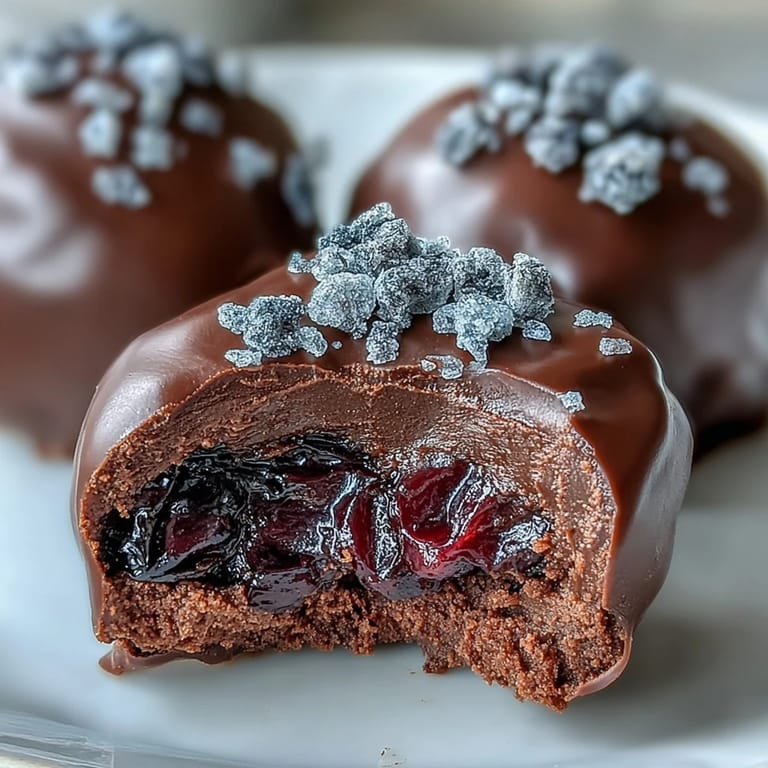
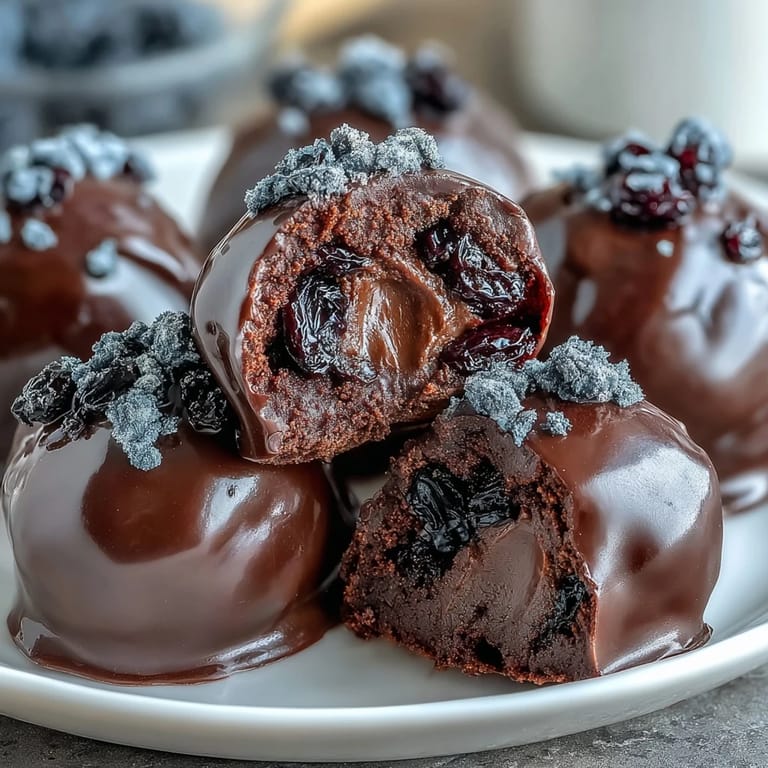
- Freeze-dried black currants, 2 tbsp: These add a visual pop and a subtle textural contrast that elevates the whole experience.
- Cocoa powder, 2 tbsp: A classic finish that gives them that sophisticated, almost professional appearance.
Tired of Takeout? 🥡
Get 10 meals you can make faster than delivery arrives. Seriously.
One email. No spam. Unsubscribe anytime.
Instructions
- Heat your cream until it's just barely simmering:
- You'll see thin wisps of steam rising and maybe a few lazy bubbles at the edges—that's when you pull it off the heat. Any hotter and you'll scald it, which somehow changes the entire texture.
- Let the chocolate sit for a full minute in that warm cream:
- This patience is everything; it allows the heat to gently penetrate the chocolate pieces rather than creating a seized, grainy mess. Stir slowly in one direction until you have something that looks like silk.
- Fold in your butter, black currant purée, and liqueur:
- The mixture should go glossy and impossibly smooth—if it looks broken or separated, you either went too hot or too fast. Just keep stirring gently and it usually comes back together.
- Chill your ganache for 1 to 2 hours until it's firm enough to hold a shape:
- This is a perfect time to walk away, make tea, or watch something you've been meaning to get to. When you come back, it should feel like soft clay, not liquid or rock-hard.
- Roll ganache into balls using just your hands or a melon baller:
- Cold hands help tremendously—run them under cool water and dry them completely. You're aiming for roughly walnut-sized spheres; they don't need to be perfect since the coating will hide any irregularities.
- Freeze your shaped truffles for 20 minutes before coating:
- This prevents them from falling apart when they meet the warm melted chocolate. It's a small step that makes an enormous difference in the final result.
- Melt your coating chocolate slowly over a double boiler, stirring constantly:
- If the water underneath boils too vigorously, you risk getting moisture into your chocolate, which causes it to seize and become unusable. Patience here saves your entire project.
- Dip each truffle with a fork, letting excess chocolate drip away gracefully:
- One quick bob in the warm chocolate, then lift it out and let gravity do the work for a few seconds before you place it on your tray. You're aiming for a thin, elegant shell, not a thick chocolate shell.
- Garnish while the chocolate is still wet if using the optional toppings:
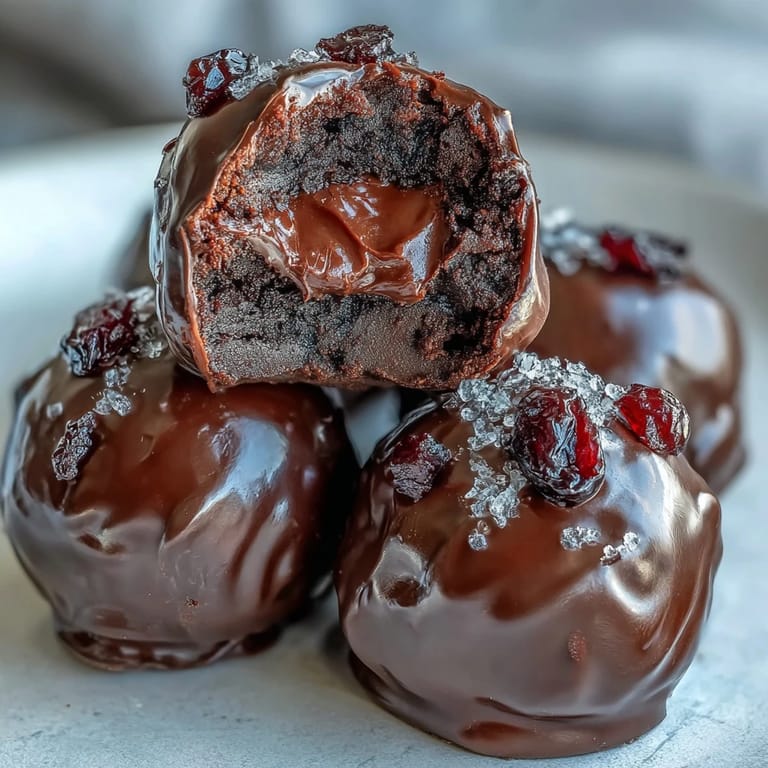
- Crushed freeze-dried currants stick immediately and look absolutely stunning, or a light dusting of cocoa powder adds an understated sophistication. Work quickly since the coating sets faster than you'd expect.
- Let them set at room temperature for 30 minutes or refrigerate to speed things up:
- Room temperature setting gives you a slightly snappier shell, while the fridge is faster if you're impatient. Either way, they're ready to eat once the coating no longer feels tacky.
 Save
Save There was a quiet moment last winter when someone took one of these truffles, closed their eyes while they ate it, and just said nothing for a few seconds—which somehow felt like the highest compliment possible. That's when I understood these weren't complicated at all; they were just chocolate and black currant translated into something worth savoring.
Finding the Right Black Currant
Black currant purée exists in a few forms, and honestly it matters which one you choose. The strained, unsweetened version is what you want here—it's tart enough to sing against the chocolate without the added sugar that would make these cloying and one-note. I've made these with pre-made purées from specialty shops and with my own homemade version from fresh black currants that I'd cooked down and pushed through a fine sieve.
The Double Boiler Technique
Melting chocolate over direct heat is how chocolate dreams go to a grainy, seized nightmare, so the double boiler is genuinely your friend here. The key is making sure the water underneath never actually touches the bowl sitting on top, and that you stir constantly rather than leaving it alone to melt. I learned this the hard way with my first batch, watching perfectly good chocolate seize in seconds and feeling that particular regret of wasted ingredients.
Storage and Shelf Life
These truffles keep for up to a week in an airtight container in the refrigerator, and they actually taste better on day two or three once the flavors have settled and married together. They don't need to be fussy about temperature, though they will get slightly softer at room temperature, which honestly some people prefer since it makes that ganache center even more luxurious on the tongue.
- If you're making these more than a few days ahead, freezing them works beautifully—just thaw them in the fridge for a few hours before eating.
- The freeze-dried currant garnish stays crisp for the entire shelf life, making it a great choice if you're gifting these or making them ahead.
- Let them sit at room temperature for 10 minutes before eating if they've been refrigerated, which takes away that cold stiffness and brings all the flavors to their fullest.
 Save
Save Making these truffles is honestly about discovering that restaurant-quality chocolate doesn't live in fancy boxes from fancy shops—it lives in your hands on an ordinary afternoon. Each one you bite into carries that small moment of accomplishment that makes homemade desserts genuinely taste better than anything store-bought.
Recipe FAQ
- → What makes black currant and chocolate such a good pairing?
The natural tartness and bright acidity of black currants perfectly complement the bittersweet notes of dark chocolate. This balance prevents the confections from feeling overly heavy or cloying, while the fruit's subtle tannin profile harmonizes beautifully with cocoa's complex flavor compounds.
- → How long do these need to set before serving?
After coating, the truffles require approximately 30 minutes at room temperature or 15-20 minutes in the refrigerator to fully set. For the best texture and flavor experience, allow them to come to slightly cool room temperature (around 18-20°C) before serving, as this allows the ganache to soften slightly and the full flavor profile to emerge.
- → Can I make the ganache ahead of time?
Absolutely. The ganache can be prepared up to 3 days in advance and stored refrigerated in an airtight container. In fact, many chocolatiers recommend making the ganache a day ahead to allow the flavors to mature and the texture to stabilize. When ready to shape, let it soften at room temperature for about 15-20 minutes until pliable but still firm.
- → Why use 70% cocoa chocolate specifically?
Seventy percent cocoa dark chocolate provides an ideal bittersweet foundation that stands up to the assertive tartness of black currants without being overwhelmed. Lower percentage chocolates would be too sweet, while higher percentages might make the confection overly bitter. This particular cocoa percentage creates a sophisticated balance that appeals to both dark chocolate enthusiasts and those who prefer sweeter confections.
- → What's the best way to achieve a smooth coating?
Temperature control is essential. Melt the coating chocolate gently over a double boiler, being careful not to exceed 32°C to maintain proper temper. The ganache centers should be slightly chilled but not frozen, as extreme cold causes the coating to crack and form uneven surfaces. Work efficiently and tap your dipping tool gently against the bowl's edge to remove excess chocolate for a professional finish.
- → Are there variations for different dietary needs?
For dairy-free versions, substitute heavy cream with full-fat coconut cream and use high-quality vegan chocolate. The resulting ganache will have subtle coconut notes that actually complement the currant flavor beautifully. Those avoiding alcohol can simply omit the liqueur or replace it with a teaspoon of black currant extract for additional fruit intensity without the alcohol content.