 Save
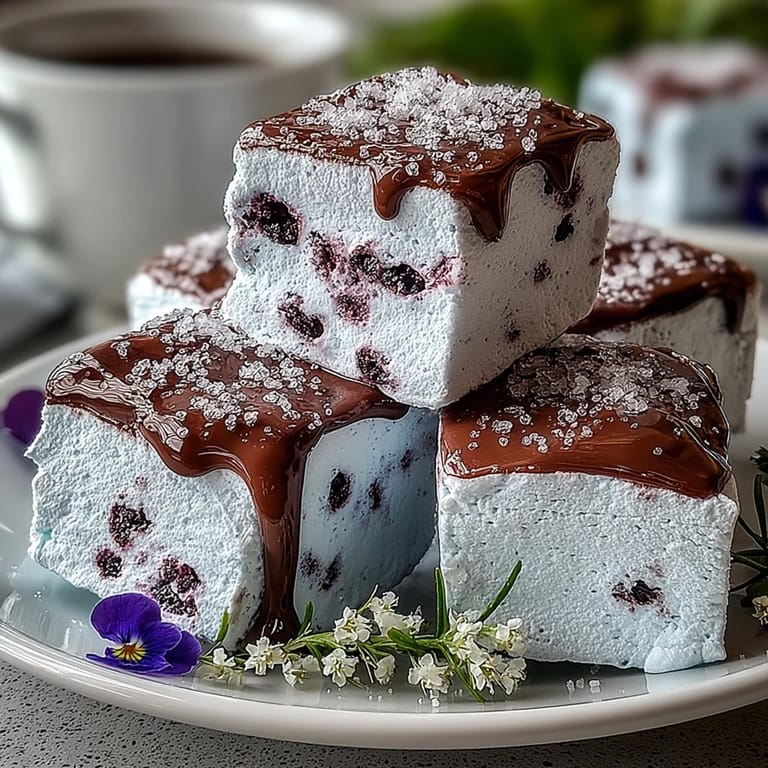
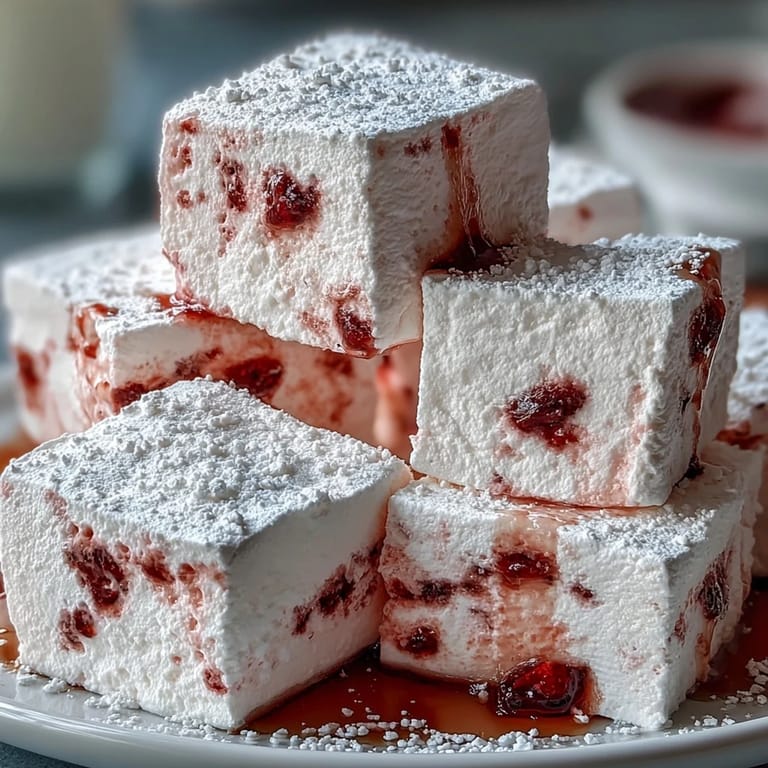
Save My kitchen smelled like a European candy shop the first time I attempted black currant marshmallows, all fruity tartness mixing with vanilla and the faint sweetness of corn syrup. I'd spotted black currants at the farmer's market and couldn't resist their deep purple color, thinking they'd be perfect for something more interesting than the plain white marshmallows everyone expects. The process felt surprisingly meditative—watching the syrup climb on the thermometer, then whipping gelatin into those glossy peaks while the black currant purée waited patiently on the counter. What emerged was something between candy and cloud, with a subtle tartness that made every bite feel a little luxurious. Now I make these whenever I want to impress someone or just remind myself that homemade marshmallows are genuinely worth the effort.
I brought a batch to a book club meeting on a chilly October evening, and someone actually gasped when they tasted one—not because they were perfect, but because they'd never experienced a marshmallow with this kind of complexity. That moment taught me that texture and flavor working together can genuinely surprise people, especially when the tartness catches them off guard in the best way. My friend Kate has since requested them for every gathering, which is both flattering and slightly terrifying.
Ingredients
- Black Currant Purée: Whether you use fresh or frozen black currants, blending and straining them creates that jewel-toned base that'll give your marshmallows their distinctive flavor and soft lavender hue.
- Powdered Unflavored Gelatin: Three packets bloom in cold water to create the structure that transforms sugar syrup into cloud-like marshmallow—this is your silent partner in achieving that perfect texture.
- Granulated Sugar & Light Corn Syrup: Together these create a stable syrup that reaches exactly 240°F, which is the sweet spot for marshmallow success without crystallizing.
- Cold Water for Blooming: Keep this cold so the gelatin doesn't begin to set prematurely—this small detail prevents grainy texture later.
- Confectioners Sugar & Cornstarch Mix: The combination prevents sticking better than either ingredient alone, and it creates that slightly powdery exterior that feels nostalgic.
- Salt & Vanilla Extract: Salt deepens the black currant flavor without tasting salty, while vanilla rounds out everything into something that feels complete.
Tired of Takeout? 🥡
Get 10 meals you can make faster than delivery arrives. Seriously.
One email. No spam. Unsubscribe anytime.
Instructions
- Prepare Your Canvas:
- Line an 8x8 inch baking pan with parchment paper and dust it generously with the confectioners sugar and cornstarch blend—this is your insurance against sticky situations. Don't skimp on the dusting; it makes turning out the finished slab infinitely easier.
- Build Your Black Currant Base:
- In a small saucepan, combine the black currant purée with water and sugar, then simmer for 4 to 5 minutes until it thickens slightly and the flavors concentrate. This cooking step mellows the tartness just enough while keeping it tart enough to matter.
- Bloom the Gelatin:
- Sprinkle the gelatin over cold water in your stand mixer bowl and let it sit untouched for 10 minutes—the gelatin will absorb the liquid and become spongy. This matters more than it seems; blooming ensures smooth texture rather than grainy bits.
- Cook Your Syrup to Exactly Right:
- In a medium saucepan, combine sugar, corn syrup, and water, then heat without stirring until the mixture reaches 240°F on a candy thermometer. This temperature creates the perfect balance of stability and fluff; go higher and you'll get hard marshmallows, go lower and they'll be gummy.
- Whip It Into Clouds:
- With the mixer on low, carefully pour the hot syrup into the bloomed gelatin—pour slowly to avoid splatters and let the gelatin absorb the heat gradually. Once it's incorporated, kick the speed to high and whip for 6 to 8 minutes, watching the mixture transform from shiny to thick and tripled in volume, which is genuinely magic to witness.
- Swirl in the Purple Magic:
- Add salt, vanilla, and the cooled black currant purée, whipping another 1 to 2 minutes until it's fully incorporated and the mixture has turned that soft lavender color. The color shift signals that everything's working together.
- Pour and Set:
- Immediately pour the marshmallow mixture into your prepared pan and smooth the top with a spatula—work quickly because this stuff starts to firm up fast. Sift a generous layer of the sugar-cornstarch mix over the top and let it sit uncovered at room temperature for at least 4 hours until completely set.
- Cut and Dust:
- Turn the marshmallow slab onto a cutting board, peel away the parchment paper, and dust all exposed sides with more of the sugar-cornstarch mixture. Cut into squares with a sharp knife that you've also dusted in the mixture—this prevents sticking and gives you clean edges.
 Save
Save There's something quietly wonderful about offering someone a homemade marshmallow and watching their face change when they realize it's actually delicious. These black currant ones made me realize that treats don't need to be complicated to be memorable—they just need to taste better than what people expect.
Why Black Currants Are Worth Seeking Out
Black currants aren't as common in American kitchens as they deserve to be, probably because they're tart enough to demand respect rather than just sweetness. Once you taste them in marshmallows, you'll understand why European confectioners have been using them for centuries—the flavor has this sophisticated edge that makes you want another one. If you can't find black currant purée at your regular market, check the frozen fruit section or specialty shops, and it's absolutely worth the hunt.
Substitutions That Actually Work
I've experimented with blackberry, raspberry, and cherry purées when black currants weren't available, and each one creates a slightly different personality in the marshmallow. Raspberries give you a softer tartness, blackberries lean earthy, and cherries add an almost floral note that's surprisingly lovely. The technique stays exactly the same; you're just swapping one purée for another, so feel confident experimenting with whatever tart fruit speaks to you.
Serving and Storing Your Marshmallow Triumph
These marshmallows deserve better than a plastic bag, so store them in an airtight container at room temperature where they'll stay perfect for up to a week. I've learned to use parchment paper between layers if you're stacking them, which prevents any sticking and keeps them looking pristine. They're magical stirred into hot cocoa, but honestly, they're best just eaten as is, perhaps with a square of dark chocolate nearby if you're feeling indulgent.
- For extra tartness that punches harder, swirl in additional black currant purée just before the mixture sets completely.
- If your kitchen is particularly warm or humid, add an extra 30 minutes to the setting time—marshmallows need a dry environment to firm up properly.
- A sharp knife dusted frequently in the sugar-cornstarch mixture prevents ragged edges and makes cutting feel almost professional.
 Save
Save Making black currant marshmallows taught me that the fanciest desserts are often just regular techniques executed with intention and a little tartness. These will make your kitchen smell incredible and your reputation even better.
Recipe FAQ
- → What makes black currant marshmallows unique?
The addition of blackcurrant purée creates a beautiful lavender color and delivers a distinctive tart-sweet flavor profile that sets these marshmallows apart from traditional vanilla varieties. The fruit infusion adds sophistication while maintaining the classic fluffy texture.
- → How long do these marshmallows take to set?
The marshmallow mixture needs to sit at room temperature for at least 4 hours to fully set. Planning ahead is essential since the total time includes preparation, cooking, and this crucial setting period for achieving the perfect pillowy consistency.
- → Can I substitute other fruits for blackcurrant?
Absolutely. Blackberry, raspberry, or cherry purée work wonderfully as alternatives. Each fruit will create a different color and flavor profile while maintaining the same fluffy texture. Adjust sugar quantities based on the fruit's natural sweetness.
- → Why is a candy thermometer necessary?
Reaching 240°F (115°C) is critical for achieving the right sugar concentration. This temperature ensures the syrup creates proper structure when whipped, resulting in marshmallows that hold their shape without becoming too dense or sticky.
- → How should I store these marshmallows?
Keep in an airtight container at room temperature for up to one week. The sugar-cornstarch dusting prevents sticking and helps maintain freshness. Avoid refrigeration as it can make the texture rubbery and affect the delicate fluffy consistency.
- → What creates the marshmallow's fluffy texture?
The combination of bloomed gelatin and hot sugar syrup whipped at high speed incorporates air pockets, creating the signature pillowy structure. Whipping for 6-8 minutes triples the volume and develops the glossy, stable foam that sets into fluffy squares.