 Save
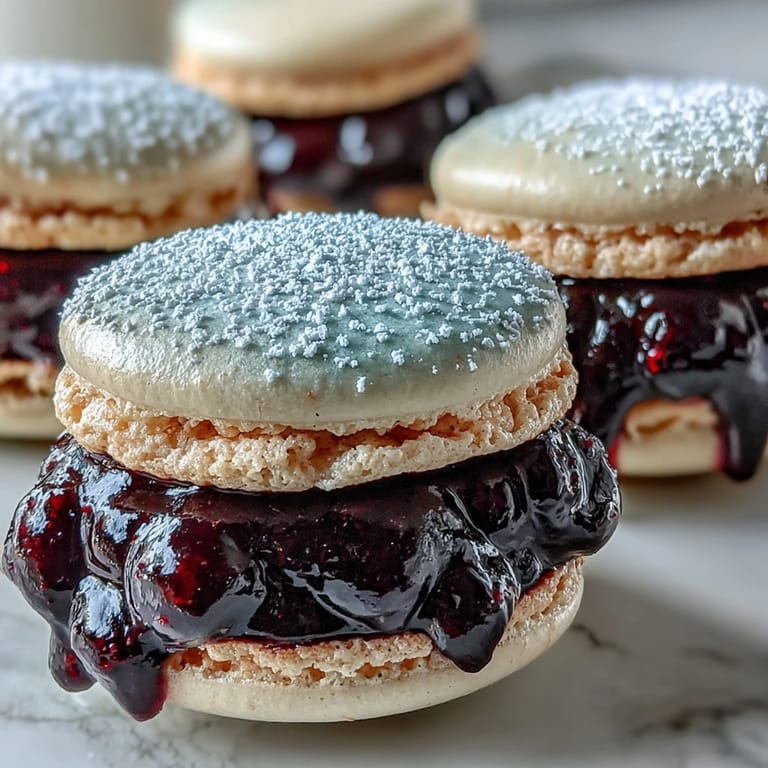
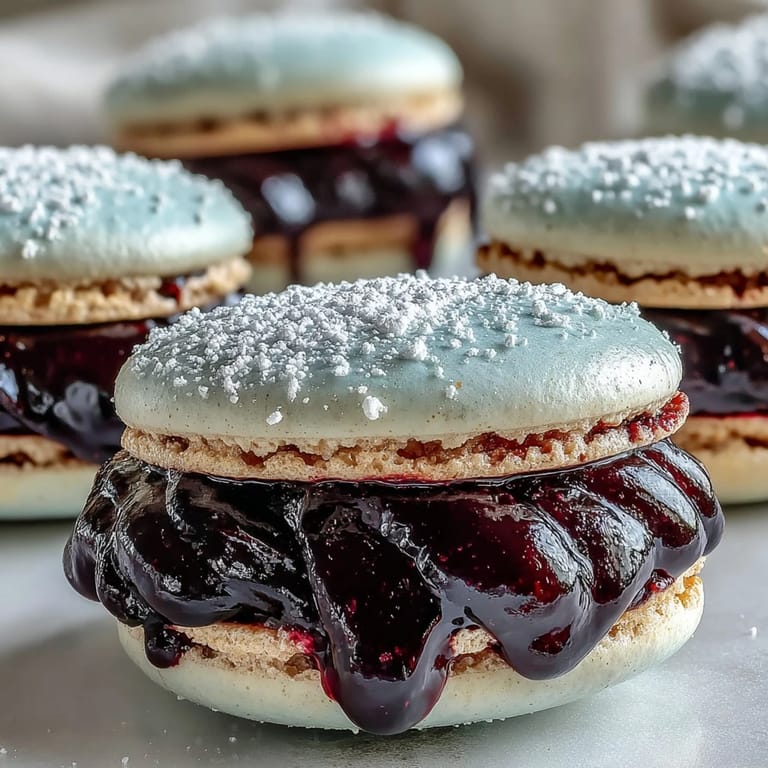
Save The first time I attempted macarons, I was convinced they were impossible—until a friend casually mentioned that her grandmother in Lyon had been making them for decades, and the secret wasn't magic, just patience and respect for the ingredients. Years later, I discovered that blackcurrant, with its tart sophistication, transforms these delicate almond shells into something almost jewel-like. There's something deeply satisfying about cracking into a perfectly rested macaron, feeling that crisp exterior give way to the silky ganache center. This recipe captures that feeling, distilled into manageable steps that actually work.
I'll never forget bringing these to a small dinner party where someone's grandmother—a former pastry chef from Brussels—picked one up and immediately went quiet. She bit into it, closed her eyes, and said, "You've got the feet right." Those four words meant more to me than any compliment about taste ever could. That's when I realized macarons aren't about impressing people; they're about the quiet pride of doing something genuinely difficult well.
Ingredients
- Egg whites, aged: Room-temperature aged egg whites (24–48 hours in the fridge) whip into a more stable meringue—this is non-negotiable if you want consistent results.
- Granulated and powdered sugar: The granulated sugar stabilizes the meringue while the powdered sugar keeps the shells delicate; don't skimp on sifting the powdered sugar.
- Almond flour, finely ground: Blanched almond flour that's genuinely fine makes the difference between smooth shells and ones with a sandy texture—if it feels gritty between your fingers, sift it again.
- Blackcurrant purée: Fresh or frozen blackcurrants blended and strained remove the seeds, which would create unwanted texture in the ganache; if you can't find blackcurrants, cassis purée works in a pinch.
- White chocolate: Use real white chocolate, not white coating chocolate—the cocoa butter makes the ganache taste luxurious rather than waxy.
- Unsalted butter and lemon juice: The butter adds richness while lemon juice brightens the blackcurrant without making it taste citrusy; it's a partnership that shouldn't be skipped.
Tired of Takeout? 🥡
Get 10 meals you can make faster than delivery arrives. Seriously.
One email. No spam. Unsubscribe anytime.
Instructions
- Prepare your mise en place:
- Line your baking sheets with parchment paper or silicone mats before you start; this small moment of readiness prevents panicking later when you're holding a piping bag and watching meringue deflate.
- Process and sift the dry ingredients:
- Pulse almond flour and powdered sugar in a food processor until they feel impossibly fine, then sift the mixture—you'll hear a difference in texture as the lumps break down, and what emerges is almost cloud-like. This step determines whether your shells will be smooth or have dimples and cracks.
- Build your meringue:
- Beat egg whites and salt until foamy, then add granulated sugar gradually while the mixer runs, watching the peaks go from soft to stiff and glossy—this takes about 3–4 minutes and you'll notice the moment when the meringue transforms from loose to billowy. It should look like thick, shiny clouds.
- Tint the meringue:
- Add food coloring and mix until the color is even; gel coloring works better than liquid because it won't thin the meringue.
- Fold with intention:
- Add the almond mixture in three parts, folding gently with a spatula—this is the moment where overmixing happens and shells become hollow instead of domed. You're looking for a batter that flows in ribbons, not one that's stiff; it should take about 10–15 folds per addition.
- Pipe the shells:
- Transfer batter to a piping bag with a 1 cm round tip and pipe circles about 3.5 cm wide onto your prepared sheets, spacing them at least 2 cm apart. The pressure in your piping hand matters—too much and the shells spread into thin discs, too little and they stay bumpy.
- Release the air bubbles:
- Tap the baking sheets firmly on the counter several times, letting gravity pull air pockets down and out; then run a toothpick through any remaining visible bubbles. This step directly affects whether you'll get those signature ruffled feet.
- Let the shells rest:
- Leave them at room temperature for 30–45 minutes until a thin, papery skin forms on top and the shells no longer feel wet to the touch. You'll feel a difference between a sticky shell and a rested one; it's unmistakable.
- Bake with precision:
- Preheat to 150°C (300°F) and bake one tray at a time for 13–15 minutes, rotating halfway through—low and slow is the rule here, as high heat creates hollow, flat shells. The shells are done when they lift cleanly off the parchment but still feel slightly tender inside.
- Cool completely:
- This isn't laziness; fully cooled shells won't crack when removed from the parchment and won't weep when filled.
- Make the ganache:
- Place white chocolate in a heatproof bowl, heat blackcurrant purée until it just simmers, then pour it over the chocolate and wait 1 minute before stirring—the heat will melt the chocolate gently. Stir in softened butter and lemon juice until the mixture is glossy and smooth, then let it cool until it's thick enough to hold its shape but still spreadable.
- Match and fill:
- Pair shells by size—this makes the macarons look intentional rather than haphazard—then pipe a small dollop of ganache onto one shell and gently press the partner shell on top. A light twist seals them together.
- Mature the macarons:
- Store in an airtight container in the fridge for at least 24 hours; this allows the shells to absorb moisture from the ganache and the flavors to meld together. They'll taste noticeably better than they did immediately after assembly.
 Save
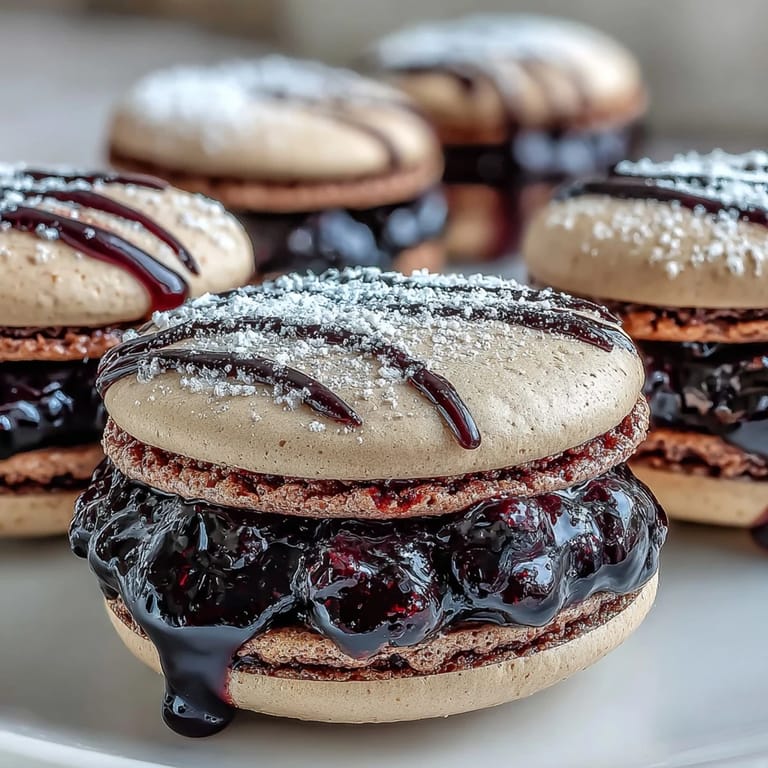
Save I remember the afternoon when a batch of mine finally had perfect feet—those delicate ruffles that make macarons look like tiny, edible works of art. My partner walked into the kitchen, saw them cooling on the rack, and asked if I'd ordered them instead of making them, which I'm choosing to take as the highest compliment.
Understanding the Science
Macarons work because of the balance between the meringue's structure and the almond flour's weight. When you fold them together, you're not just mixing—you're creating an emulsion where tiny air pockets are held in place by the proteins and fats working together. The resting time allows a skin to form, which traps those air pockets and creates the characteristic domed top and ruffled feet during baking. It's physics disguised as pastry, and understanding it transforms macarons from mysterious to manageable.
Troubleshooting the Inevitable Hiccups
Even with perfect technique, macarons sometimes have moods. Hollow shells mean your batter was overmixed or your oven temperature was too high—the outside set before the inside had time to rise. Flat shells without feet suggest your shells didn't rest long enough or your oven temperature was too low. Cracked shells usually mean the opposite: too much oven heat or a shell that wasn't mature enough. The good news is that macarons are forgiving teachers; each batch teaches you something.
Beyond the Basic Blackcurrant
Once you've made these once, you'll understand the platform well enough to experiment. Raspberry, passion fruit, or even earl grey work beautifully as ganache flavors, and you can shift the shell color to match. The structural technique never changes—only the flavor swaps. I've started keeping a notebook of combinations that work, and each success builds confidence for the next attempt.
- Let ganache cool to room temperature before piping to avoid splitting the delicate shells.
- Macarons keep for 3–4 days refrigerated in an airtight container; they don't freeze well because the texture changes.
- Fresh shells taste good, but 24-hour-old macarons taste transcendent—patience genuinely rewards you here.
 Save
Save These macarons are delicate and ambitious, but they're proof that impossible things become possible when you're willing to pay attention. Serve them with tea, gift them in a pretty box, or keep them hidden in the fridge as your reward for surviving a difficult week.
Recipe FAQ
- → Why must I age the egg whites before making these?
Aging egg whites for 24-48 hours in the refrigerator allows them to lose some moisture, resulting in a more stable meringue with better volume. This helps create the characteristic smooth tops and proper feet that make these confections visually stunning and texturally perfect.
- → How do I know when the batter is ready to pipe?
The batter should flow in thick ribbons from your spatula and be able to form a figure-8 without breaking. If the ribbon breaks, continue folding gently. Overmixing will cause the shells to spread too thin, while undermixing results in lumpy tops and no feet.
- → What is the purpose of letting the shells rest before baking?
The resting period allows a skin to form on the surface of each shell. This skin is essential—it traps steam during baking, creating the signature ruffled feet at the base. The shells are ready when they're no longer tacky to the touch and have a matte appearance.
- → Can I substitute the blackcurrant purée with other fruits?
Yes, you can replace blackcurrant purée with raspberry, strawberry, passion fruit, or lemon purée. Adjust the sugar in the ganache slightly based on the fruit's natural tartness. The method remains the same regardless of fruit choice.
- → Why must these be refrigerated for 24 hours before serving?
This resting period allows the moisture from the ganache to soften the interior of the shells slightly, creating that perfect chewy texture. The flavors also meld together beautifully—the tangy blackcurrant and sweet white chocolate become more harmonious after time to develop.
- → How should I store these for longer keeping?
Keep assembled shells in an airtight container in the refrigerator for up to 5 days. For longer storage, freeze them in layers separated by parchment paper for up to 3 months. Thaw frozen confections in the refrigerator before bringing to room temperature for serving.