 Save
Save There's something almost magical about the moment cashews transform into silk in a blender—that shift from grainy to impossibly creamy happens in seconds, and suddenly you're holding something that tastes nothing like dairy but feels just as luxurious. I discovered this sauce while testing recipes for a friend who'd gone vegan, and what struck me most wasn't the health benefits, but how genuinely rich and satisfying it was. The zucchini noodles became my canvas for something I'd honestly thought I'd miss forever.
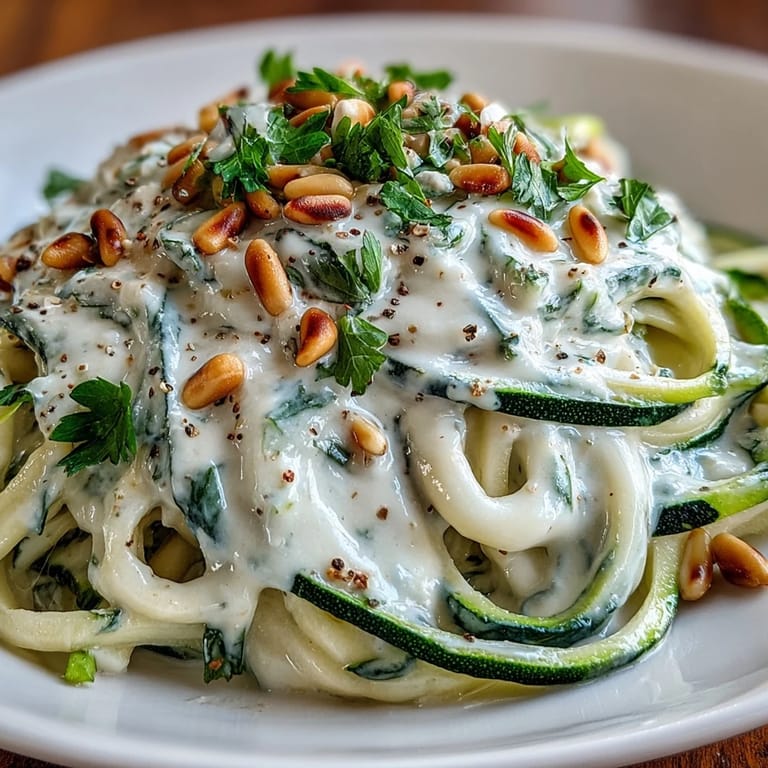
I made this for my sister's dinner party last spring when she mentioned offhand that her new partner didn't eat animal products, and I wanted to prove that vegan didn't mean sad salads. When I plated those tender zucchini noodles draped in that golden, garlicky sauce, the room went quiet for a second, and then everyone asked for seconds. That's when I realized this wasn't a compromise dish—it was just genuinely good.
Ingredients
- Raw cashews (1 cup): The star ingredient that creates that silky base; soaking them in hot water softens them enough for a high-speed blender to transform them into cream without any grittiness.
- Unsweetened plant-based milk (1 cup): Oat milk gives the richest body, but almond works if you're watching calories and cashew milk makes it almost too decadent.
- Nutritional yeast (2 tablespoons): This is what gives the sauce that savory, umami depth that makes you think there's parmesan hiding in there, and it's pure magic for vegan cooking.
- Fresh lemon juice (2 tablespoons): Brightens everything and cuts through the richness so the sauce doesn't feel heavy, plus it keeps the color from turning dull.
- Garlic (2 cloves): Raw garlic in a creamy sauce is bold but necessary; I've learned to not skimp here because it disappears into the sauce and only adds complexity.
- Onion powder (1 teaspoon): Adds sweetness and depth that makes the sauce taste more developed than if you just used garlic alone.
- Sea salt and black pepper: Season generously—vegan sauces need more seasoning than you'd think because there's no dairy fat to carry flavors.
- Medium zucchini (4): Spiralize them and pat them completely dry, otherwise they'll release water and dilute your sauce into sadness.
- Olive oil (1 tablespoon): Just enough to coat the pan and soften the noodles without making them soggy.
Tired of Takeout? 🥡
Get 10 meals you can make faster than delivery arrives. Seriously.
One email. No spam. Unsubscribe anytime.
Instructions
- Dry those zucchini noodles like your life depends on it:
- After spiralizing, pat them thoroughly with paper towels—excess water is the enemy of a creamy sauce. I learned this the hard way after my first attempt turned into zucchini soup.
- Give the noodles a quick kiss in the pan:
- Heat olive oil over medium heat and sauté those noodles for just 2–3 minutes, stirring gently so they stay tender and don't break apart. You're not cooking them through; you're just warming them up and coaxing out a tiny bit of their water.
- Soak and blend your cashews into clouds:
- Twenty minutes in hot water makes all the difference—they'll soften enough that your blender won't struggle and strain. Dump them into the blender with milk, nutritional yeast, lemon juice, garlic, onion powder, salt, and pepper, then blend until it's silkier than any store-bought cream.
- Warm the sauce gently on the stove:
- Pour it into a saucepan and heat over low heat for 3–4 minutes, stirring constantly so it doesn't stick to the bottom. If it's thicker than you'd like, splash in a bit more plant milk and whisk until it flows like sauce instead of sitting like pudding.
- Toss everything together while it's still warm:
- Combine the noodles and sauce in the same pan or a serving bowl, making sure every strand gets coated in that creamy goodness.
- Finish it with something special:
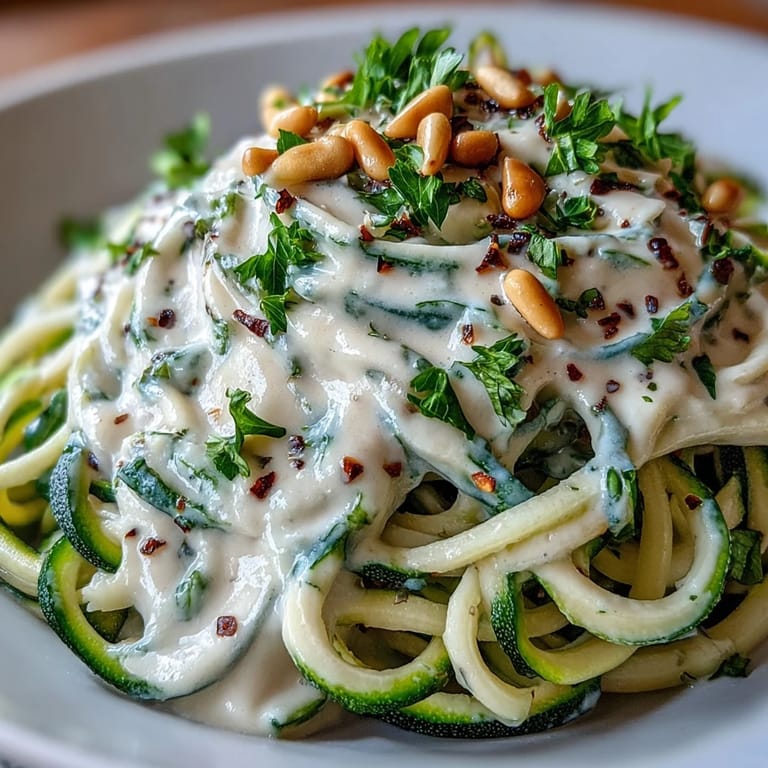
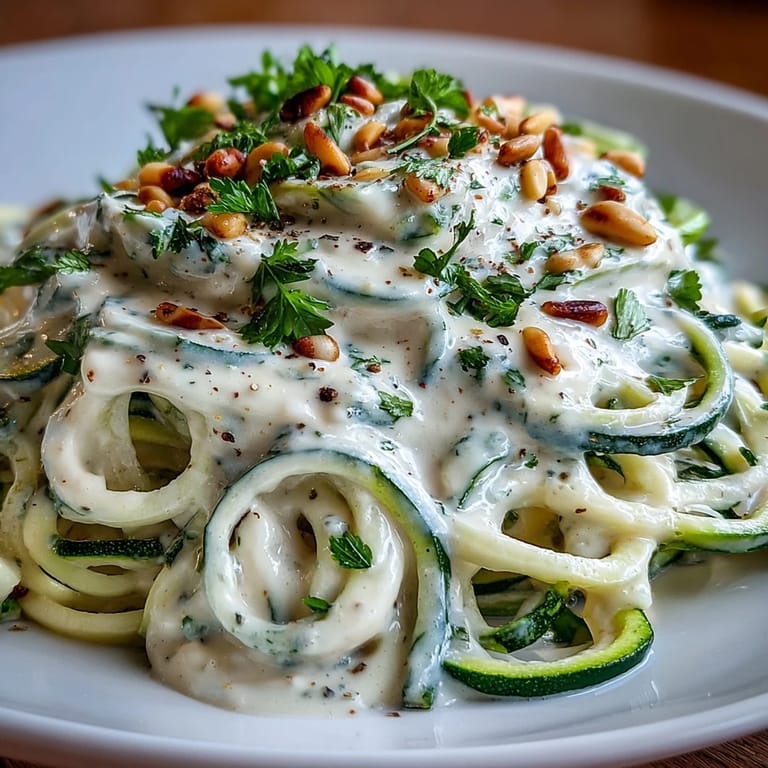
- A scatter of fresh parsley, a handful of toasted pine nuts, and a crack of black pepper transform this from simple to restaurant-worthy in about 30 seconds.
 Save
Save What I love most about cooking this dish is how it bridges two worlds—people who eat vegan and people who just want delicious food discover they don't have to choose between them. Every time I make it, someone eats it without knowing it's dairy-free until I tell them, and that moment of surprise never gets old.
Flavor Variations That Actually Work
The beauty of this sauce is that it takes flavor additions like a dream, because the cashew base is neutral enough to support whatever direction you want to go. I've stirred in smoked paprika and felt like I was eating something almost smoky and complex, and another time I added a teaspoon of white miso and the sauce developed this savory depth I couldn't quite identify but knew was incredible. A tiny pinch of red pepper flakes adds heat that builds gradually, and fresh basil blended in instead of stirred on top makes it taste Italian in a way that feels more authentic.
What To Spiralize If You're Tired of Zucchini
Zucchini is mild and neutral, which is why it works, but honestly after you've made this sauce once you might be curious about what else it coats beautifully. Sweet potato noodles pick up that creamy sauce and taste almost like a comfort food hybrid, carrots stay firm and their natural sweetness plays nicely against the garlic, and if you want to feel less experimental, gluten-free pasta is always a safety net. I've even done a mix of zucchini and yellow squash just for visual interest, and the slight color difference makes the dish feel more intentional than it actually is.
The Secret to Creamy Sauces Without Dairy
This isn't actually a secret anymore, but it's worth repeating because it changed how I think about cooking: fat plus liquid plus proper blending equals creaminess, and it doesn't matter where the fat comes from. Cashews have protein and fat that emulsify beautifully when blended, nutritional yeast adds savory thickness, and lemon juice keeps everything bright so it doesn't taste like you're eating pure fat. The real lesson is that vegan cooking isn't about deprivation—it's about understanding ingredients so well that you can build the same luxurious textures through different means.
- Taste the sauce before it goes on the noodles and season aggressively—it should taste almost bold on its own, because the noodles will mellow it out.
- If you have a lower-power blender, soak the cashews longer and use slightly more milk to give your blender an easier job.
- Make extra sauce and keep it in the fridge for up to 4 days; it reheats beautifully with a splash of milk and transforms pasta, roasted vegetables, or even grains into something elegant.
 Save
Save This dish taught me that cooking for people you care about doesn't mean struggling through unfamiliar techniques or apologizing for dietary choices. It means understanding ingredients well enough to create something so delicious that the story behind it doesn't matter—just how good it tastes.
Recipe FAQ
- → Is this dish gluten-free?
Yes, this dish is naturally gluten-free when using certified gluten-free plant-based milk. All other ingredients, including zucchini noodles and cashews, are naturally gluten-free.
- → Can I make the sauce ahead of time?
Absolutely. The cashew Alfredo sauce can be prepared up to 3 days in advance and stored in an airtight container in the refrigerator. Gently reheat with a splash of plant milk before serving.
- → What can I substitute for cashews?
Raw sunflower seeds or macadamia nuts work well as alternatives. Keep in mind the flavor profile may shift slightly, but the creamy texture remains similar.
- → How do I prevent zucchini noodles from becoming watery?
After spiralizing, pat the noodles dry with paper towels to remove excess moisture. Sauté them briefly just until slightly tender rather than cooking them completely.
- → Can I use regular pasta instead of zucchini noodles?
Yes, gluten-free pasta or whole wheat pasta both work beautifully with this cashew Alfredo sauce. The sauce pairs well with any pasta variety.
- → How long do cashews need to soak?
Soak raw cashews in hot water for 20 minutes. For even smoother blending, you can soak them in room temperature water for 2-4 hours or overnight.