 Save
Save The first time I made basbousa, my neighbor's mother watched from my kitchen doorway, quietly correcting my technique with the gentlest nod. She'd brought the rose water, insisting it was the detail that mattered most. What I learned that afternoon wasn't just how to layer semolina and coconut, but that some recipes carry stories across generations, and they taste better when made with someone's grandmother's patience in mind.
I made this for a small group of friends one winter evening, and they kept reaching for slice after slice while we talked about everything and nothing. Someone asked what made it so good, and honestly, it was just the warmth of butter, the smell of coconut toasting in the oven, and the fact that we were all sitting around the same table.
Ingredients
- Fine semolina: This is the backbone, giving basbousa its signature sandy texture and slight nuttiness when it bakes.
- Granulated sugar: Sweetens the cake itself, so you're not relying entirely on syrup.
- Desiccated coconut, unsweetened: The unsweetened kind lets you control sweetness and gives a cleaner coconut flavor than sweetened versions.
- Plain yogurt: The secret to moisture and a subtle tang that balances all that sweetness perfectly.
- Unsalted butter or ghee: Ghee adds richness and a slight golden depth if you have it on hand.
- Baking powder: Just enough to give the cake a light, tender crumb without making it airy.
- Vanilla extract: A small anchor that rounds out the flavors without shouting.
- Salt: The unsung hero that makes coconut taste more like itself.
- Whole blanched almonds: More than decoration, each almond adds a slight contrast in texture and a hint of bitter elegance.
- Granulated sugar for syrup: Creates the glossy, light syrup that basbousa is known for.
- Water: Keeps the syrup from becoming too thick or crystalline.
- Lemon juice: Prevents crystallization and adds a whisper of brightness that keeps the syrup from tasting one-note.
- Rose water or orange blossom water: Optional but worth seeking out, this is where the magic lives if you want that authentic, almost floral sweetness.
Tired of Takeout? 🥡
Get 10 meals you can make faster than delivery arrives. Seriously.
One email. No spam. Unsubscribe anytime.
Instructions
- Set your oven and prepare the pan:
- Preheat to 350°F and grease your 9x9 pan with butter or tahini. The tahini is a traditional choice that adds a subtle richness.
- Combine the dry elements:
- In a large bowl, mix semolina, sugar, coconut, baking powder, and salt until everything is evenly distributed. This takes only a minute but makes sure no pockets of baking powder will create bitter surprises.
- Bring it together with wet ingredients:
- Add yogurt, melted butter, and vanilla to the dry mix, stirring until you have a thick, cohesive batter that holds together. It should feel slightly moist but not sticky.
- Spread and score with intention:
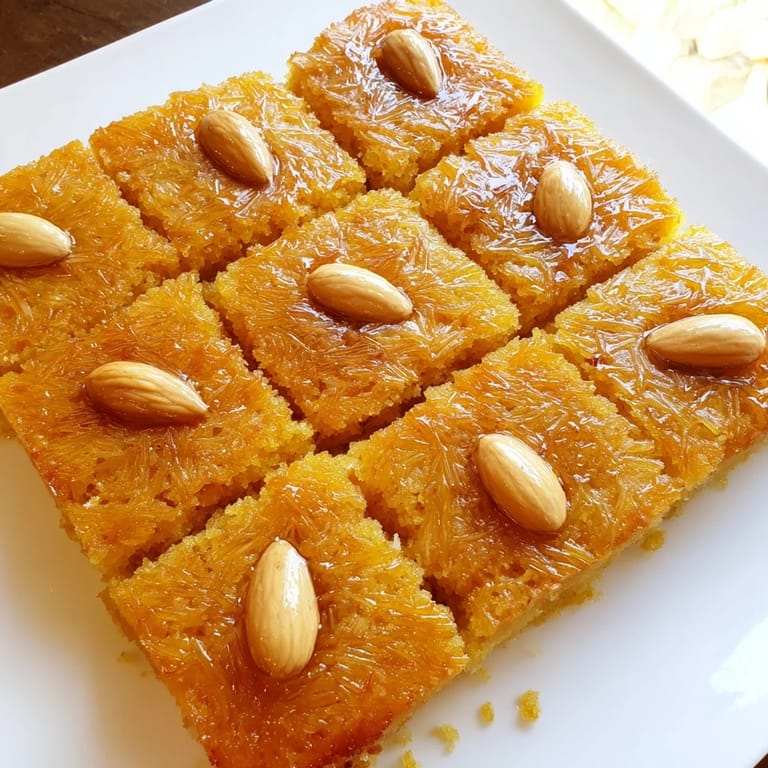
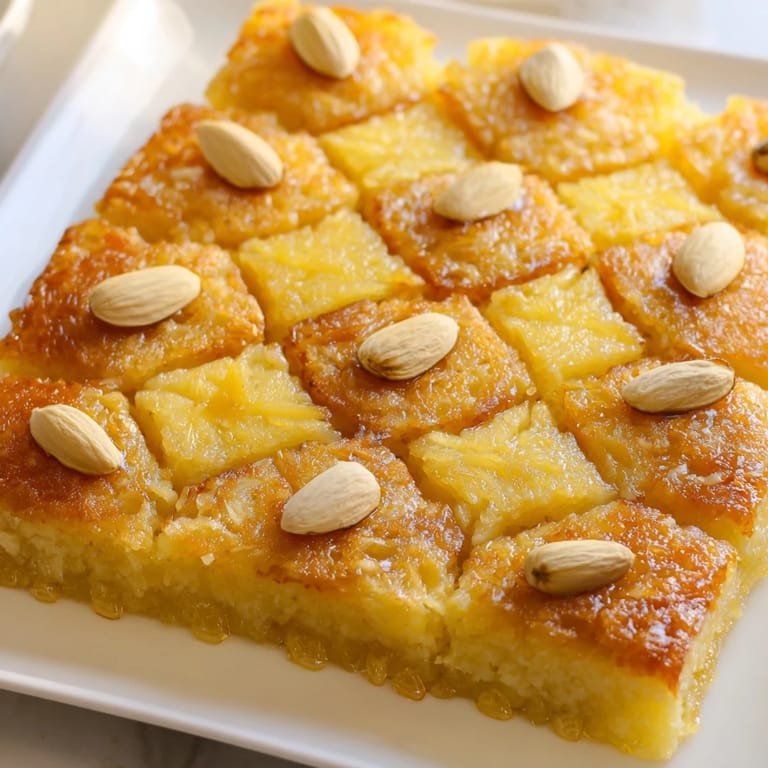
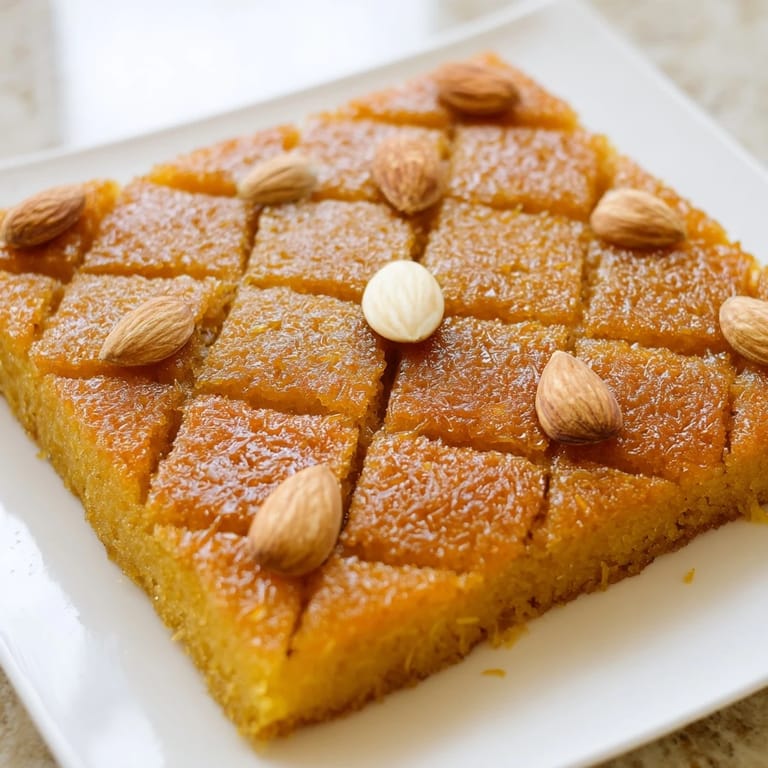
- Press the batter evenly into your pan, then use a sharp knife to score it into 12 squares or diamonds. Press gently so you cut through without dragging, and place one almond in the center of each piece as if you're placing a small gift.
- Bake until golden and set:
- Bake for 30 to 35 minutes, watching for that deep golden color and a toothpick that comes out clean from the center. The edges will firm up first, so patience here makes the difference.
- Prepare the syrup while it bakes:
- In a saucepan, combine sugar, water, and lemon juice. Bring to a boil, then lower the heat and simmer for 8 to 10 minutes until it thickens slightly and coats the back of a spoon. Remove from heat and stir in rose water or orange blossom water if using, then let it cool completely.
- Pour syrup over hot cake:
- This is the moment it all comes together. Pour the cooled syrup evenly over the hot basbousa as soon as it comes out of the oven, letting it soak into every crevice and settle into those scored lines.
- Cool and serve with care:
- Let it cool completely at room temperature, then re-cut along the scored lines with a sharp knife to separate the pieces cleanly. Each bite will be glossy, moist, and perfectly sweet.
 Save
Save Years later, I still remember how my hands smelled like coconut oil after making this, and how the cake looked on the plate with afternoon light catching the syrup. That's when I realized desserts are small rituals, moments we give ourselves permission to slow down and make something beautiful.
Why This Dessert Feels Special
Basbousa sits at the intersection of humble and elegant. It uses ingredients most people have in their pantry, yet tastes like something from a Cairo café. The texture is almost impossible to mess up because the yogurt forgives small variations, and the syrup hides any minor imperfections. What makes it special isn't complexity; it's how a few simple elements come together to create something that feels both comforting and a little bit ceremonial.
Syrup Secrets and Timing
The syrup is where most people stumble, either by making it too thick or too thin, or by pouring it over a cooling cake and wondering why it doesn't absorb properly. The window matters: hot cake, cooled syrup. The lemon juice isn't just for flavor—it's a chemical trick that keeps sugar crystals from forming and keeps the syrup silky and pourable. If you're using rose water, add it only after the heat is off. Heat destroys those delicate floral notes, turning them slightly bitter.
Serving and Storage Wisdom
Basbousa is one of those rare desserts that gets better as it sits. After the first day, the syrup redistributes, and the flavors deepen. Store it in an airtight container at room temperature for up to four days, and it will taste fresher longer than you'd expect.
- Serve with strong, dark tea or Turkish coffee to cut through the sweetness.
- If almonds aren't your thing, pistachios or even a single pine nut works just as well.
- Make it your own by experimenting with orange blossom water over rose water, or skip the floral note entirely and let coconut be the star.
 Save
Save This dessert has taught me that the best recipes are the ones that taste like home, regardless of where home actually is. Make it, share it, and let the syrup do its quiet work.
Recipe FAQ
- → What gives Basbousa its moist texture?
The combination of yogurt and a syrup soak after baking ensures the cake remains tender and moist.
- → Can almonds be substituted in this dessert?
Yes, pistachios or other nuts can replace almonds for a different flavor and garnish.
- → How is the syrup flavored?
The syrup is made with sugar, water, lemon juice, and optionally rose or orange blossom water for a fragrant finish.
- → What is the role of coconut in this dish?
Desiccated coconut enriches the texture and adds a subtle tropical flavor to the semolina cake.
- → How should the cake be cut before baking?
Score the batter into squares or diamonds and place an almond in the center of each piece for even cooking and presentation.
- → Any tips to increase richness?
Replacing half of the yogurt with sour cream enhances the cake’s moisture and flavor depth.