 Save
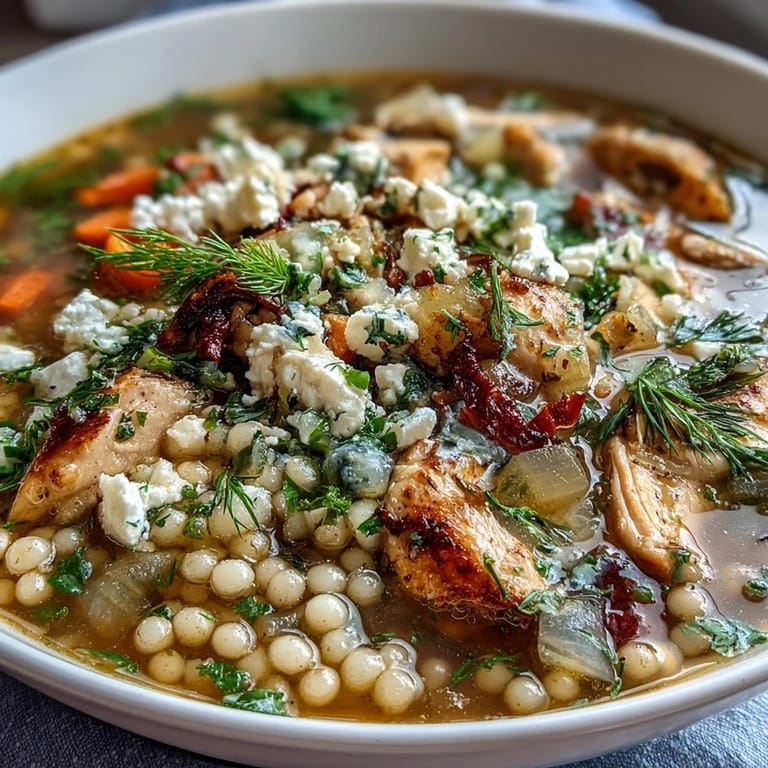
Save My neighbor Maria showed up at my door one rainy Tuesday with a container of this soup, and I was instantly transported to a summer trip to Athens I'd taken years before. One spoonful and I understood why she made it constantly—the brightness of lemon cutting through the savory broth felt like sunshine in a bowl. I asked for the recipe that evening, and she laughed, saying it was something her grandmother simplified for weeknight dinners. Now it's become my go-to when I want something that tastes like care but doesn't demand hours in the kitchen.
I made this for my daughter's book club last spring, and what struck me was how quiet the kitchen got once everyone was eating—that's when you know a soup is doing its job. One guest asked if the feta was crumbled on top as a garnish or if it melted into the broth, and I realized I'd never thought about it that way before. Now I do both: some feta goes into each bowl, and some floats across the top for that salty, creamy contrast that makes each bite interesting.
Ingredients
- Boneless, skinless chicken breasts: Bite-sized pieces cook quickly and stay tender if you don't leave them in the broth too long—I learned that the hard way with overcooked chicken the first time.
- Yellow onion, carrots, and celery: This aromatic base is what gives the soup its foundation; don't skip the sauté step or they'll stay too firm.
- Garlic: Three cloves might seem like a lot, but it mellows as it simmers and becomes almost sweet.
- Chicken stock: Low-sodium matters here because the lemon and feta bring their own saltiness—you can always add more, but you can't take it back.
- Pearl couscous: Larger than regular couscous, it stays individual and chewy rather than turning mushy, which changes everything about the texture.
- Olive oil: Good quality makes a difference when you're using it as your main fat source.
- Bay leaf and dried oregano: The oregano is what makes this distinctly Greek; the bay leaf just whispers in the background.
- Lemon zest and juice: Add the zest early if you want a deeper flavor, but save the juice for the end so it stays vibrant and sharp.
- Feta cheese: Crumble it yourself if you can—it stays more textured than pre-crumbled, which matters when it's sitting on top of hot soup.
- Fresh dill: Optional but worth the extra step; it brings a different kind of brightness than the lemon does.
Tired of Takeout? 🥡
Get 10 meals you can make faster than delivery arrives. Seriously.
One email. No spam. Unsubscribe anytime.
Instructions
- Build your flavor base:
- Heat olive oil in a large pot over medium heat, then add the onion, carrots, and celery—you want them to soften and start releasing their sweetness, which takes about 5 minutes. Listen for a gentle sizzle, and watch until the onion becomes translucent at the edges.
- Bloom the garlic:
- Stir in the minced garlic and let it cook for just 1 minute until it becomes fragrant—the smell will tell you when it's ready, and you don't want it to brown. This tiny moment unlocks the flavor.
- Cook the chicken through:
- Add your bite-sized chicken pieces and stir occasionally for 3 to 4 minutes until they lose their raw look and turn mostly opaque. They don't need to be fully cooked yet since they'll finish in the broth.
- Build the broth:
- Pour in the chicken stock, add the bay leaf and oregano, and bring everything to a gentle boil—you'll see small bubbles breaking the surface. Once it's bubbling, reduce the heat to a simmer.
- Cook the couscous:
- Stir in the pearl couscous and let it simmer uncovered for 15 to 18 minutes, stirring occasionally so nothing sticks to the bottom. The couscous will absorb the broth and become tender, and the chicken will finish cooking through.
- Finish with brightness:
- Remove from heat, fish out and discard the bay leaf, then stir in the lemon zest and juice—this is where the soup comes alive. Taste it and season with salt and pepper until it feels balanced.
- Serve with feta and dill:
- Ladle the soup into bowls and top each one with crumbled feta and a sprinkle of fresh dill if you're using it. Set lemon wedges on the side so people can squeeze in more brightness if they want it.
 Save
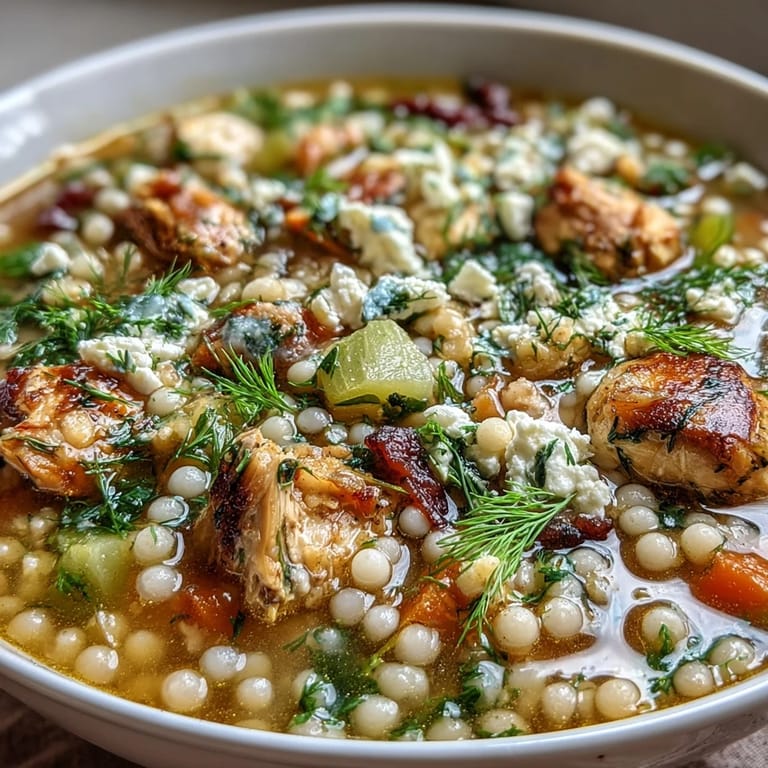
Save There was an evening last winter when my son came home exhausted from exams, and I had this soup waiting for him. He sat at the counter while I ladled it into a bowl, and the way he closed his eyes on the first spoonful made me understand that food doesn't have to be complicated to be comforting. That's what this soup does—it shows up when you need it and asks nothing in return except maybe a little lemon wedge on the side.
The Magic of Pearl Couscous
Pearl couscous changed how I think about soup entirely, honestly. Most grains either disappear into mush or stay completely separate, but pearl couscous finds a middle ground—it softens and absorbs flavor while keeping its individual character. I tested regular couscous once to compare, and the difference was noticeable enough that I've never gone back. The larger grains also catch the broth in a way that makes each bite feel purposeful rather than accidental.
Why Lemon Timing Matters
I used to add lemon juice partway through cooking, thinking it would infuse more deeply, and I was wrong—it just faded into the background. A friend mentioned that she always adds citrus last, and it seemed like such a simple thing, but it changed everything. Now the lemon stays bright and recognizable, cutting through the richness of the feta and making you want another spoonful. It's one of those cooking lessons that seems obvious once someone tells you, but you had to learn it yourself first.
Making It Your Own
This recipe feels adaptable in ways that make it feel like your own kitchen creation rather than something you copied. The base is solid enough that you can shift things around without losing the soul of the dish, whether that means adding spinach in the last 2 minutes, swapping chicken thighs for breasts, or making it vegetarian with chickpeas and vegetable stock. I've even added a pinch of red pepper flakes when I wanted something spicier, and it worked beautifully without overwhelming the other flavors.
- If you have homemade stock, this is the soup to use it in—the difference is subtle but real, and it's worth saving your good broth for moments like this.
- Don't skip topping it with feta and dill even if you think they're optional—those finishing touches are what make it taste intentional rather than just warm.
- Serve this with crusty bread or thick toast so you have something to drag through the broth at the bottom of your bowl.
 Save
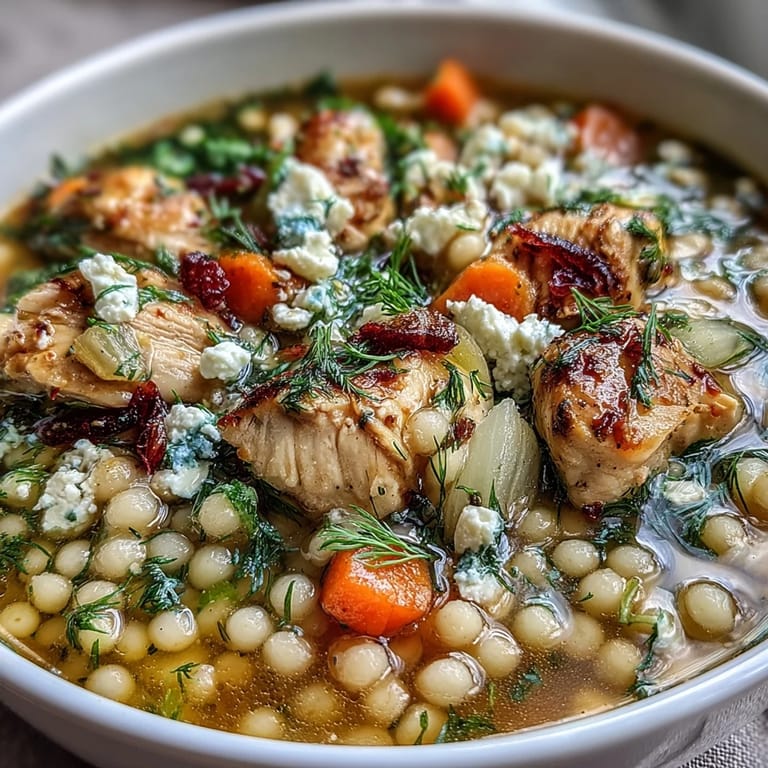
Save This soup has become one of those recipes I make without thinking too hard about it, which is exactly when you know something has become part of your cooking life. It's the kind of dish that reminds you why people gather around tables in the first place.
Recipe FAQ
- → What makes this Greek-style?
The combination of lemon juice and zest, oregano, fresh dill, and feta cheese gives this soup its distinctive Greek character. These bright, Mediterranean flavors are classic elements of Greek cooking.
- → Can I make this ahead of time?
Yes, the flavors actually improve after sitting. However, the pearl couscous will continue absorbing liquid, so you may need to add extra broth when reheating. Store the feta topping separately and add just before serving.
- → What can I substitute for pearl couscous?
Orzo pasta, rice, or small pasta shapes work well. For gluten-free options, use quinoa, rice, or gluten-free couscous. Adjust cooking time accordingly as grains vary.
- → Is this suitable for freezing?
The soup freezes well for up to 3 months. Freeze without the feta topping, and add fresh crumbles when reheating. The couscous may soften slightly but will still be enjoyable.
- → How can I add more vegetables?
Spinach, kale, or zucchini can be added in the last few minutes of cooking. Diced potatoes or chickpeas also work well for extra heartiness without overpowering the Greek flavors.