 Save
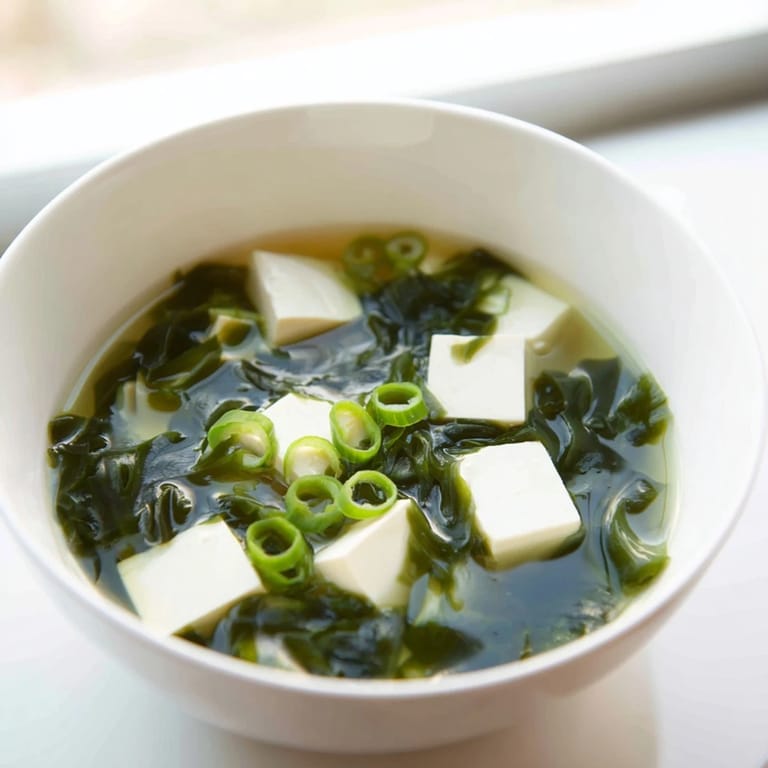
Save The first time I made wakame soup, I'd just come home from a long rainy walk, craving something that felt like a warm embrace without being heavy on my stomach. I'd bought a small packet of dried wakame months earlier and kept pushing it to the back of my pantry, intimidated by its unfamiliar crinkly appearance. That afternoon, watching the seaweed bloom in cold water felt like witnessing a tiny kitchen miracle, and I've kept a stash in my cupboard ever since.
Last winter, my neighbor mentioned she'd been feeling under the weather, so I brought over a container of this gently steaming soup. She called me two days later saying it was exactly what she needed, and now we exchange little jars of seaweed and miso whenever one of us runs low. Something about sharing simple nourishment feels more meaningful than elaborate dinner parties sometimes.
Ingredients
- Dried wakame seaweed: This mineral rich sea vegetable expands dramatically when soaked, so a little goes a long way toward creating that authentic restaurant texture
- Dashi stock: The foundation of Japanese cooking, use a good quality vegetarian dashi made from kombu and shiitake to keep this plant based while still achieving that essential umami depth
- Silken tofu: Firm tofu holds its shape better during simmering, but silken creates those lovely tender bites that practically melt on your tongue
- White miso paste: Milder and slightly sweeter than red miso, it dissolves beautifully and adds that characteristic fermented richness without overpowering delicate ingredients
- Soy sauce: Just enough to enhance the savory notes and give the broth a golden hue, choose tamari if you need to keep it gluten free
- Sesame oil: Completely optional but adds a lovely nutty finish that rounds out all the flavors beautifully
Tired of Takeout? 🥡
Get 10 meals you can make faster than delivery arrives. Seriously.
One email. No spam. Unsubscribe anytime.
Instructions
- Wake up the seaweed:
- Place the dried wakame in a small bowl and cover with cold water, watching it transform from paper thin sheets into tender green fronds as it rehydrates for about five minutes
- Warm the broth:
- Pour your dashi into a medium saucepan and bring it to a gentle simmer over medium heat, letting the aroma fill your kitchen before adding anything else
- Add the heartier ingredients:
- Gently slide in your cubed tofu and drained wakame, letting them swim in the simmering broth for just two or three minutes until everything is heated through
- Dissolve the miso properly:
- Ladle out about half a cup of hot broth into a separate small bowl and whisk in your miso paste until completely smooth, then pour this mixture back into the soup
- Finish with finesse:
- Stir in your soy sauce and sesame oil if using, letting everything warm through for one final minute while being careful not to let the soup reach a rolling boil
- Garnish and serve immediately:
- Ladle into bowls and scatter those bright green scallion slices across the top, adding a pop of color and fresh bite to every steaming spoonful
 Save
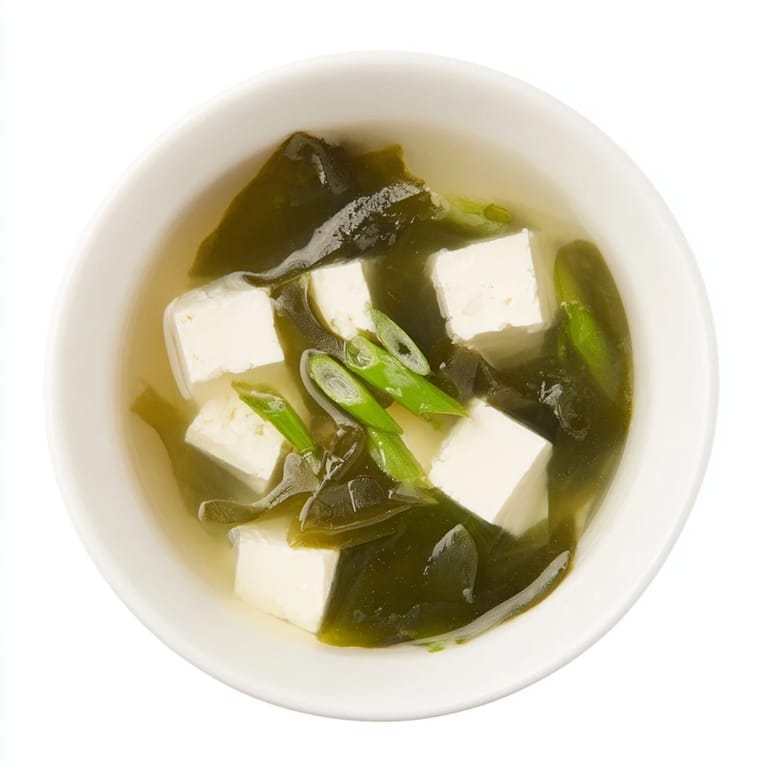
Save My daughter used to call this mermaid soup when she was little, and she'd make up stories about the seaweed fronds being ocean kelp forests while she ate. Now she makes it herself in her first apartment, texting me photos of her garnish arrangements like she's invented something entirely new.
Making It Your Own
Once you've mastered the basic version, don't be afraid to experiment with add ins like sliced mushrooms, baby spinach, or shredded carrot. The beauty of this soup lies in its adaptability to whatever vegetables you have on hand, though I recommend keeping the wakame and miso as your constant anchors.
Broth Fundamentals
Homemade dashi makes a noticeable difference, but don't let that stop you from using good quality instant dashi powder on busy weeknights. The key is tasting your broth before adding miso and soy sauce, since some dashi brands are saltier than others and you want to build balanced flavor gradually.
Perfect Pairings
This soup shines alongside steamed short grain rice and perhaps a simple Japanese style salad dressed with sesame vinaigrette. It also makes a soothing start to a meal featuring tempura or grilled fish, offering that perfect contrast of hot and cold, rich and light.
- Leftovers keep well for two days in the refrigerator, though the tofu will absorb more miso flavor and become even more delicious
- If reheating, do so gently over low heat rather than boiling to preserve the miso's beneficial properties
- The soup will thicken slightly as it sits, so add a splash of water or extra dashi when warming up leftovers
 Save
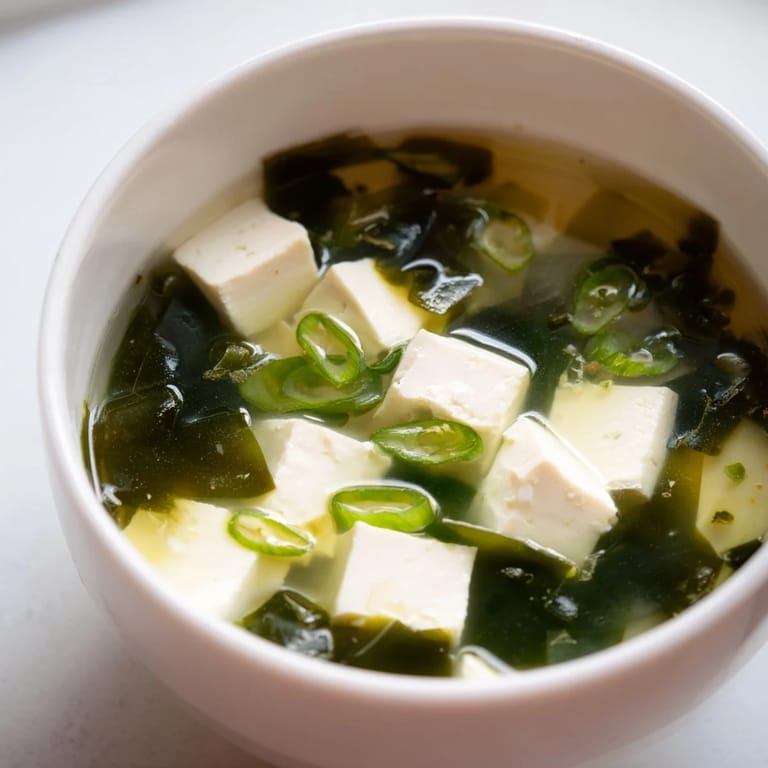
Save There's something profoundly grounding about a bowl of this soup, simple as it is, that reminds me why we bother cooking at all. It's nourishment that feeds something deeper than hunger.
Recipe FAQ
- → What does wakame taste like?
Wakame has a delicate, slightly sweet flavor with subtle oceanic notes. When rehydrated, it becomes tender and adds a pleasant texture to the broth without being overpowering or overly fishy.
- → Can I make this without dashi stock?
Yes, you can substitute dashi with vegetable broth or water, though the authentic umami flavor will be less pronounced. For the best result, use kombu (kelp) to make a simple vegetarian dashi alternative.
- → Why shouldn't I boil the miso paste?
Boiling miso paste destroys its beneficial probiotics and enzymes, and can make the flavor bitter. Always dissolve miso in a small amount of hot broth first, then stir it into the soup after removing from heat.
- → How do I store leftover wakame soup?
Store cooled soup in an airtight container in the refrigerator for up to 2 days. Reheat gently over low heat, adding a splash of water if the broth becomes too concentrated. The wakame will continue to soften.
- → What vegetables can I add to this soup?
Sliced mushrooms, spinach, bok choy, carrots, or daikon radish make excellent additions. Add heartier vegetables like carrots during the simmering stage, while delicate greens like spinach should be added in the last minute.
- → Is this soup suitable for meal prep?
This soup is best enjoyed fresh but can be prepared ahead. Store the broth and vegetables separately, then combine and reheat when ready to serve. The tofu may become softer after refrigeration but remains delicious.