 Save
Save My first encounter with knafeh happened on a sweltering afternoon in Beirut, watching my neighbor pull a golden, crispy disk from her oven and immediately drown it in cool honey syrup that made the cheese inside sing. The contrast was almost shocking—the way the heat made those stringy cheese strands stretch with each bite, the crackle of the phyllo giving way to something impossibly soft and warm. I stood in her kitchen for the next three hours, notebook in hand, asking questions she answered between checking on her guests and refilling tiny coffee cups. That dessert became my obsession, and I've been chasing that same magic ever since.
I made this for my sister's birthday party on a whim, not fully confident I'd pulled off the technique correctly, and watched her friends go completely silent after their first bites—the kind of silence that only happens when food hits different. My sister caught my eye across the table with this knowing smile, and I realized that moment, more than any cooking show or restaurant visit, was when I truly understood what food could do.
Ingredients
- Akawi cheese: The soul of this dessert, but it requires patience to soak and desalt properly—I learned this the hard way after one inedibly salty first attempt.
- Ricotta cheese: This creamy counterpart keeps everything tender and prevents the filling from becoming rubbery.
- Kataifi pastry: Those delicate shredded strands are what give knafeh its signature crunch, and thawing them slowly at room temperature prevents breakage.
- Unsalted butter: Each strand needs to be coated evenly, so warm butter works better than cold, and brushing rather than pouring gives you more control.
- Sugar and water: The foundation of the syrup, balanced with lemon juice to keep it from cloying.
- Orange blossom and rose water: These aromatics are what make knafeh unmistakably Middle Eastern—a few drops too many will overpower, so add cautiously.
- Pistachios: The final flourish that adds color, texture, and a subtle nutty note that nobody expects but everyone adores.
Tired of Takeout? 🥡
Get 10 meals you can make faster than delivery arrives. Seriously.
One email. No spam. Unsubscribe anytime.
Instructions
- Prepare your workspace and preheat:
- Get your oven going to 180°C and make sure your baking dish is within arm's reach—you'll want everything ready because knafeh moves fast once it's assembled.
- Desalt the cheese with patience:
- Soak the Akawi in cold water for several hours or overnight, changing the water every hour until it tastes only slightly salty. This step is non-negotiable if you want a dessert and not a salt brick.
- Mix the filling:
- Combine your drained Akawi with ricotta in a bowl until you have a loose, spreadable mixture that holds together loosely but never compactly.
- Butter every strand:
- Gently tease apart the kataifi strands in a large bowl—they want to stay together, but coaxing them apart gently prevents clumping. Pour warm melted butter over them slowly, mixing constantly until each strand gleams with butter.
- Build the base:
- Spread half your buttered kataifi into the greased baking dish, pressing it down into an even layer that will eventually become the crispy bottom everyone fights over.
- Add the treasure:
- Spread the cheese mixture evenly over your kataifi base, leaving about a finger's width from the edges so everything stays contained.
- Top it off:
- Layer the remaining buttered kataifi over the cheese, pressing gently so the whole thing holds together but doesn't compress into a dense cake.
- Bake until golden:
- Slide it into the oven for 30 to 35 minutes, watching for the moment when the top turns a deep golden brown and you can hear it crackling slightly when you shake the pan.
- Make the syrup while it bakes:
- In a saucepan, combine sugar, water, and lemon juice, bring to a boil, then simmer gently for 8 to 10 minutes until it coats the back of a spoon. Remove from heat, stir in the orange blossom and rose water slowly, then let it cool completely—this is crucial because hot syrup on cold knafeh can cause it to split.
- The dramatic finale:
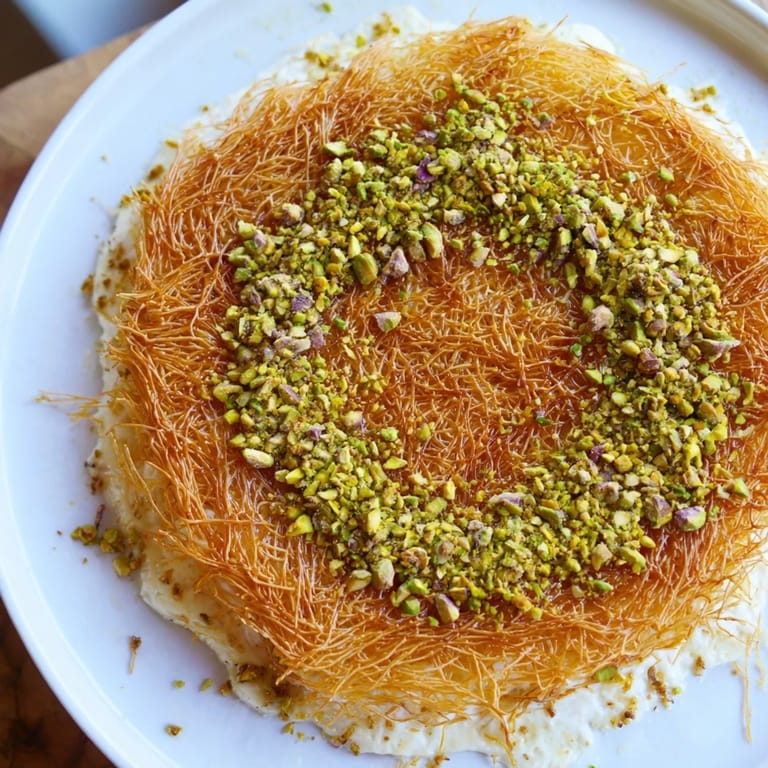
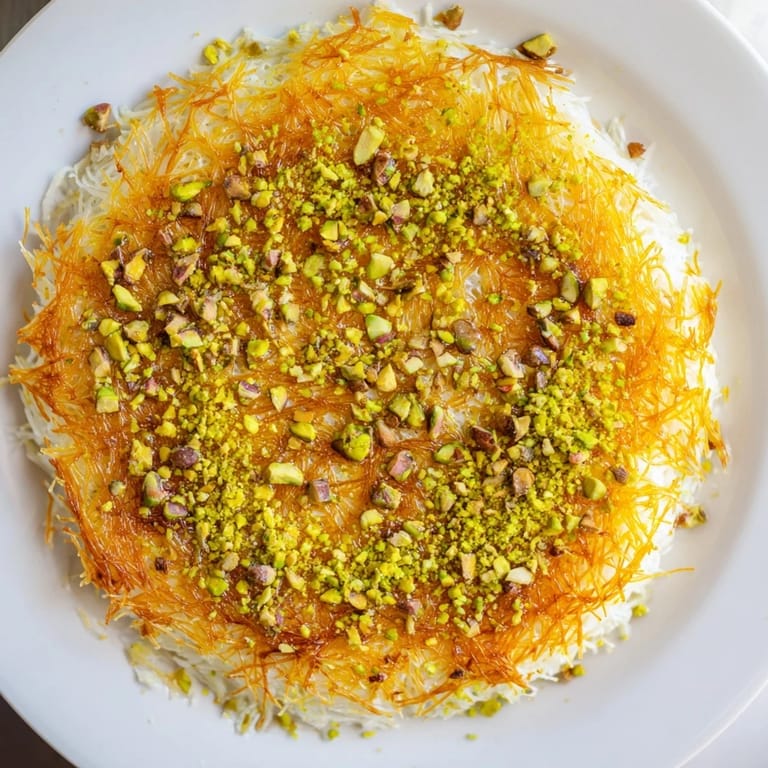
- Remove the hot knafeh from the oven and immediately invert it onto a serving platter in one confident motion—the golden phyllo side is now facing up. Pour half the cooled syrup over the hot knafeh and watch it soak in immediately.
- Garnish and serve:
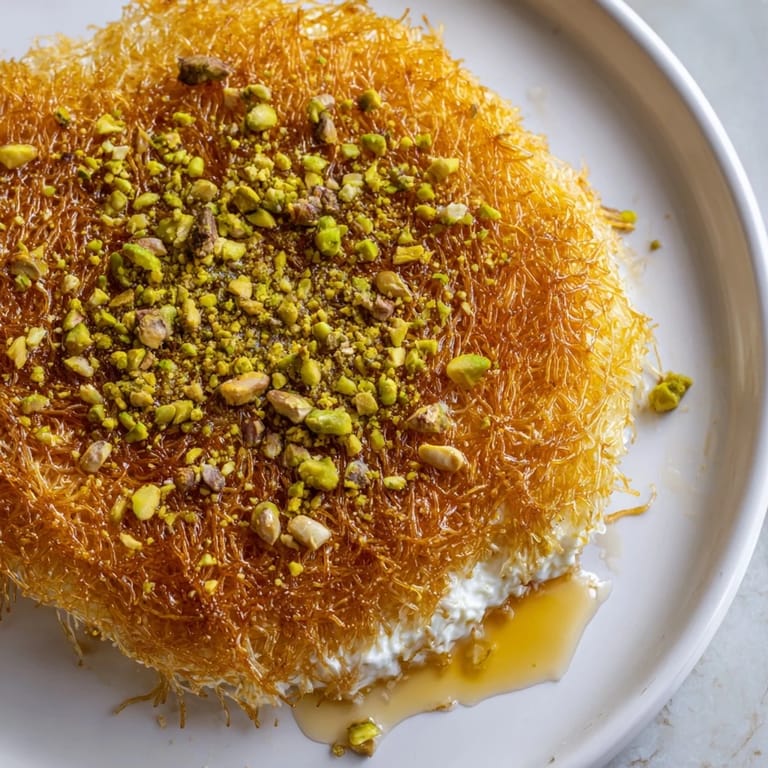
- Scatter chopped pistachios across the top, drizzle with honey if you like, and bring it to the table while the contrast between warm cake and cool syrup is still at its peak.
 Save
Save There's a moment right after you invert the knafeh and see all that golden crispness revealed that you feel a small victory rush, especially if you've never made it before. That's the exact moment my confidence returned after that one salty failure, and it's been riding high ever since.
Why This Dessert Matters
Knafeh isn't just a dessert in the Levantine tradition—it's a celebration dessert, one that appears at weddings, holidays, and moments worth marking. Learning to make it well is learning to communicate something beyond words, a way of saying 'I took time for this, for you.' It's also one of those recipes that intimidates people until they try it, and then they wonder why they ever doubted themselves.
Timing and Make-Ahead Magic
One of the best-kept secrets about knafeh is that you can assemble it hours ahead and bake it just before serving, which means you can focus on your guests instead of being tied to the oven. The cheese filling also benefits from sitting for a few hours in the fridge—it firms up slightly and layers more evenly. If you're serving a crowd, this flexibility is absolutely priceless.
Serving Suggestions and Flavor Pairing
Knafeh is best served warm, still steaming when it hits the plate, with extra syrup on the side for those who want to drench theirs further. A small cup of strong Turkish coffee or a glass of ice-cold mint tea alongside is the traditional pairing, and these aren't suggestions—they're essential counterweights that balance the sweetness and richness perfectly.
- Don't skip the honey drizzle if you have quality honey on hand, as it adds another layer of complexity that takes this from good to memorable.
- For extra crunch, broil the finished knafeh for just 1 to 2 minutes after baking, watching closely to prevent burning the phyllo.
- Leftover knafeh can be gently reheated in a low oven, but serve it the same day for the best contrast between textures.
 Save
Save This dessert has a way of surprising people the first time they bite into it, and that moment of recognition—when they taste something they've never quite encountered before—is addictive. Once you master the technique, you'll find yourself making it more often than you'd expect.
Recipe FAQ
- → What cheese types work best for this dish?
Traditional Akawi cheese offers authentic flavor, but unsalted mozzarella combined with ricotta provides a similar stretchy and creamy texture.
- → How should the kataifi pastry be prepared?
Thaw the kataifi dough and gently separate its strands before soaking them in melted butter to ensure an even, golden crisp when baked.
- → What is the purpose of the syrup?
The syrup, infused with orange blossom and rose waters, adds sweetness and fragrant floral notes, soaking into the pastry once baked.
- → Can I make the syrup ahead of time?
Yes, prepare the syrup in advance and let it cool. Pour it over the hot pastry immediately after baking for optimal absorption.
- → How to achieve a crispier top layer?
After baking, broiling the dish for a minute or two enhances the crispness of the kataifi strands without overcooking the cheese filling.
- → What garnishes complement the dish?
Chopped pistachios add crunch and color, while a light drizzle of honey enhances sweetness and visual appeal.