 Save
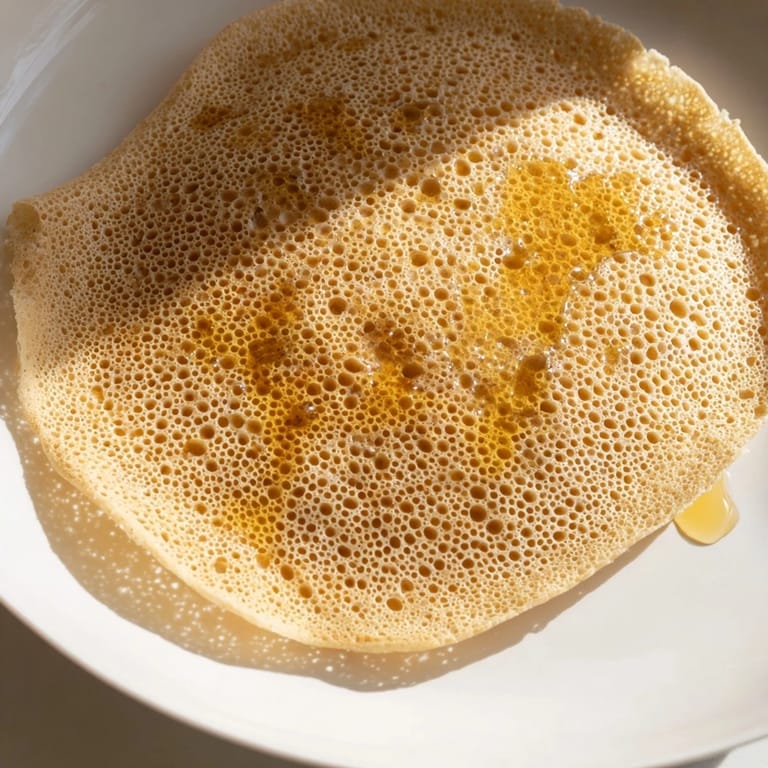
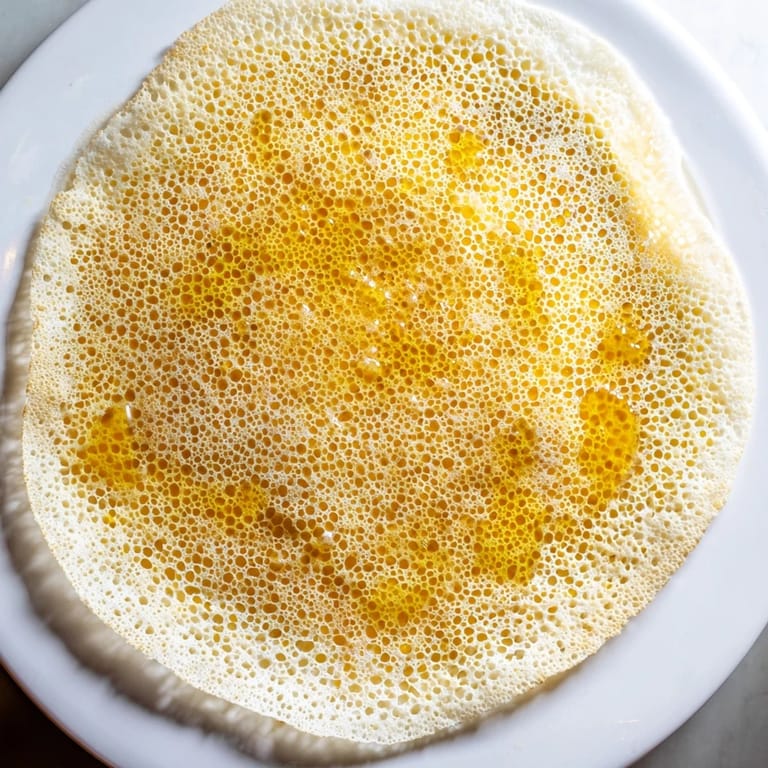
Save My first baghrir arrived on a small ceramic plate at a Marrakech café, steam rising from its golden surface like something alive. The moment I bit into it, I understood why these spongy pancakes have been waking up North African families for generations—that honeycomb texture, those delicate holes catching the warm butter and honey, made something so simple feel like an occasion. Now, making them at home, I'm struck by how a bit of yeast and patience transform basic ingredients into something almost too beautiful to eat.
I made these for a friend who'd never had Moroccan food before, and watching her face when she took that first bite—that slight pause, then a genuine smile—reminded me that the best recipes are the ones that surprise people in the best way. She came back the next morning specifically asking if we could make them again, which tells you everything about how memorable these are.
Ingredients
- Fine semolina: This is what creates those characteristic honeycomb holes—don't substitute with regular semolina or the texture won't develop properly.
- All-purpose flour: Provides structure while the semolina brings texture, and using both together is the traditional balance.
- Warm water: The temperature matters more than you'd think; too hot kills the yeast, too cold and nothing happens.
- Active dry yeast: This gentle rising agent is key—it creates those tiny air pockets without making the crepes heavy or bread-like.
- Baking powder: Works alongside yeast to ensure the holes form evenly across the whole surface.
- Granulated sugar: Feeds the yeast and adds a whisper of sweetness that enhances without overwhelming.
- Salt: A small amount awakens all the other flavors and keeps things balanced.
- Unsalted butter: Warm and melted, it pools into those holes like liquid gold.
- Honey: The finishing touch—use something you actually enjoy eating, because it's front and center here.
Tired of Takeout? 🥡
Get 10 meals you can make faster than delivery arrives. Seriously.
One email. No spam. Unsubscribe anytime.
Instructions
- Build your batter base:
- Whisk the dry ingredients together in a large bowl, making sure the yeast and baking powder are evenly distributed so you don't end up with random holes or flat spots. This takes maybe a minute but saves you from disappointment later.
- Bring it together:
- Slowly pour in the warm water while whisking constantly to avoid lumps—think of it as coaxing the batter into existence rather than forcing it. The final mixture should be smooth and pourable, about the consistency of thin pancake batter.
- Let patience work:
- Cover the bowl loosely and let it sit at room temperature for 30 minutes; you'll see small bubbles forming on the surface, which is exactly what you want. This resting period is when the yeast wakes up and starts creating those holes.
- Heat your pan:
- Place a nonstick skillet or crepe pan over medium heat without adding any oil or butter—the batter naturally releases from the surface once those holes form. Give it a minute to warm evenly so the first crepe doesn't cook unevenly.
- Pour and trust:
- Using a ladle or measuring cup, pour about ¼ cup of batter into the center of the pan, then give it a gentle swirl to spread it thin. Don't overthink the shape; rustic is beautiful here.
- Watch the magic:
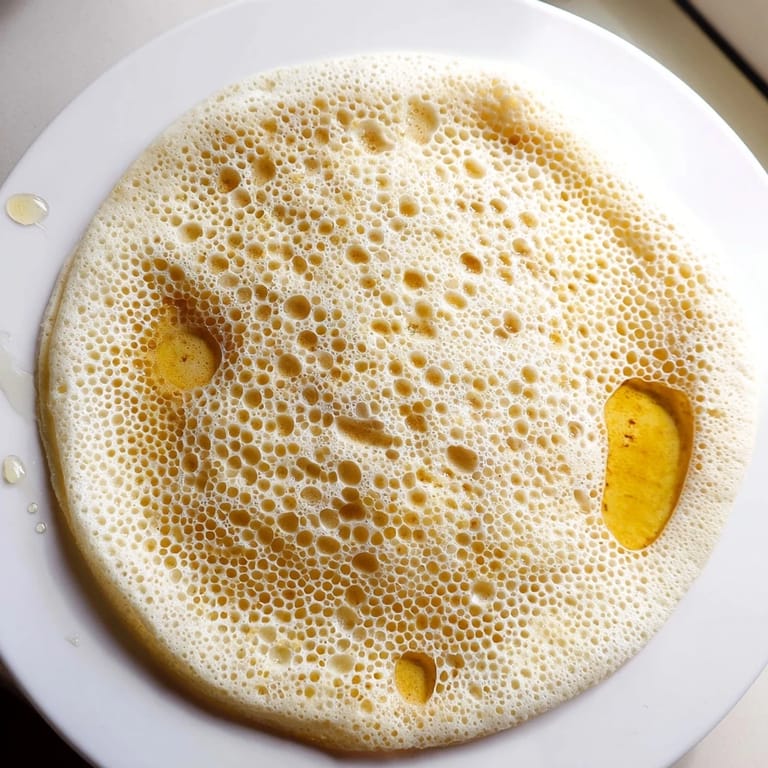
- You're looking for the surface to completely dry and fill with tiny holes, which takes about 2 to 3 minutes depending on your heat. When the bottom is set and golden, slide it onto a plate—no flip needed.
- Keep the rhythm:
- Stir the batter occasionally between each crepe to keep the ingredients evenly distributed, and stack the finished ones on a warm plate. They stay soft and pliable while warm, which is essential for that perfect texture.
- Finish with warmth:
- In a small saucepan, gently melt butter with honey together over low heat, stirring to combine. Drizzle this generously over your warm baghrir just before serving, letting it soak into every hole.
 Save
Save There's a quiet morning peace to standing over a warm pan, watching each baghrir transform from a thin puddle into a sky full of tiny holes, knowing that in moments it will be ready to catch warm honey. It's the kind of cooking where patience isn't a chore but a meditation.
The Secret of the Honeycomb
Those holes aren't accidental—they're the entire point, and they happen because of the gentle rise from yeast meeting the quick heat of the pan. The yeast creates gas bubbles during the resting period, and when the batter hits the hot surface, those bubbles expand and burst through the top, leaving behind that signature texture that makes baghrir unmistakable. Understanding this means you stop worrying about whether you're doing it right and start marveling at the simple chemistry happening in your pan.
Timing and Temperature Matter
Medium heat is crucial here—too hot and the bottom burns before the top dries, too cool and you'll get a rubbery crepe instead of that delicate sponge. The warm water for the batter should feel like a comfortable bath, not scalding; if it's too hot, you'll kill the yeast and end up with a flat, dense pancake. These small details might seem picky, but they're actually what separate a forgettable baghrir from one that makes you want to linger over breakfast.
Serving and Storage Wisdom
Baghrir is absolutely best eaten warm and fresh, when those holes are still set but the crepe itself is tender and receptive to every drop of honey and butter. If you make them ahead, you can gently rewarm them in a low oven or even a dry skillet, though they're never quite the same as fresh—so embrace the ritual of making them to order if you can.
- Toast some almonds or pistachios and sprinkle them over the honey-butter for a textural surprise that feels fancier than it is.
- A squeeze of fresh lemon juice over the honey brings a brightness that keeps these from feeling too heavy first thing in the morning.
- Make the honey-butter mixture while the last batch cooks so everything comes together warm and ready to serve.
 Save
Save There's something deeply satisfying about mastering a recipe that looks complicated but is genuinely simple once you understand the why behind each step. Baghrir has a way of turning an ordinary breakfast into something worth slowing down for.
Recipe FAQ
- → What gives Baghrir its honeycomb texture?
The texture comes from the batter resting period allowing yeast to create bubbles which form characteristic holes during cooking.
- → Can I use all-purpose flour only?
Using a mix of semolina and flour works best for authentic texture, but all-purpose flour alone can make softer crepes.
- → How do I know when to remove the crepe from the pan?
Cook until the surface is dry and covered with holes; flipping is not necessary for even cooking.
- → Can Baghrir be stored and reheated?
Yes, they keep fresh longer if stored in an airtight container and can be gently reheated before serving.
- → What is the best way to serve Baghrir?
Serve warm with melted butter and honey drizzled on top, optionally garnished with chopped nuts.