 Save
Save The first time I folded msemen, my hands were shaking slightly because I was terrified of tearing the dough thin enough to read through. My Moroccan neighbor had casually mentioned that the pastry should be almost translucent, and I remember standing in my kitchen thinking that sounded impossible. But then something clicked as I worked the oiled dough, coaxing it wider and thinner with gentle pressure from my fingertips, and suddenly I understood why she'd made it look so effortless. That warm honey drizzled over the golden, flaky result made me realize I'd unlocked something special.
I made these for friends one Sunday morning, and the sound of their forks crackling through the crust was worth every careful fold. Someone said it tasted like what her grandmother made in Marrakech, and I felt this small rush of joy knowing I'd somehow captured that memory for her through butter and semolina. That's when food stopped being just about feeding people and started being about connection.
Ingredients
- All-purpose flour: The foundation of your dough, providing structure and elasticity so it stretches paper-thin without breaking.
- Fine semolina: This is what gives msemen its distinctive slightly grainy texture and helps prevent stickiness during folding and frying.
- Warm water: Temperature matters more than you'd think because it activates the yeast and makes the dough supple enough to stretch.
- Instant yeast: Optional but worth using if you prefer a lighter, airier crumb with visible layers when bitten.
- Vegetable oil: Use it generously for greasing your hands and work surface so the dough stays manageable and doesn't stick.
- Unsalted butter: Brush it between every fold to create those distinct flaky layers that make msemen worth making.
- Honey: Warm it gently before serving so it soaks into the pastry without making it soggy, adding sweetness and richness.
Tired of Takeout? 🥡
Get 10 meals you can make faster than delivery arrives. Seriously.
One email. No spam. Unsubscribe anytime.
Instructions
- Build Your Dough:
- Mix your flour, semolina, sugar, salt, and yeast in a large bowl, then gradually add warm water while stirring until everything comes together into a soft, shaggy mass. Knead for about 10 minutes until the dough becomes smooth and elastic, then let it rest covered for 15 minutes to relax the gluten.
- Divide and Oil Up:
- Cut the dough into 8 equal pieces and roll each into a smooth ball, then generously oil your hands and work surface because this is where the magic happens. The oil prevents sticking and lets you handle the delicate dough without tearing it.
- Stretch into Gossamer:
- Take one dough ball and gently flatten it with your oiled palms, working from the center outward until it's so thin you can almost see light through it. Brush the entire surface with melted butter, sprinkle with a light dusting of semolina, then fold all four sides toward the center to create a square, brushing and sprinkling with each fold.
- Let It Relax:
- Stack your finished squares on an oiled plate and let them rest for 5 minutes while you heat your skillet. This brief pause lets the dough set slightly so it holds together beautifully when you fry it.
- Flatten and Fry:
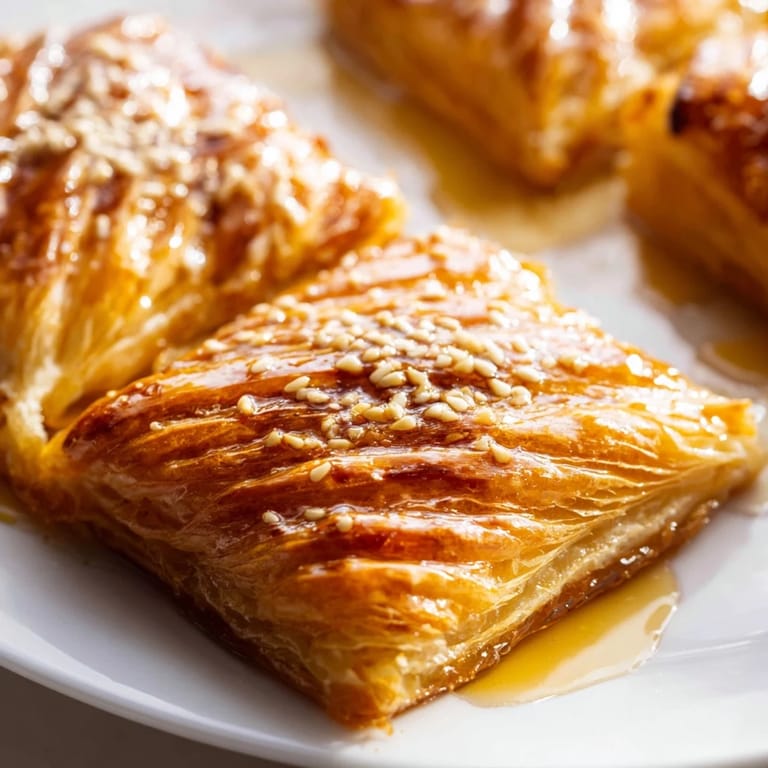
- Heat a non-stick skillet over medium heat with a light brush of oil, then gently press each square to about 1/4-inch thickness. Fry for 2 to 3 minutes per side until the exterior is golden brown and shatteringly crisp, adding more oil if needed to keep it glossy.
- Finish with Honey:
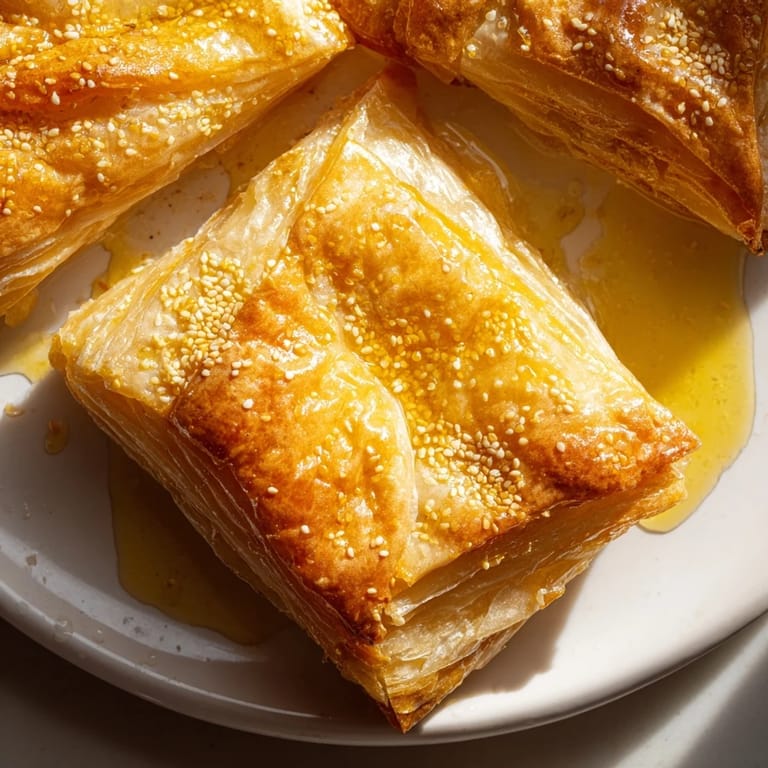
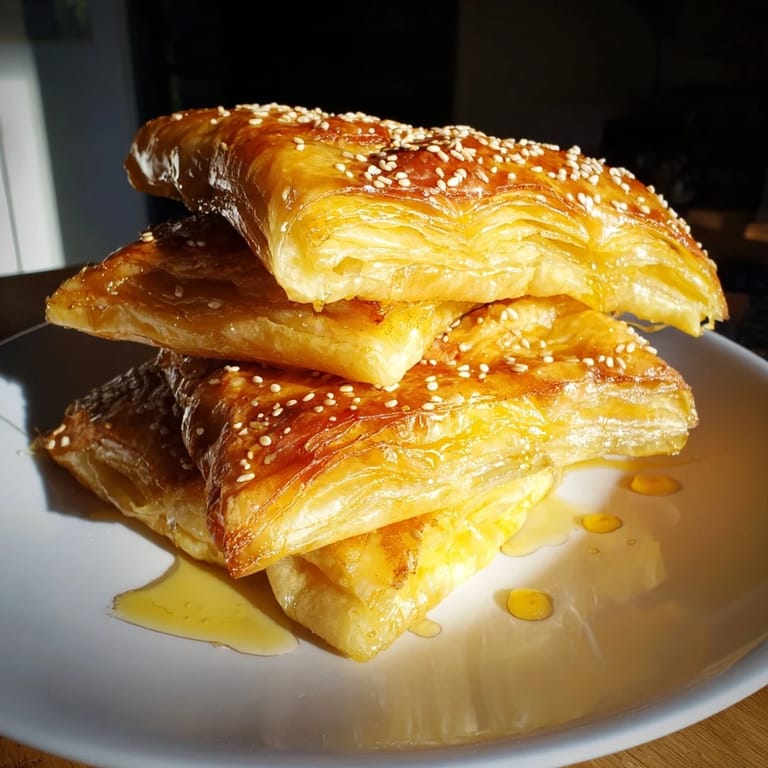
- Transfer each finished msemen to a plate and immediately drizzle with warm honey while the pastry is still hot so it soaks in slightly without making it soggy. Serve right away and listen for the satisfying crack as everyone breaks into their first bite.
 Save
Save I ruined my first batch by getting impatient and trying to fry them at too high a temperature, watching helplessly as the outside turned dark while the inside stayed doughy. The second attempt taught me that medium heat is your friend, and that sometimes the slower path gives you better results. Now I can't imagine making these any other way.
The Secret of Those Perfect Layers
Most people think msemen are complicated because of the layering, but really it's just butter and patience applied repeatedly. Each fold brushed with melted butter creates a barrier that separates one layer from the next, and when the pastry fries, those buttered seams steam and puff up to create the flaky texture that makes these so addictive. The semolina dusted between layers does two things: it absorbs any excess moisture so the layers don't stick together, and it adds that subtle nutty flavor that rounds out the honey.
Timing and Temperature
There's a sweet spot between rushing and overthinking this recipe, and it lives somewhere around medium heat and 2-3 minutes per side. I used to fret about whether they were done, flipping constantly and checking the color obsessively, until I realized that setting a mental timer and trusting the process actually works better. Now I know that when one edge starts turning golden, it's time to flip, and that's all the certainty I need.
Beyond Basic Honey
Honey is the classic pairing, but I've learned that msemen are truly a blank canvas for whatever your morning calls for. Amlou, that creamy almond-honey paste, transforms them into something almost indulgent, while a spoonful of orange blossom jam adds brightness and floral notes that feel special without being complicated. A simple cinnamon-sugar dusting before frying creates a pastry that's part Moroccan, part American coffee shop, and entirely your own.
- Try warming your honey with a pinch of cinnamon and a squeeze of lemon juice for depth that tastes like you planned it all along.
- Make amlou by blending toasted almonds with honey and a bit of argan oil if you want to serve something that feels truly special.
- Dust cinnamon and sugar on top right before frying if you want to skip the post-fry drizzling altogether.
 Save
Save There's something about a food that transforms through your own hands, that goes from simple ingredients to something that cracks and flakes and soaks up honey, that makes you want to make it again and again. These pastries aren't just breakfast; they're proof that patient, repetitive work creates something worth celebrating.
Recipe FAQ
- → What gives Msemen its flaky texture?
The layering technique involving butter and semolina between folded dough sheets creates the signature flaky texture when pan-fried.
- → Can I use regular flour instead of semolina?
Semolina adds a distinctive graininess and crispness, but substituting with all-purpose flour may affect texture slightly.
- → How do I prevent Msemen from sticking to the pan?
Lightly brushing the skillet with oil and using a non-stick pan helps prevent sticking during cooking.
- → Is it possible to make Msemen ahead of time?
Yes, Msemen squares can be prepared in advance and reheated on a skillet or toaster before serving.
- → What are some popular accompaniments for Msemen?
Warm honey is classic, while almond-honey spreads or fresh jams add extra flavor contrasts.