 Save
Save My first baklava came from a neighborhood bakery where the owner, Mrs. Yilmaz, would hand them to us in paper cones still warm from the oven. Years later, I attempted to recreate that magic at home and discovered that baklava isn't about perfection—it's about patience and the simple alchemy of butter-soaked phyllo meeting warm honey. That first attempt was slightly uneven, the layers occasionally torn, but when I poured the honey syrup over the hot pastry and heard it sizzle, I knew I'd unlocked something special.
I made this for my book club once, nervous that homemade baklava would seem too ambitious. Instead, everyone went quiet mid-conversation, forks pausing, eyes closing slightly with each bite. One friend asked for the recipe right then, mid-gathering, and I watched her taste that combination of honey and cinnamon and understand why this dessert has survived centuries.
Ingredients
- Walnuts, pistachios, and almonds: Use the finest quality you can find and chop them yourself—pre-ground nuts lose their aromatics and turn slightly bitter when baked.
- Granulated sugar: This is your baseline sweetness that lets the nuts shine without overpowering them.
- Ground cinnamon: The warmth here is essential; don't skip it or substitute with other spices.
- Phyllo dough: Thaw it completely and work with it cold, keeping unused sheets covered—this prevents the frustrating tearing that happens with dry dough.
- Unsalted butter, melted: This is your binding agent and the reason every layer becomes golden and crisp; brush it generously but not wastefully.
- Honey: Use real honey, preferably something floral like acacia or clover, as it changes the entire flavor profile.
- Water and sugar for syrup: These create the base that allows the honey to coat every layer without becoming cloyingly thick.
- Lemon juice and zest: The subtle brightness prevents the dish from feeling one-note and adds complexity.
- Cinnamon stick: This infuses the syrup with deeper spice notes than ground cinnamon alone.
Tired of Takeout? 🥡
Get 10 meals you can make faster than delivery arrives. Seriously.
One email. No spam. Unsubscribe anytime.
Instructions
- Prepare your workspace:
- Preheat your oven and grease the baking dish thoroughly, paying special attention to corners where phyllo tends to stick and burn. Have all your ingredients measured and within arm's reach—phyllo dough waits for no one.
- Make the nut mixture:
- Combine your chopped nuts with sugar and cinnamon in a bowl, stirring until everything is evenly coated and fragrant. This mixture is your treasure; it's what transforms plain phyllo into something memorable.
- Protect and unroll:
- Unroll your phyllo sheets carefully and immediately cover them with a slightly damp kitchen towel—this single step prevents the frustration of crumbly, unusable dough. Work quickly but calmly; rushing causes tears.
- Layer your first base:
- Place a phyllo sheet in your prepared dish and brush it lightly with melted butter using gentle, even strokes. Repeat this process seven more times, creating a sturdy foundation that will support everything above it.
- First nut layer:
- Scatter about one-third of your nut mixture across the phyllo, spreading it so every corner gets some—uneven distribution means some bites will be all phyllo, others all nuts. Neither is ideal.
- Build the middle:
- Layer five more phyllo sheets, buttering each one, then scatter another third of the nuts. You're creating a structure that will give you distinct layers when cut, rather than a mushy middle.
- Final assembly:
- Add five more phyllo sheets with butter, top with the remaining nuts, then finish with eight to ten phyllo sheets, each brushed with butter as you go. This final cap creates that shattering texture everyone loves.
- Score and prepare for baking:
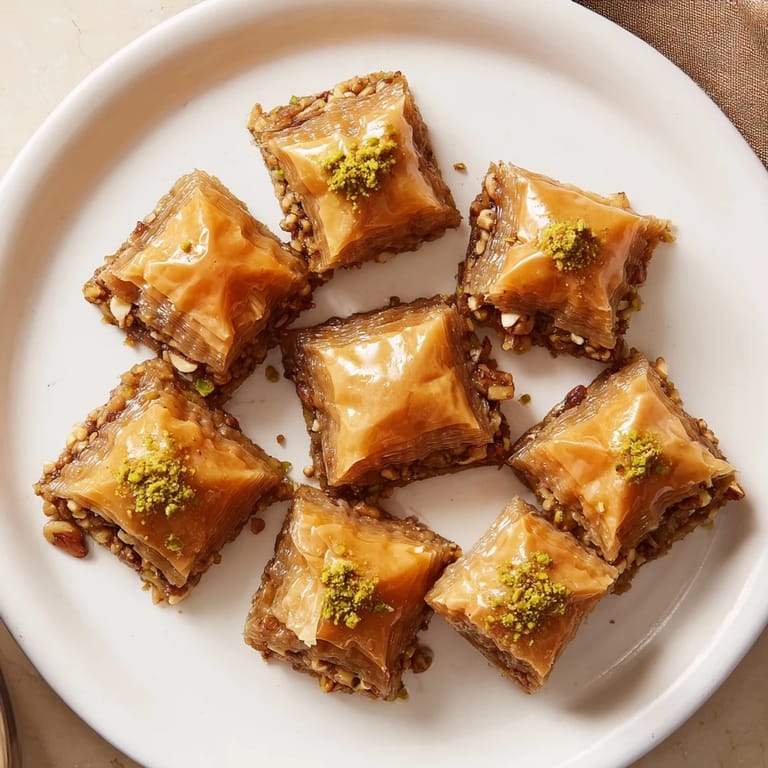
- Using a very sharp knife, cut your baklava into diamonds or squares before baking—trying to cut baked baklava creates shattering and mess. Cut all the way to the bottom of the dish in one smooth motion per cut.
- Bake until golden:
- Place in your preheated oven and bake for 45 minutes, watching for that deep golden color that signals the butter has done its work and the pastry is truly crisp. The kitchen will smell so good you'll be tempted to open the oven every five minutes.
- Prepare the syrup:
- While your baklava bakes, combine honey, water, sugar, lemon juice, zest, and a cinnamon stick in a saucepan. Bring to a boil, then reduce to a gentle simmer for about 10 minutes—you want the sugar fully dissolved and the flavors mingled.
- The crucial moment:
- The instant you remove baklava from the oven, pour the warm syrup slowly and evenly over the hot pastry. This is when the magic happens—the hot phyllo absorbs the syrup, and the contrast of temperatures sets the texture perfectly.
- Let it rest:
- Allow everything to cool completely undisturbed, at least four hours, preferably overnight. Patience here transforms good baklava into transcendent baklava.
 Save
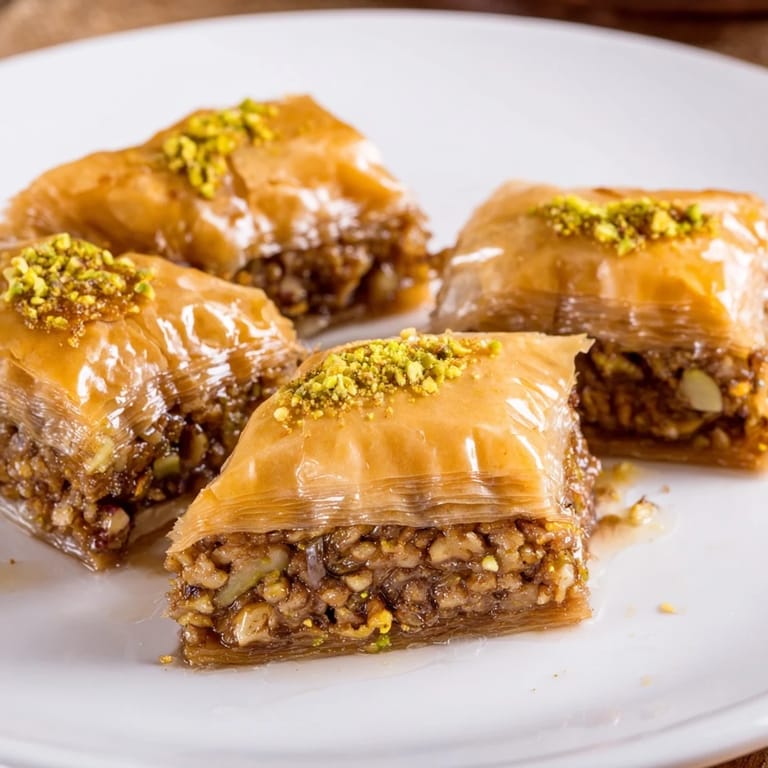
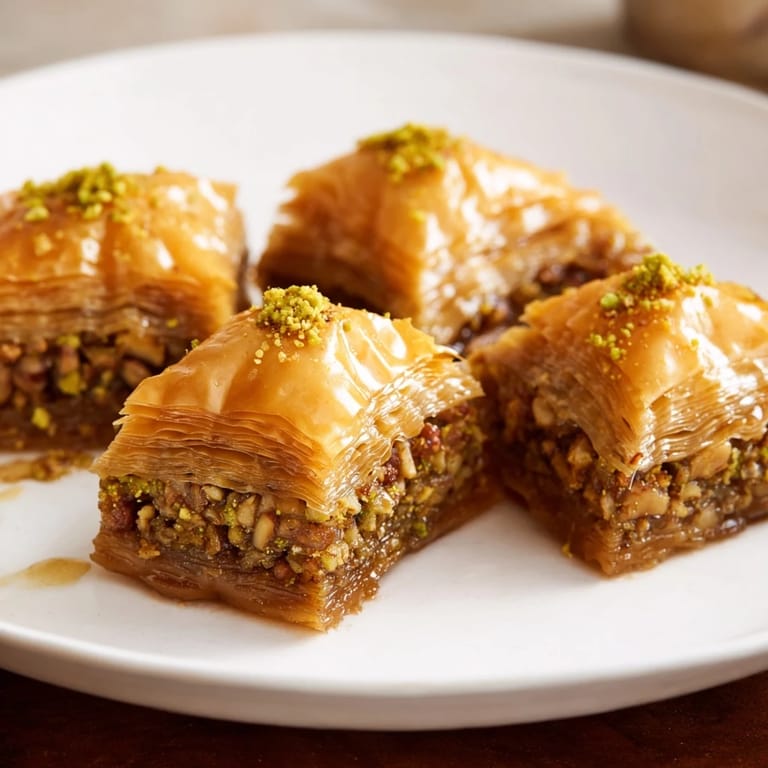
Save There's a moment, maybe on day two or three, when you reach for another piece and realize the baklava has somehow become even better than it was fresh. The flavors have deepened, the honey has completely saturated everything, and you understand why this dessert is offered at special occasions and why people guard their family recipes like secrets.
Why This Dessert Stands the Test of Time
Baklava survives because it solves multiple cravings simultaneously—the textural contrast of shattering phyllo against soft nuts, the warmth of cinnamon against floral honey, the richness of butter balanced by lemon brightness. It's not overly complicated once you understand the structure, yet it feels luxurious to serve. This is why Ottoman courts favored it, and why it still appears at celebrations today.
Storage and Serving Wisdom
Keep your finished baklava covered loosely at room temperature—the phyllo will stay crisp and the honey will continue to mellow. It actually improves over a few days as flavors marry and integrate. Pair each piece with strong Turkish coffee or black tea; the bitterness of the coffee against the sweet pastry creates a balance that no dessert wine can quite achieve.
Variations Worth Exploring
Once you've mastered the classic, consider playing with proportions or aromatics. Some bakers swap a portion of honey for orange blossom water, creating a lighter, more floral version. Others add rose water or cardamom to the nut filling, pushing the dessert toward Persian territory. The structure remains the same; only the personality changes.
- For a lighter version, reduce honey slightly and add a tablespoon of orange blossom water to the syrup.
- Toast your nuts briefly before chopping to deepen their flavor and add subtle complexity.
- If phyllo tears during assembly, simply overlap the torn edges with the next sheet and butter over the seam—it will fuse and no one will know.
 Save
Save Making baklava is an act of small rebellions against modern convenience, and it's worth every minute. When someone bites into a piece you've made, they're tasting centuries of tradition wrapped in butter and patience.
Recipe FAQ
- → How do I keep the phyllo from drying out during preparation?
Keep unrolled phyllo covered with a damp towel to maintain moisture and prevent it from becoming brittle.
- → What nuts are best for the filling?
A mixture of finely chopped walnuts, pistachios, and almonds creates a rich, textured filling that complements the sweet syrup.
- → How is the honey syrup flavored?
The syrup is infused with lemon juice, lemon zest, and a cinnamon stick, providing a warm, aromatic finish.
- → When should the syrup be poured over the pastry?
Pour the warm syrup slowly over the hot, freshly baked pastries to allow full absorption and maintain crispness.
- → How long should it rest before serving?
Let it cool completely and rest for at least 4 hours to allow the syrup to soak in and the flavors to meld.