 Save
Save My friend Sarah called one winter evening asking if I wanted to host a hot pot dinner, and honestly, I'd never done it before. She showed up with bags of fresh vegetables and proteins, set up a little burner at my dining table, and suddenly my living room transformed into this warm, interactive gathering space where everyone became their own chef. That night taught me that hot pot isn't just about the food—it's about slowing down together, cooking in real time, and letting conversation flow naturally between bites.
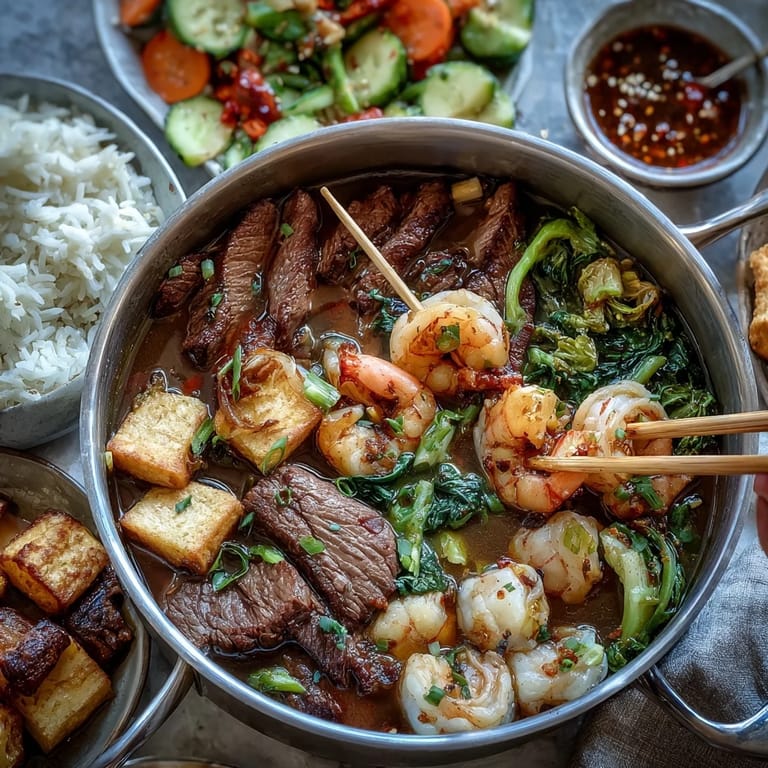
Last summer, I made this for my partner's birthday with a mix of seafood and vegetables, and watching them discover that perfectly cooked shrimp floating in the broth was like witnessing pure joy unfold in slow motion. The whole meal lasted nearly two hours, and nobody wanted it to end—we just kept adding more noodles, trying different sauce combinations, and laughing about whose cooking style was the messiest.
Ingredients
- Chicken or vegetable broth (2.5 liters): This is your foundation, so use quality broth that tastes good on its own because the aromatics will only enhance it, not mask it.
- Garlic and ginger (2 cloves and 5 cm piece): Slicing rather than mincing lets you remove them later, keeping the broth clear while still capturing all that warm, spicy depth.
- Soy sauce, rice vinegar, and sesame oil (1 tablespoon each plus 2 tablespoons soy): These three create the savory backbone that makes people ask what your secret ingredient is.
- Dried shiitake mushrooms (2): They're umami powerhouses that make the broth taste like it's been simmering for hours, even if you're short on time.
- Fresh chili (1 small, sliced optional): Leave the seeds in if you want real heat, or remove them for a gentler warmth that still registers on the palate.
- Thinly sliced beef, chicken, pork, or tofu (300 g): Ask your butcher to slice it paper-thin because that's where the magic happens—it cooks in seconds and stays tender.
- Shrimp and firm tofu (200 g each): These two handle the heat beautifully and appeal to everyone, making them reliable additions even when you're unsure about other proteins.
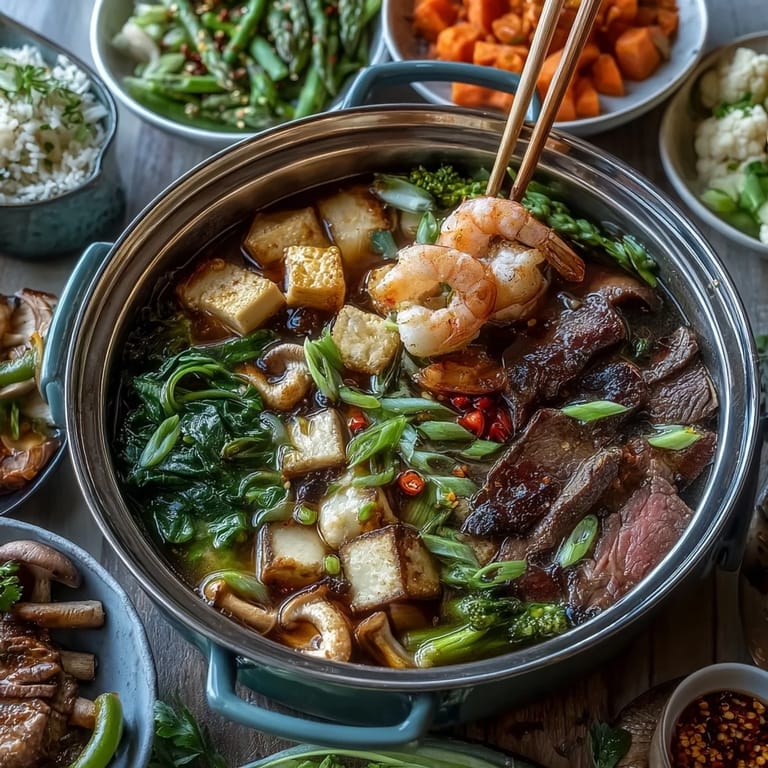
- Napa cabbage, bok choy, mushrooms, carrot, snow peas, corn, and scallions: Mix textures intentionally—soft vegetables cook faster, so arrange them by cooking time on your platter so diners know what pairs well.
- Rice noodles or glass noodles (200 g): Soak them just enough so they're pliable but still slightly firm, because they'll soften more in the broth and you don't want mushy noodles by the end.
- Soy sauce, chili oil, hoisin sauce, cilantro, sesame seeds, and lime wedges: These aren't afterthoughts—they're the creative part where each person makes the dish their own.
Tired of Takeout? 🥡
Get 10 meals you can make faster than delivery arrives. Seriously.
One email. No spam. Unsubscribe anytime.
Instructions
- Build your broth foundation:
- Combine broth, sliced garlic, ginger, soy sauce, rice vinegar, sesame oil, shiitake mushrooms, and chili in a large pot. Bring it to a rolling boil first—you'll see it visibly transform—then dial it down to a gentle simmer for at least 30 minutes so all those flavors actually merge instead of just floating around.
- Prep everything in advance:
- Arrange your proteins and vegetables on separate platters in the kitchen, grouping by type so people can easily grab what they want without confusion. This is your moment to breathe before the actual cooking starts.
- Soften your noodles:
- Pour warm water over your noodles and let them sit according to the package timing, then drain and set them aside on a small plate so they're ready to go.
- Set the table for cooking:
- Position your portable burner or induction cooktop where everyone can reach it safely, place your wide shallow pot on top, and carefully pour in that strained hot broth. Bring it back to a steady simmer and let your guests know it's game time.
- Cook and enjoy together:
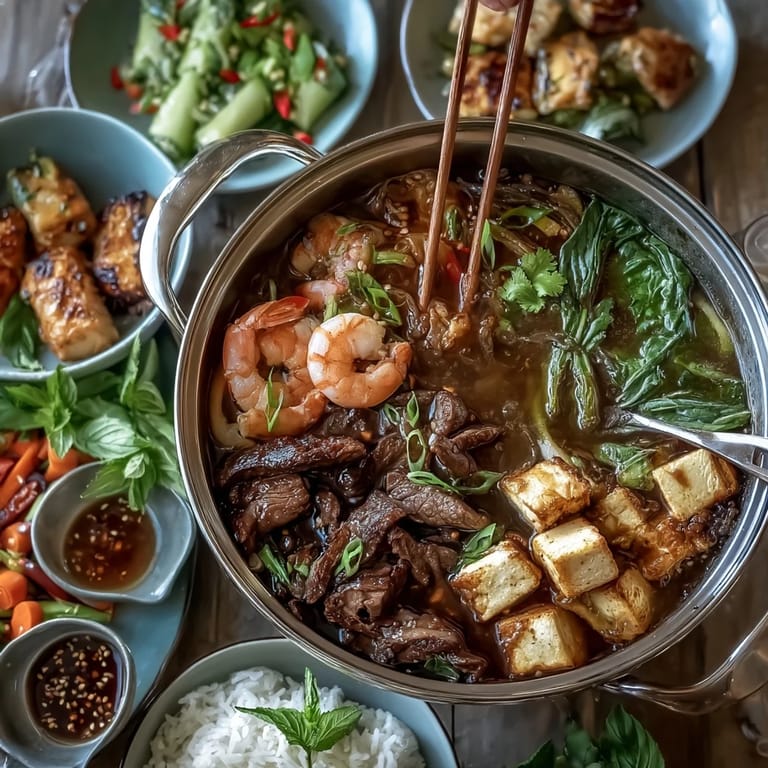
- Hand people chopsticks or slotted spoons and explain that proteins like beef and shrimp need only 1-3 minutes before they're done, while vegetables and noodles take 2-5 minutes depending on how crisp or tender someone prefers them. The rhythm becomes meditative—cook, dip, taste, repeat.
- Finish with personality:
- Let each person arrange their cooked ingredients in their bowl, add sauce combinations that speak to them, and top with cilantro, sesame seeds, and a squeeze of lime if they want brightness.
 Save
Save What started as me being nervous about hosting turned into one of my favorite dinner memories, watching my shy coworker open up while cooking her perfect bowl of noodles and vegetables, laughing when someone accidentally dropped a mushroom slice into someone else's broth. Hot pot has this way of breaking down walls because you're literally all doing the same thing at the same time, and there's something bonding about that shared vulnerability in the kitchen.
Why This Works as a Gathering Meal
Hot pot removes the pressure of the host being stuck in the kitchen while everyone else relaxes—you're all present, all participating, all invested in the experience together. I've noticed people eat slower, talk more, and actually taste their food instead of just consuming it, which somehow makes the whole evening feel longer and more satisfying even when the clock says otherwise.
Building Your Sauce Station
I set out small bowls of soy sauce, chili oil, hoisin, and fresh lime on the side, and let me tell you—watching people discover their perfect sauce combination is almost as entertaining as the cooking itself. Some people create this delicate balance of spicy and sweet, others go minimalist with just a squeeze of lime, and that experimentation becomes part of the fun.
Customization Without Limits
The beauty of hot pot is that you can build it around whatever dietary needs are at your table, and nobody feels like they're eating something different or compromised. Vegetarian guests get the same experience as meat eaters; gluten-free diners can use tamari instead of soy sauce; pescatarian friends can load up on seafood while others choose beef. I've found that when you offer variety upfront without making a big deal about accommodations, everyone feels genuinely included.
- Stock your vegetable platter with at least six different options so there's always something to cook, even if someone has unexpected preferences.
- Set out small individual sauce bowls rather than passing one around, because people are more adventurous when they can mix without worrying about germs or offending someone else's sauce.
- Keep extra broth simmering on the stove because you'll always need a refill midway through, and this way nobody has to stop cooking to handle logistics.
 Save
Save Hot pot became my answer to the question of how to make people feel genuinely welcomed at my table without spending all day in the kitchen. Everyone leaves fuller of not just food, but of conversation and connection, which honestly means more to me than any restaurant review ever could.
Recipe FAQ
- → What ingredients are used in the broth?
The broth features chicken or vegetable stock combined with garlic, fresh ginger, soy sauce, rice vinegar, sesame oil, dried shiitake mushrooms, and optional chili for heat.
- → How long should proteins and vegetables cook in the broth?
Thinly sliced proteins cook quickly, usually within 1-3 minutes, while vegetables and noodles take around 2-5 minutes to reach ideal tenderness.
- → Can this dish be adapted for vegetarian or vegan diets?
Yes, using vegetable broth and plant-based proteins like tofu, you can customize the hot pot to suit vegetarian or vegan preferences.
- → What dipping sauces complement this hot pot style?
Common accompaniments include soy sauce, chili oil, hoisin sauce, fresh cilantro, sesame seeds, and lime wedges for bright, savory flavors.
- → What are some useful tools for this cooking style?
A portable burner or induction cooktop, a large shallow pot, slotted spoons or strainers, chopsticks, and soup bowls facilitate the interactive meal experience.