 Save
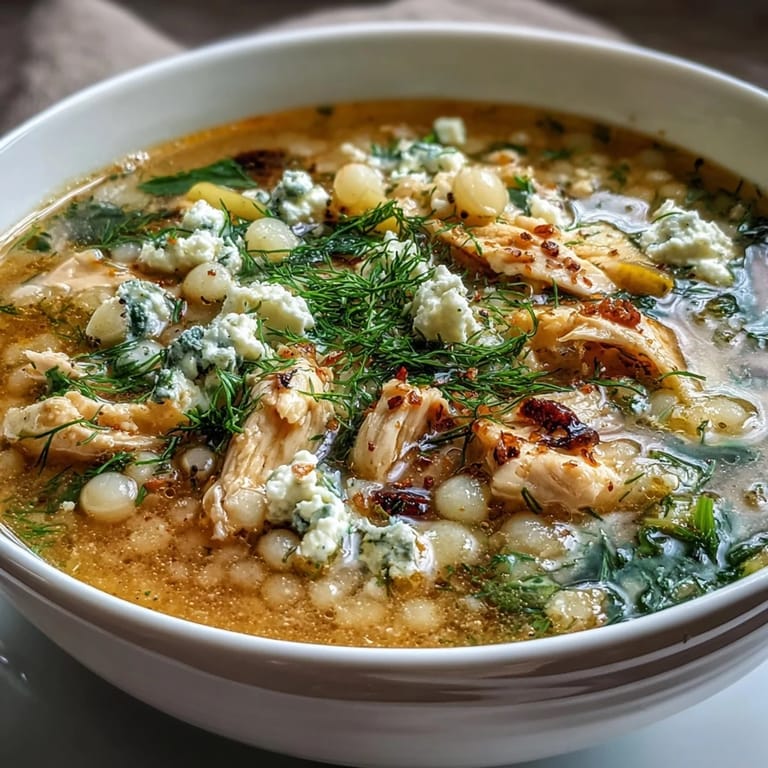
Save There's something about stirring a pot of golden broth that fills your kitchen with the smell of lemon and oregano that makes you pause and breathe it in. My neighbor Sofia taught me this soup years ago, standing in her kitchen while her grandchildren played in the next room, and she explained with such certainty that good Greek food doesn't need to be complicated, just honest. When I made it that first time alone, I kept tasting and adjusting, unsure if I was getting it right, but by the third or fourth spoonful something clicked—the way the creamy feta melted slightly into the warm broth, how the lemon brightened everything. Now it's become one of those soups I make when I want to feel like I'm cooking something that matters, even on a Tuesday night.
I made this for my partner after a long day when neither of us wanted to think too hard about dinner, and watching them lean over the bowl with a spoon, then look up and smile—that's when I realized this recipe deserved a permanent place in our regular rotation. The house smelled so good while it simmered that they came into the kitchen three separate times just to stand there and let the steam hit their face.
Ingredients
- Boneless, skinless chicken breasts (2, about 400 g): These cook quickly and shred beautifully without any bones to fish out, though if you have time, thighs will give you a richer, more forgiving broth.
- Low-sodium chicken broth (1.2 liters or 5 cups): The foundation everything rests on, so don't skimp on quality here—taste it plain first to make sure you actually like it.
- Bay leaf (1): Removes itself from the pot and adds a subtle depth that lemon alone can't quite capture.
- Yellow onion, finely chopped (1 medium): The sweet backbone of the soup, and chopping it fine means it melts into the broth rather than staying chunky.
- Carrots, peeled and diced (2 medium): They soften nicely and add natural sweetness that balances the lemon's sharpness.
- Celery stalks, diced (2): This is the holy trinity finishing move—onion, carrot, celery together create a flavor base that's been trusted for generations.
- Garlic cloves, minced (3): Added after the softer vegetables so it doesn't burn, just one minute to wake it up.
- Extra virgin olive oil (2 tablespoons): The fat that carries all the flavor, so use the good stuff you actually enjoy tasting.
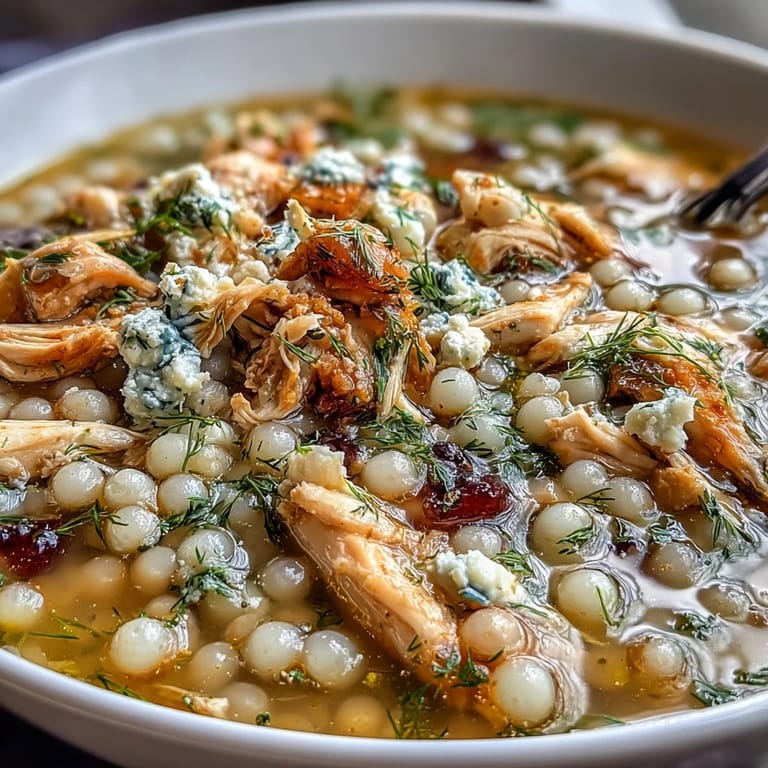
- Pearl couscous (150 g or 3/4 cup): Unlike regular couscous, these pearls have a slight chew that doesn't disappear into mush, staying textured throughout the soup.
- Lemon zest and juice (from 1 large lemon): The zest goes in during cooking to infuse the broth, then fresh juice at the end for brightness—don't skip either one.
- Dried oregano (1/2 teaspoon): The Greek signature that ties everything together, and a half teaspoon is plenty so it doesn't overpower.
- Ground black pepper (1/4 teaspoon): Start with this amount and adjust after tasting, since pepper can hide in a hot soup and then surprise you later.
- Salt, to taste: Always season at the end because the broth, couscous, and feta all bring their own saltiness to the party.
- Feta cheese, crumbled (80 g or about 3 oz): The finishing touch that transforms a good soup into something memorable, and crumbling it by hand right before serving keeps it from getting lost.
- Fresh dill, chopped (2 tablespoons): Sprinkle this right at the table so its brightness doesn't fade into the hot soup.
- Lemon wedges, for serving: Let people squeeze their own if they want more tartness—everyone's preferences are different.
Tired of Takeout? 🥡
Get 10 meals you can make faster than delivery arrives. Seriously.
One email. No spam. Unsubscribe anytime.
Instructions
- Build your base with heat:
- Heat the olive oil in a large pot over medium heat, then add your chopped onion, carrots, and celery. Sauté for about 5 minutes, stirring occasionally, until the vegetables start to soften and become translucent at the edges—you're looking for them to release their sweetness into the oil, not brown.
- Wake up the garlic:
- Stir in your minced garlic and cook for just 1 minute until the smell hits you like a wall—you'll know it's ready when it's fragrant but not yet browning.
- Bring in the broth and set the mood:
- Pour in the chicken broth, add the bay leaf, and bring everything to a gentle simmer. This isn't about a rolling boil—you want small bubbles breaking the surface, steady and calm.
- Cook the chicken through:
- Add the chicken breasts to the simmering broth and cook for 12 to 15 minutes until they're cooked through and no longer pink inside. The time varies based on thickness, so check the thickest part with a knife if you're unsure.
- Shred and return:
- Remove the cooked chicken to a cutting board, let it cool just enough to handle, then shred or chop it into bite-sized pieces. Fish out the bay leaf too, then stir the chicken back into the pot.
- Add the couscous and aromatics:
- Stir in the pearl couscous, oregano, lemon zest, and black pepper. Simmer for 10 to 12 minutes, stirring occasionally, until the couscous is tender but still has a slight bite to it—overcooked couscous turns mushy, so start checking at the 10-minute mark.
- Finish with brightness:
- Add the fresh lemon juice and taste the whole thing, adjusting salt and pepper as needed. The lemon juice should be noticeable but not overwhelming, adding a zing rather than turning it sour.
- Serve with flourish:
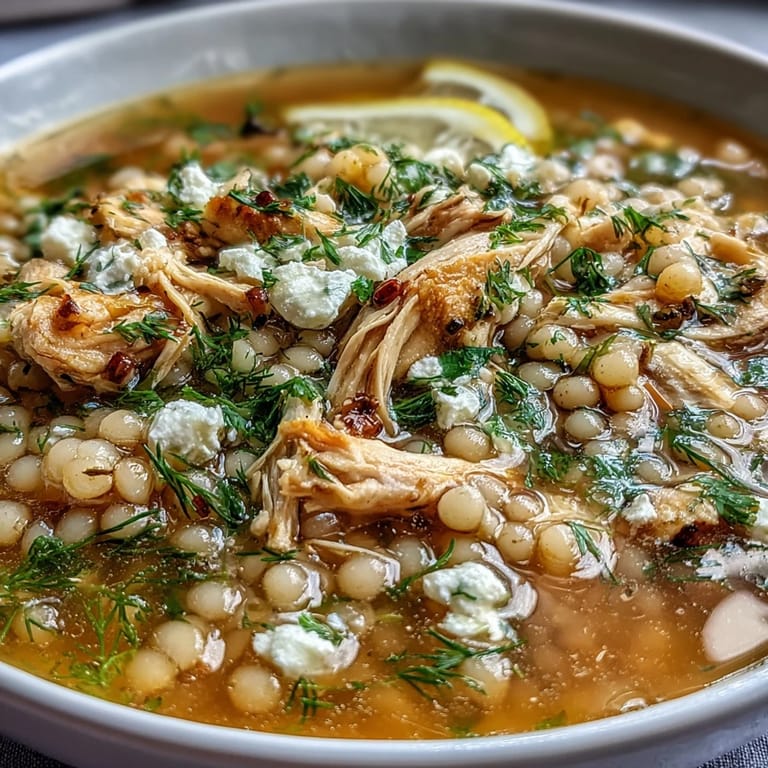
- Ladle the soup into bowls, then top each one with crumbled feta and a sprinkle of fresh dill. Serve with lemon wedges on the side so people can adjust the tartness to their liking.
 Save
Save The thing that gets me about this soup is how it transforms from a collection of ingredients into something that feels like a hug in a bowl, the kind of meal that makes you slow down and actually enjoy eating instead of just getting through dinner. It's become my default when friends visit and we're in that comfortable place where we're cooking together, talking in the kitchen while the soup bubbles quietly in the background.
Why Pearl Couscous Matters Here
Regular couscous would disappear into the broth like it was never there, but pearl couscous holds its shape and texture, giving each spoonful a little something to chew on. I learned this distinction the hard way by making the swap once and ending up with what looked more like porridge than soup, and now I'm particular about grabbing the right kind at the store. If you can't find pearl couscous, you could use small pasta like orzo in the same quantity, cooking it for about 10 minutes until tender.
The Lemon and Feta Magic
This combination is why the soup tastes Greek instead of just tasting like chicken soup with added flavors, and the balance between them is what makes people keep coming back for another spoonful. The feta adds a salty, creamy richness while the lemon cuts through it with brightness, and somehow together they make the chicken taste better than it is on its own. I've tried making versions without one or the other out of curiosity, and they're both less interesting—the lemon alone feels sharp and one-note, while feta without lemon tastes heavy.
Storage and Serving Flexibility
This soup keeps beautifully in the refrigerator for up to 3 days, though the couscous will continue absorbing liquid so you might need to add extra broth when you reheat it. The feta and dill are best added fresh each time you serve it, so they maintain their texture and brightness rather than getting soft and buried. You can also freeze it without the couscous, then add fresh couscous when you thaw and reheat, which makes it a flexible weeknight option when you want something homemade but don't have time to start from scratch.
- Make it heartier by stirring in fresh spinach or kale in the last few minutes of simmering—they'll soften just enough to incorporate without falling apart.
- If you have a Parmesan rind hanging around, add it to the broth while the chicken cooks for a deeper, richer flavor that lemon can't replicate alone.
- Crusty bread or warmed pita is essential, not optional—you'll want something to soak up every last bit of broth in the bowl.
 Save
Save Make this soup when you want to feed people something that tastes like you've put real thought into it, even if you made it in less than an hour. It's the kind of meal that reminds everyone why cooking at home matters.
Recipe FAQ
- → Can I use bone-in chicken instead?
Yes, bone-in chicken thighs or breasts can be used for richer broth and enhanced flavor, just adjust cooking time accordingly.
- → Is pearl couscous the same as regular couscous?
Pearl couscous is larger and chewier than traditional couscous, providing a heartier texture that holds up well in soups.
- → Can I substitute feta cheese?
Feta provides a tangy, creamy finish but goat cheese or ricotta salata can be alternatives if desired.
- → How can I add more greens to this dish?
Stir in chopped spinach or kale during the last 5 minutes of cooking for added color and nutrients.
- → What sides pair well with this dish?
Crusty bread, pita, or a simple side salad complement the flavors and make for a complete meal.
- → Can this be prepared ahead of time?
Yes, it keeps well refrigerated for a couple of days and flavors deepen after resting.