 Save
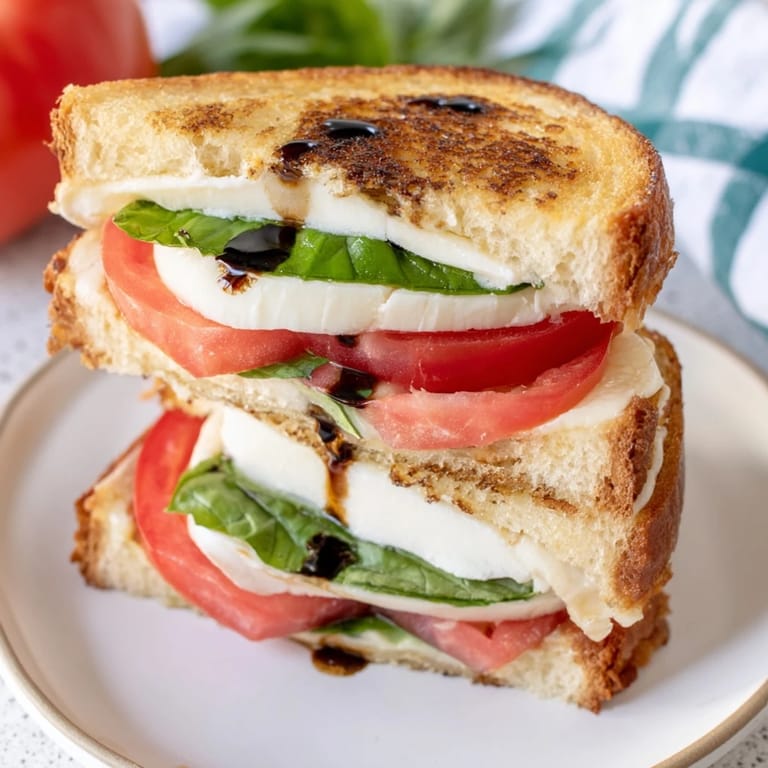
Save I discovered this sandwich by accident on a Tuesday afternoon when my tomato plant had finally produced more fruit than I could eat raw. Standing in my kitchen with a warm mozzarella ball sweating in my hand and basil leaves practically glowing on the counter, I thought: why not turn summer into something melted and comforting? The first bite taught me that grilled cheese didn't have to mean cheddar on white bread—it could taste like a caprese salad had been gently tucked between two golden, buttery slices and kissed with heat.
My neighbor smelled these cooking through our shared wall and showed up at my door with a wine glass and a hopeful expression. We ate them standing at the kitchen counter, balsamic glaze dripping onto napkins, and agreed without saying it that this was the kind of lunch worth making again and again.
Ingredients
- Sourdough or Italian bread: This is where texture comes from—four thick slices that hold everything without falling apart under the pan's gentle pressure.
- Fresh mozzarella cheese: The creamy heart of this sandwich; cold straight from the package, it melts into soft pockets of warmth.
- Unsalted butter, softened: Spread it gently on the bread's exterior so it browns evenly without burning in those hot spots the pan always seems to have.
- Ripe tomato, thinly sliced: Ripeness matters here—a mealy tomato will make you regret it, so choose one that's heavy in your hand and gives slightly to pressure.
- Fresh basil leaves: Pick them from the stem gently and use them the same day if you can; they bruise easily and lose their brightness.
- Balsamic glaze: A thin drizzle is enough; it's the accent, not the main voice, but it transforms everything it touches.
- Salt and pepper: Go light—the cheese and tomato already carry their own flavors, and you can always add more after the first bite.
Tired of Takeout? 🥡
Get 10 meals you can make faster than delivery arrives. Seriously.
One email. No spam. Unsubscribe anytime.
Instructions
- Butter your bread:
- Lay out all four slices and spread softened butter on one side of each, using the back of a butter knife to distribute it evenly. This is what makes the outside of your sandwich golden and crispy, so don't skimp.
- Build the filling:
- On two of the bread slices (butter-side down on the counter), layer mozzarella first, then tomato slices, then basil. The order matters because mozzarella creates a seal that keeps the tomato's moisture from making the bread soggy. Sprinkle salt and pepper as you layer—taste a tiny corner of tomato if you're unsure about your seasoning.
- Add the balsamic:
- Drizzle just enough glaze over the tomato and basil to see it coat the surface—about a teaspoon per sandwich. Too much and it becomes the dominant flavor instead of a supporting note.
- Crown the sandwich:
- Press the remaining bread slices on top, butter-side facing up, with your palm flat for an even seal.
- Heat the pan:
- Set your skillet over medium heat and let it warm for a minute or two—you want it hot enough to sizzle when butter hits it, but not so hot that your bread chars before the cheese melts.
- Cook the first side:
- Gently place the sandwiches in the pan and listen for that satisfying sizzle. Cook for 3 to 4 minutes without moving them around; you're building color and crispness. If you peek early and see it's still pale, give it another 30 seconds.
- Flip and finish:
- Using a spatula, carefully flip each sandwich and cook the second side for another 3 to 4 minutes until it's deep golden and the cheese feels soft if you press the sides gently. The tomato inside should be slightly warm, not hot.
- Rest and serve:
- Slide the sandwiches onto a cutting board and let them sit for exactly one minute—this lets the cheese set just slightly so it doesn't slide out when you cut. Slice diagonally if you're feeling fancy, drizzle with extra balsamic if the mood strikes, and eat while it's still warm.
 Save
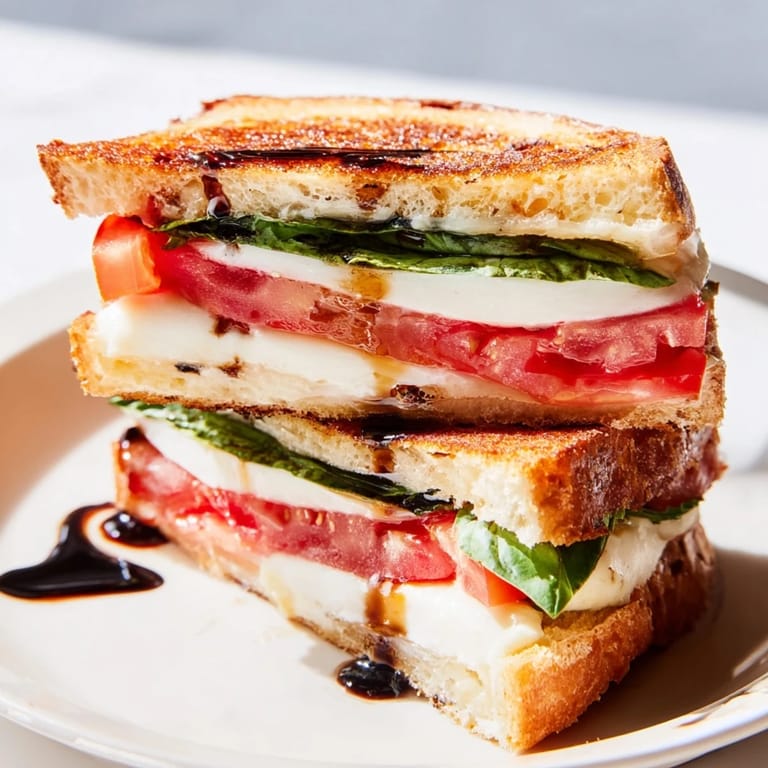
Save My daughter, who usually asks for plain butter sandwiches, ate one of these without questioning it, then asked if we could have them again tomorrow. That question meant more to me than any recipe rating ever could.
Why This Twist Works
Grilled cheese has always been about comfort, but it can feel predictable if you make it the same way every time. Adding the bright, acidic tomato and the peppery basil wakes up the richness of the melted cheese without overwhelming it. The balsamic glaze ties everything back to its Italian inspiration, creating a sandwich that's both nostalgic and new. It's familiar enough to feel safe, interesting enough to feel special.
Bread Choice Matters More Than You Think
The bread you choose dictates the entire texture of your sandwich. A sturdy sourdough gives you that contrast between the crispy, caramelized exterior and the slightly chewy interior. Italian bread offers a lighter crumb that gets more butter-soaked and richly browned. Ciabatta is airier and more delicate, almost luxurious. Whole grain bread works too, but it's denser and needs slightly lower heat so it doesn't burn before everything inside is warm. I've made these with each kind and loved them differently each time.
Timing and Temperature Control
The hardest part of making a perfect grilled cheese is resisting the urge to crank up the heat and rush it. Medium heat feels slow, almost lazy, but it's the only way to get the cheese melted all the way through without charring the bread to bitterness. Your pan temperature should be warm enough that a drop of water sizzles immediately, not so hot that it evaporates in a millisecond.
- If the outside is browning too quickly and the inside is still cool, lower the heat and cover the pan with a lid for the last minute of cooking.
- If you find yourself cooking these regularly, learn how your specific stove and pan behave—every combination is slightly different.
- A cast iron skillet retains heat beautifully once it's warm, so if you have one, it's worth the extra minute to preheat it properly.
 Save
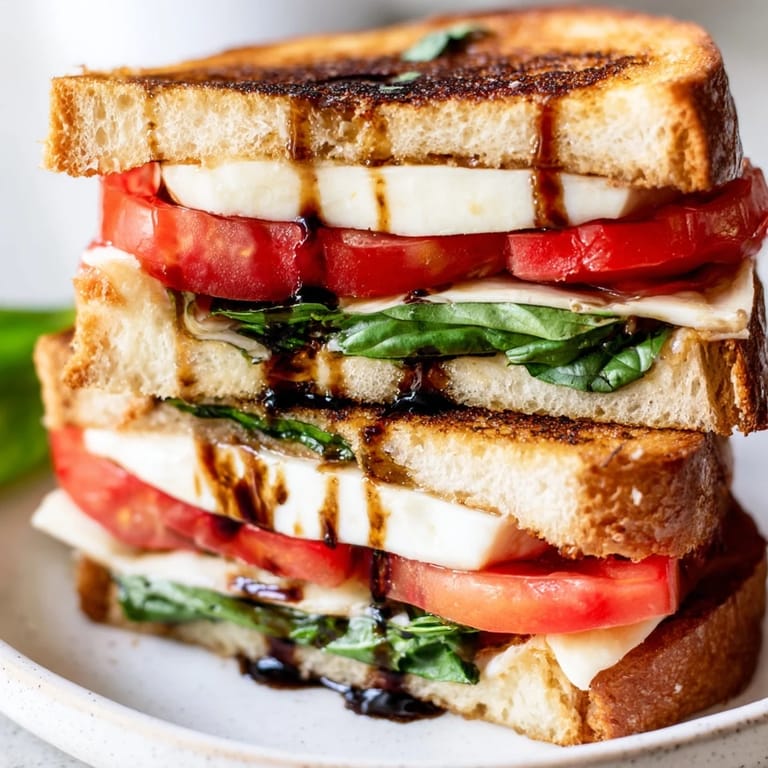
Save This sandwich proves that the best meals don't need to be complicated—they just need good ingredients treated with attention and respect. Make these when tomatoes are at their peak, when basil grows wild, and when you want something warm and gentle and deeply satisfying.
Recipe FAQ
- → What type of bread works best?
Sourdough or Italian bread is ideal for its sturdy texture and ability to crisp nicely without becoming soggy.
- → Can I add other herbs or seasonings?
Fresh basil is classic, but adding pesto or oregano can enhance the flavor profile beautifully.
- → How do I avoid the sandwich becoming soggy?
Butter the outsides of the bread and cook on medium heat to achieve a golden crust while melting the cheese inside without moisture buildup.
- → Is balsamic glaze necessary?
While optional, a drizzle of balsamic glaze adds a tangy sweetness that complements the fresh ingredients well.
- → Can this be made vegan-friendly?
Yes, by substituting plant-based butter and vegan mozzarella alternatives, you can enjoy a dairy-free version.