 Save
Save I was standing in my kitchen on a gray Tuesday afternoon when my neighbor stopped by with a basket of lemons from her tree, more than she knew what to do with. The abundance felt like a gentle nudge to do something bright and immediate, so I started chopping vegetables without much of a plan, thinking soup would be the perfect canvas for all that citrus. What emerged was this lemon herb soup that somehow tastes like springtime even when the weather outside says otherwise.
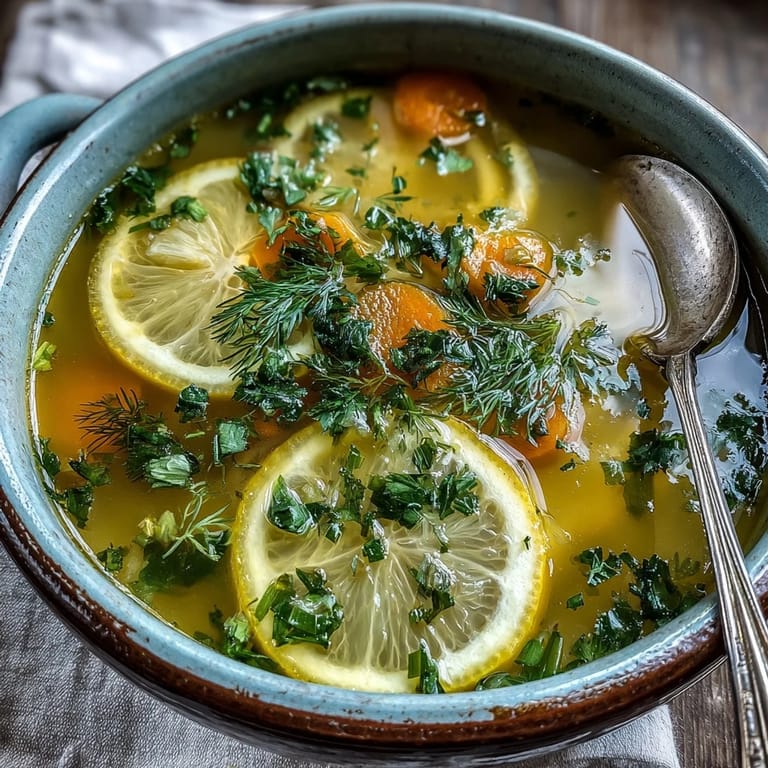
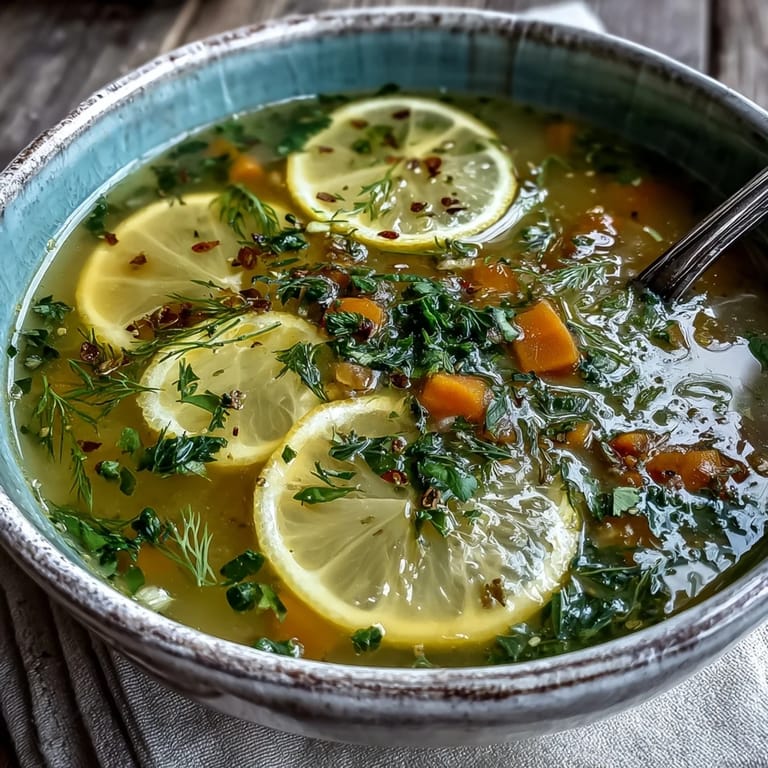
The first time I made this for guests, I served it in small bowls with a thin lemon slice floating on top and some fresh dill scattered across, and I remember watching someone's face light up after that first spoonful. They said it tasted clean and alive, which became exactly how I thought about this soup from then on.
Ingredients
- Olive oil: Use good quality if you can, since it's one of the few fats here and it carries flavor through the whole pot.
- Onion, garlic, carrots, and celery: These are your foundation, and chopping them similarly sized means they cook evenly and give you a balanced base.
- Vegetable broth: Low sodium is important because you're seasoning this yourself and you want that control.
- Lemon zest and juice: The zest goes in partway through for brightness, while the juice gets added at the end so it stays vibrant and doesn't cook away.
- Fresh herbs (parsley, dill, chives, thyme): These are what make the soup feel alive, so don't skip them or substitute with dried versions unless you absolutely must.
- Cooked rice or orzo: This is optional but adds a gentle texture and substance if you want the soup to feel more like dinner.
- Salt and black pepper: Taste as you go because good seasoning is what turns good soup into the kind you remember.
Tired of Takeout? 🥡
Get 10 meals you can make faster than delivery arrives. Seriously.
One email. No spam. Unsubscribe anytime.
Instructions
- Build your base with the aromatics:
- Heat the olive oil in a large pot over medium heat and add the chopped onion, letting it soften into translucence over about 3 minutes. The smell of this alone is comforting, so pause for a moment and notice it before moving forward.
- Develop the vegetables:
- Stir in the garlic, carrots, and celery, and let them cook together for around 5 minutes until they start to lose their firmness but still have some resistance when you bite one. This is the moment when the pot fills with a savory, garden-like fragrance.
- Bring in the broth and simmer:
- Pour in all the vegetable broth and bring it to a rolling boil, then reduce the heat down and let it simmer gently for 10 minutes to let all those vegetables fully soften and release their flavor into the liquid.
- Add the citrus and herbs:
- Stir in the lemon zest, lemon juice, parsley, dill, chives, and thyme, then simmer for another 5 minutes so the flavors meld without the brightness of the herbs getting lost. At this point, your kitchen smells like a Mediterranean coastal village.
- Finish and season:
- If you're using rice or orzo, stir it in now and let everything warm through for 2 to 3 minutes, then taste and adjust the salt and pepper until it tastes like something you'd want to eat again tomorrow. Serve it hot with an extra sprig of herbs on top if you're feeling generous.
 Save
Save There's something about making someone a warm bowl of this soup when they're having a rough day that feels like the most honest kind of kindness. It's simple enough not to make a fuss, but flavorful enough to matter.
When to Serve This
This soup works as a refined starter before a fish dish or roasted chicken, or you can double the recipe and serve it as the main course with crusty bread on the side. In spring and summer, some people like to chill it and serve it cold, though I prefer it warm since that's when the herbal notes seem most pronounced. It's equally welcome at a casual family dinner or a small gathering where you want to feel put-together without spending hours in the kitchen.
Variations Worth Trying
If you swap the dill for fresh tarragon, the whole soup tastes more French and elegant, while basil pulls it toward an Italian direction. Some mornings I add a handful of shredded cooked chicken to make it heartier, and on occasions when I have fresh baby spinach, wilting some into the pot right before serving adds color and a subtle earthiness that rounds out the bright citrus.
Storage and Make-Ahead
This soup keeps well in the refrigerator for up to 3 days, and the flavors actually deepen a bit as it sits, so making it a day ahead isn't a problem. You can also freeze it, though I recommend leaving out the rice or orzo until you reheat it so the texture stays better.
- Add the herbs fresh right before serving, especially if the soup has been refrigerated or frozen, so they maintain their brightness.
- If you're reheating, do it gently on the stovetop rather than aggressively in the microwave to keep the flavors delicate.
- A squeeze of fresh lemon juice right before serving brings everything back to life, even if you added juice during cooking.
 Save
Save This is the kind of soup that proves you don't need complicated ingredients or advanced techniques to make something memorable and nourishing. Make it when you need something that feels both comforting and fresh.
Recipe FAQ
- → How long does lemon herb soup keep?
The soup stores well in the refrigerator for 3-4 days in an airtight container. The flavors often develop and improve overnight. If adding rice or orzo, note that the pasta may absorb more liquid over time, so you might need to add extra broth when reheating.
- → Can I freeze this soup?
Yes, you can freeze this soup for up to 3 months. However, it's best to freeze it before adding the fresh herbs, as they can lose their vibrant color and texture when frozen. Add fresh herbs when reheating for the best results.
- → What can I substitute for the fresh herbs?
Fresh herbs work best here, but you can substitute dried herbs at a ratio of 1 teaspoon dried for 1 tablespoon fresh. Basil or tarragon make excellent alternatives to dill or chives if you want to vary the flavor profile.
- → Is this soup suitable for a detox or cleanse?
This light, vegetable-based soup is naturally low in calories and free from common allergens. The lemon provides vitamin C and antioxidants while the fresh herbs offer additional nutrients. It's an excellent choice for lighter eating or as part of a balanced diet.
- → Can I make this soup creamy?
Absolutely. You can stir in a half cup of heavy cream or coconut milk during the final minutes of simmering for a creamy version. Alternatively, blend a portion of the vegetables before adding the citrus and herbs to create a naturally creamy texture without dairy.