 Save
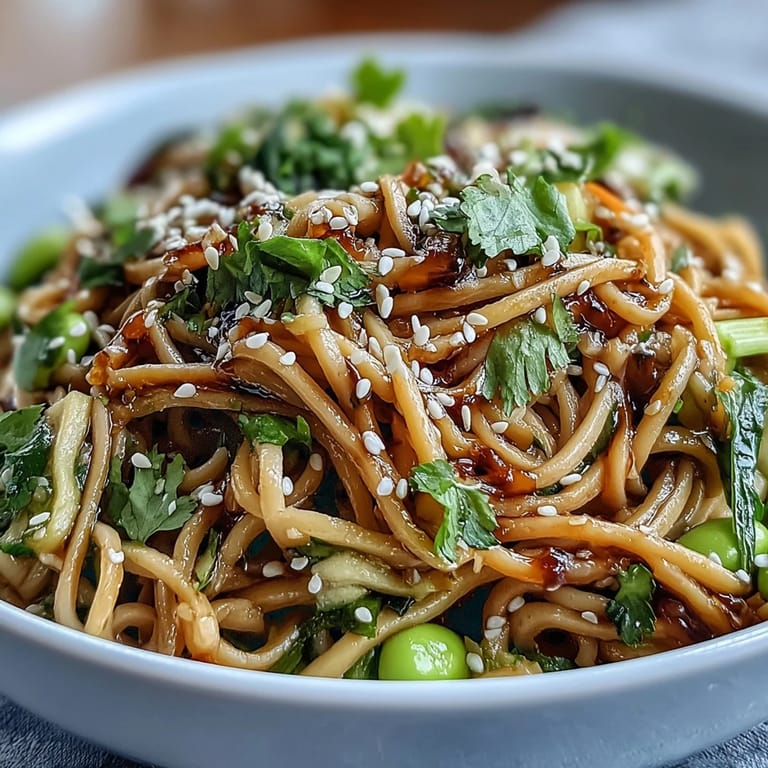
Save My neighbor knocked on my door one July afternoon holding a bag of edamame from her garden and asked if I knew what to do with them. I didn't, but I had soba noodles in the pantry and a hunch that cold noodles and summer vegetables might be exactly what we both needed. We stood in my kitchen slicing cucumbers and carrots, whisking together a dressing I half-remembered from a restaurant years ago. That bowl became my go-to whenever the heat made cooking feel impossible.
I started making this for weeknight dinners when I realized my usual pasta routine had grown stale. The first time I tossed the noodles with the dressing, I used too much sesame oil and the whole bowl tasted like I'd poured perfume on it. Now I measure carefully, and I've learned that a little grated ginger goes a long way. My kids started requesting it on repeat, especially after soccer practice when they wanted something filling but not heavy.
Ingredients
- Dried soba noodles: These buckwheat noodles have a nutty flavor and firm bite that holds up beautifully when tossed cold, just make sure to rinse them well after cooking or they turn gummy.
- Shelled edamame: Fresh or frozen both work, and they add a pop of green and a boost of protein without any fuss.
- Cucumber: Julienned cucumber brings a crisp, refreshing crunch that balances the richness of the sesame dressing.
- Carrots: Peeled and julienned, they add sweetness and a bright orange contrast that makes the bowl look as good as it tastes.
- Scallions: Thinly sliced, they give a mild onion bite and a hint of sharpness that wakes up the other flavors.
- Toasted sesame seeds: These little seeds add a toasty crunch and a visual finish that makes the dish feel complete.
- Fresh cilantro or mint leaves: Optional, but a handful of herbs adds a bright, aromatic lift that takes the bowl from good to great.
- Soy sauce: The salty backbone of the dressing, use tamari if you need it gluten-free and the flavor stays rich.
- Rice vinegar: Its mild acidity brightens the dressing without overpowering the sesame and ginger.
- Toasted sesame oil: A little goes a long way, this is what gives the dressing its deep, nutty aroma.
- Tahini or smooth peanut butter: Either one adds body and creaminess, I usually reach for tahini because it blends more smoothly.
- Honey or maple syrup: A touch of sweetness balances the salty and tangy elements and rounds out the dressing.
- Fresh ginger: Grated finely, it adds a warm, spicy kick that makes the dressing taste alive.
- Garlic clove: Minced small, it brings a subtle sharpness that deepens the flavor without overwhelming.
- Water: Just a tablespoon or two to thin the dressing so it coats the noodles evenly instead of clumping.
Tired of Takeout? 🥡
Get 10 meals you can make faster than delivery arrives. Seriously.
One email. No spam. Unsubscribe anytime.
Instructions
- Cook the soba noodles:
- Boil the noodles according to the package directions, usually around 4 to 5 minutes, then drain and rinse them under cold water to stop the cooking and wash away excess starch. This step keeps them from turning into a sticky mess.
- Blanch the edamame:
- While the noodles cook, drop the edamame into boiling water for 2 to 3 minutes until bright green and tender, then drain and set aside. If using frozen, they thaw and cook in the same short time.
- Make the sesame dressing:
- In a small bowl, whisk together the soy sauce, rice vinegar, sesame oil, tahini, honey, grated ginger, and minced garlic until smooth. Add a tablespoon of water if it feels too thick, you want it to drizzle easily.
- Prep the vegetables:
- Julienne the cucumber and carrots into thin matchsticks, and slice the scallions thinly on the diagonal. Having everything ready makes the final assembly quick and satisfying.
- Toss the noodles:
- In a large bowl, toss the cooled soba noodles with about half of the sesame dressing so every strand gets coated. Reserve the rest for drizzling over the finished bowls.
- Assemble the bowls:
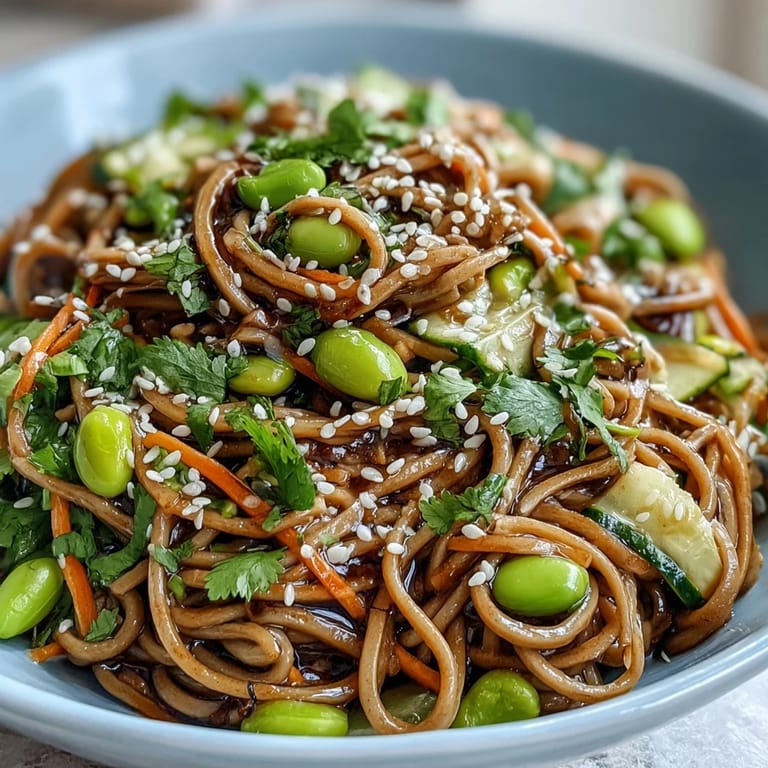
- Divide the dressed noodles among four bowls, then top each with edamame, cucumber, carrots, and scallions. Drizzle the remaining dressing over the top and finish with a sprinkle of toasted sesame seeds and fresh herbs if you like.
- Serve:
- Serve immediately while the vegetables are still crisp and the noodles are cold. If you need to make it ahead, keep the noodles and toppings separate until you're ready to eat.
 Save
Save One evening I packed this into jars and brought it to a potluck, and three people asked for the recipe before we even sat down to eat. It was the first time I realized that a dish I'd thrown together on a whim had become something I could be proud to share. Now it's my answer whenever someone asks what to bring to a summer gathering.
What to Add for Extra Protein
I've topped this bowl with grilled tofu, soft-boiled eggs, shredded chicken, and even leftover salmon, and all of them worked beautifully. If you go with tofu, press it well and pan-fry it until the edges are golden and crisp. A soft-boiled egg with a jammy yolk adds richness and makes the bowl feel more like a meal. If you're feeding someone who eats meat, rotisserie chicken is the fastest shortcut and tastes great with the sesame dressing.
How to Make It Gluten-Free
Most soba noodles contain a mix of buckwheat and wheat, so check the label and look for 100 percent buckwheat varieties if you need it gluten-free. Swap the soy sauce for tamari, which has the same salty depth without the gluten. Double-check the tahini and sesame oil labels too, though most brands are naturally gluten-free. Once you make those swaps, the bowl tastes exactly the same.
Storage and Make-Ahead Tips
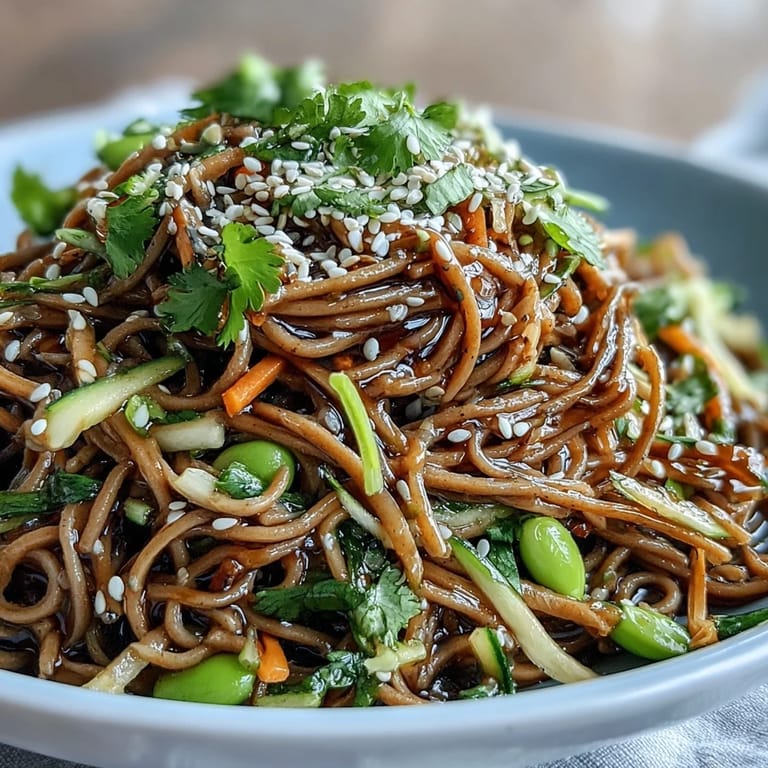
This bowl is one of those rare dishes that actually holds up in the fridge for a day or two, though the vegetables lose some of their crunch. I like to pack the dressed noodles and the raw vegetables separately, then assemble each bowl right before eating. The dressing keeps for up to a week in a sealed jar, and you can shake it back together if it separates. If you're making it for meal prep, hold off on adding the sesame seeds and herbs until serving so they stay fresh and fragrant.
- Store leftover noodles and vegetables in separate airtight containers in the fridge for up to two days.
- Refresh the noodles with a splash of cold water and a drizzle of dressing before serving.
- The dressing can be made up to a week ahead and stored in the refrigerator.
 Save
Save This bowl has become my reset button, the thing I make when I need something nourishing and uncomplicated. It never disappoints, and it always tastes like a small, delicious victory.
Recipe FAQ
- → What makes soba noodles different from regular pasta?
Soba noodles are made from buckwheat flour, giving them a nutty flavor and chewy texture. They're thinner than Italian pasta and cook much faster. Buckwheat provides beneficial nutrients and creates noodles that are perfect for cold preparations.
- → Can I make this bowl ahead of time?
Absolutely. The noodles absorb dressing beautifully over time, making them ideal for meal prep. Store dressed noodles and vegetables separately, then combine when ready to eat. The sesame dressing keeps well in the refrigerator for up to a week.
- → How do I prevent soba noodles from sticking together?
Rinse cooked soba noodles thoroughly under cold water immediately after draining. This removes excess starch and stops the cooking process. Toss with a small amount of sesame oil or dressing before storing to keep them separate.
- → What vegetables work best in this bowl?
Julienned cucumbers and carrots provide classic crunch and color. Consider adding snap peas, bell peppers, shredded red cabbage, or radishes. The key is pairing vegetables that maintain their crispness against the tender noodles.
- → Is the sesame dressing customizable?
The dressing is highly adaptable. Substitute tahini with smooth peanut butter for a nuttier variation. Adjust sweetness with more honey, add heat with sriracha, or brighten with extra rice vinegar. The base of soy, vinegar, and sesame oil creates endless possibilities.
- → Can I use this dish for different dietary needs?
Naturally vegetarian and dairy-free, this bowl adapts easily. Use tamari instead of soy sauce for gluten-free needs, ensuring soba noodles are 100% buckwheat. Add grilled chicken, shrimp, or tofu for extra protein, or keep it completely plant-based as written.