 Save
Save I'll never forget the summer afternoon when my neighbor brought over this stunning pineapple platter from a tropical resort she'd visited. As we gathered on the porch with cold glasses of sparkling water, the sheer visual beauty of it made everyone pause before eating. That's when I realized that sometimes the most memorable dishes aren't complicated creations—they're celebrations of nature's own artistry. Now, whenever I want to impress without stress, I create this Tropical Pineapple Paradise, and it never fails to transport everyone to a sunny island getaway right in my own dining room.
I made this for my daughter's graduation dinner last summer, and watching her light up when she saw it on the table—before anyone had even tasted it—reminded me that presentation is its own form of love. Her friends were so impressed they started asking me for catering advice. That one platter became the memory everyone still talks about.
Ingredients
- 1 large ripe pineapple, halved vertically: The star of the show. Look for one that's golden-yellow with a sweet aroma at the base and leaves that tug away easily. The vertical halving keeps those gorgeous green leaves intact for that wow factor everyone notices the moment they see it.
- 2 kiwis, peeled and sliced: Their bright green color is non-negotiable for visual contrast. I learned to slice them just before serving so they stay jewel-like and don't weep juice all over the platter.
- 1 mango, peeled and sliced: Choose one that yields slightly to pressure but isn't mushy. The golden hue bridges the warm and cool tones on your platter beautifully.
- 1 papaya, peeled, seeded, and sliced: Its peachy-pink tones add warmth. Make sure it's ripe enough to be sweet but firm enough to slice cleanly.
- 1 small dragon fruit, peeled and sliced: This one's pure theater—those magenta and white colors make people stop mid-conversation. Get the pink variety for maximum drama.
- 1 cup strawberries, hulled and halved: They're your red anchor point. Use the freshest ones you can find because their quality really shines here.
- 1 cup seedless grapes, halved: Mix red and green for color variety. The halving makes them easier to eat directly from the platter and shows thoughtfulness.
- 1/2 cup blueberries: These tiny jewels fill gaps and add pops of deep blue that tie the whole color story together.
- 1/2 cup raspberries: Handle them gently—they bruise easily. Add them last to keep them looking pristine.
- 1/2 cup pomegranate arils: Those jewel-like seeds are the final glimmer of luxury. Yes, seeding a pomegranate takes patience, but it's so worth it.
- 1/4 cup unsweetened shredded coconut: A light sprinkle adds tropical authenticity and a subtle texture contrast without overwhelming delicate fruit flavors.
- Fresh mint leaves: Beyond decoration, those green leaves add a whisper of refreshment and fragrance that makes people lean in closer.
Tired of Takeout? 🥡
Get 10 meals you can make faster than delivery arrives. Seriously.
One email. No spam. Unsubscribe anytime.
Instructions
- Create Your Canvas:
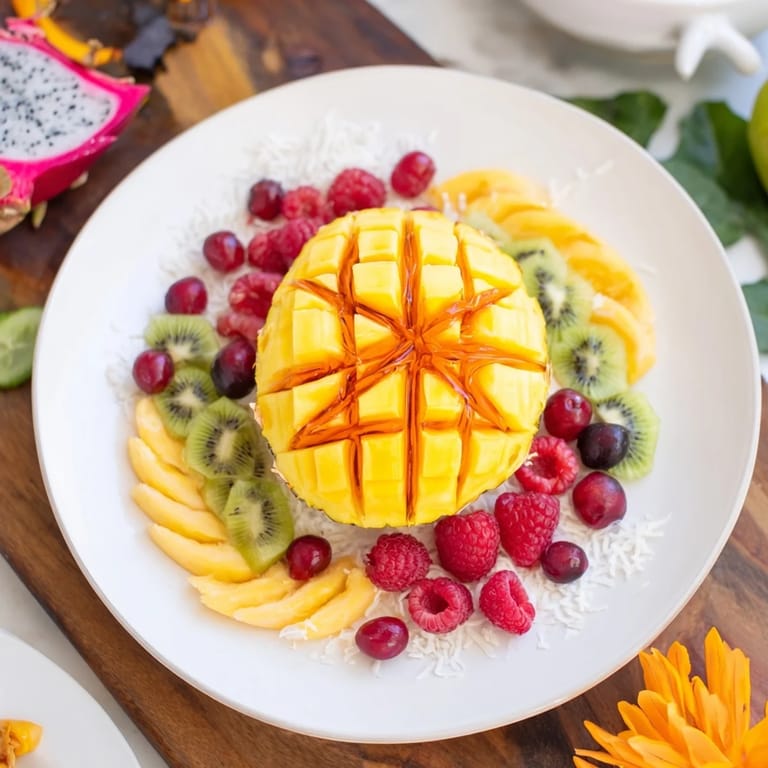
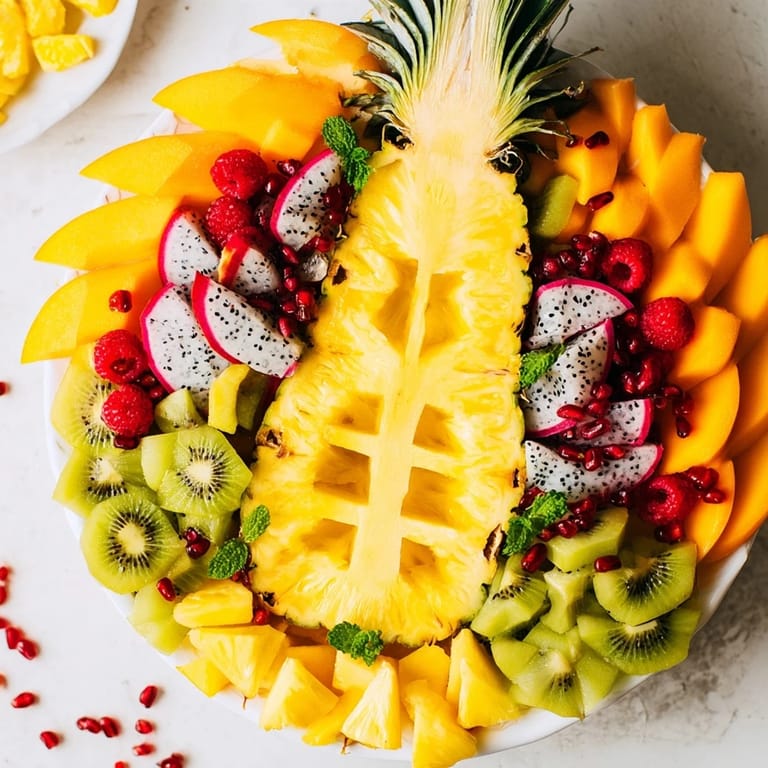
- Place that stunning pineapple half, cut-side up, right in the center of your largest serving platter. Take a sharp paring knife and score the yellow flesh in a crosshatch pattern—not too deep, just enough that someone can easily scoop out a piece with their spoon. The skin and those glorious green leaves stay completely intact. This is your anchor point, your visual center of gravity.
- Paint With Tropical Hues:
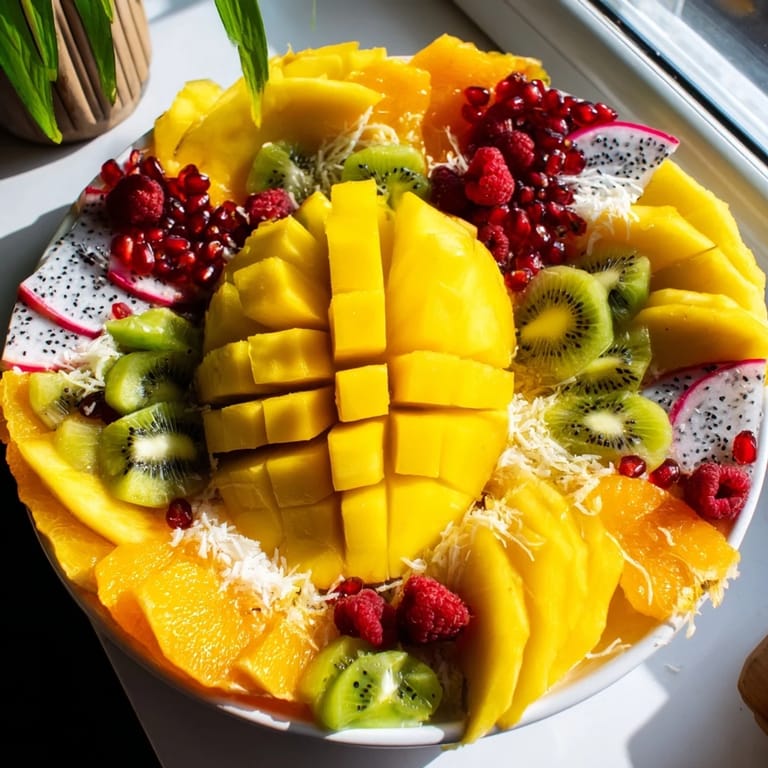
- Starting from the pineapple, fan out your mango, papaya, and dragon fruit slices in rays, like you're creating a sunset around your centerpiece. Alternate the colors intentionally—warm against cool, bright against soft. Think like an artist. You're not just arranging fruit; you're composing something beautiful.
- Fill Every Gap With Purpose:
- Now comes the meditative part. Arrange your kiwi slices, strawberries, grapes, blueberries, raspberries, and pomegranate arils in the spaces between and around the fan shapes. Work symmetrically if that feels right to you, or let it be naturally abundant. Watch the colors talk to each other—let the deep blues complement the bright reds, let the pale yellow kiwis brighten the deeper tones.
- Add Texture and Fragrance:
- Sprinkle that unsweetened coconut lightly across the arrangement. Don't cover everything—you want people to see all that gorgeous fruit peeking through. Just enough to whisper tropical luxury.
- The Final Grace Note:
- Tuck fresh mint leaves strategically around the platter. Between fruit clusters, in corners, wherever feels balanced to you. These aren't just green—they add fragrance and that last touch of garden freshness.
- The Moment Before Serving:
- If you're making this more than 30 minutes ahead, cover it gently with plastic wrap and refrigerate. The cold will keep everything crisp and refreshing. When you're ready to serve, check that everything still looks vibrant, and then present it before it's even touched. Let people marvel first.
 Save
Save My friend Sarah, who claims she doesn't have a creative bone in her body, made this once for a potluck and came back grinning from ear to ear. Someone had photographed it, posted it online, and she got actual compliments about her artistic vision. She'd just followed her instincts with color placement. That's when I understood—this platter isn't about technique or culinary training. It's about trusting that beautiful fruit speaks for itself.
The Art of Color Harmony
Colors aren't accidental on this platter. The deep purples and magentas of the dragon fruit create drama against the sunny yellows of mango and pineapple. The jewel tones—deep blues of blueberries, burgundy of raspberries, crimson of strawberries—they're all part of a visual language that makes people want to photograph their food before eating it. I've learned that when you understand how colors complement each other, even the simplest arrangement becomes gallery-worthy. It's not just nutrition; it's nourishment for the eyes first.
Why This Works as a Dessert
In a world of heavy desserts, this platter feels like a gift. The natural sugars in ripe fruit satisfy that sweet tooth without the post-meal heaviness. Serve it after something savory, and people will feel refreshed rather than stuffed. I've noticed that at summer dinners especially, guests will return to this platter multiple times, grazing on different fruits as conversation flows. It's interactive, it's wholesome, and somehow it feels both indulgent and light at the same time.
Pairing and Serving Ideas
The beauty of this platter is its flexibility. I've served it as the finale to a formal dinner, as a centerpiece at a casual brunch, and even as the star of a girls' night gathering. The pineapple half can hold dipping sauces—a drizzle of honey, a coconut cream mixture, or even a light yogurt dip—in its center cavity, making it functional as well as gorgeous. Cold sparkling water with lime, a crisp Moscato, or even a tropical fruit punch all pair beautifully. And here's a secret: I often serve this alongside grilled chicken or fish at dinner parties. The visual impact and the tropical feel somehow make everything taste more like a vacation.
- Try drizzling lime juice over the entire platter just before serving for a subtle brightness that enhances every fruit
- Swap in seasonal fruits like starfruit, passion fruit, or lychee whenever you find them—this platter is a living template, not a prison
- For a 10-person gathering, one platter feeds six as a standalone dessert, but pairs beautifully with cheese and crackers for a mixed mezze approach
 Save
Save This platter has become my signature move for moments when I want to say something without words—welcome, celebration, care, gratitude. It's proof that simple, honest ingredients arranged with a little intention can feel like a gesture of love.
Recipe FAQ
- → How do I prepare the pineapple for serving?
Cut the pineapple in half vertically, trim the core, and score the flesh in a crosshatch pattern while keeping the skin intact for easy serving and attractive presentation.
- → Can I substitute any of the tropical fruits?
Yes, you can swap or add seasonal fruits such as starfruit, passion fruit, or lychee to customize the display.
- → What garnishes enhance the fruit platter?
Sprinkling shredded unsweetened coconut and adding fresh mint leaves contribute texture, scent, and visual appeal.
- → Is this dish suitable for special diets?
It is naturally vegan and gluten-free, with no dairy or eggs, making it suitable for many dietary preferences.
- → How should the platter be served or stored?
Serve immediately for best freshness, or cover and refrigerate for up to 2 hours prior to serving.
- → What beverages pair well with this platter?
Light options like chilled Moscato or sparkling water with lime complement the fruity flavors perfectly.