 Save
Save I'll never forget the moment I decided to turn a cheese board into something magical. It was a starry winter evening, and I was preparing for a dinner party when I caught myself gazing out at the night sky through the kitchen window. The crescent moon was impossibly bright, and in that instant, I realized I could bring that celestial magic right to my serving board. That night, armed with a tiny star-shaped cutter and an assortment of beautiful cheeses, I created something that made my guests gasp before they even tasted it. A cheese board had become an edible night sky, and suddenly, entertaining felt like creating art.
The first time I made this for a group of friends, I watched their faces light up as they walked into the dining room. One guest actually whispered, "Did you really make this yourself?" It wasn't about being complicated—it was about seeing possibility in simple ingredients and arranging them with intention. That moment taught me that entertaining is really about saying, "You're worth the extra thought," and this board says it perfectly.
Ingredients
- Aged cheddar (150 g): This is your foundation, offering a sharp, nutty backbone that anchors the entire board. I learned to slice it into varied thicknesses—some thin enough to drape, some chunky for texture—so guests find little surprises
- Creamy blue cheese (100 g): The bold personality that makes people pause and appreciate its depth. I always position it where the light catches it, because its veining is genuinely beautiful
- Brie or camembert (120 g): This is your gentle, luxurious touch—soft enough to create a color contrast and rich enough to keep everything balanced
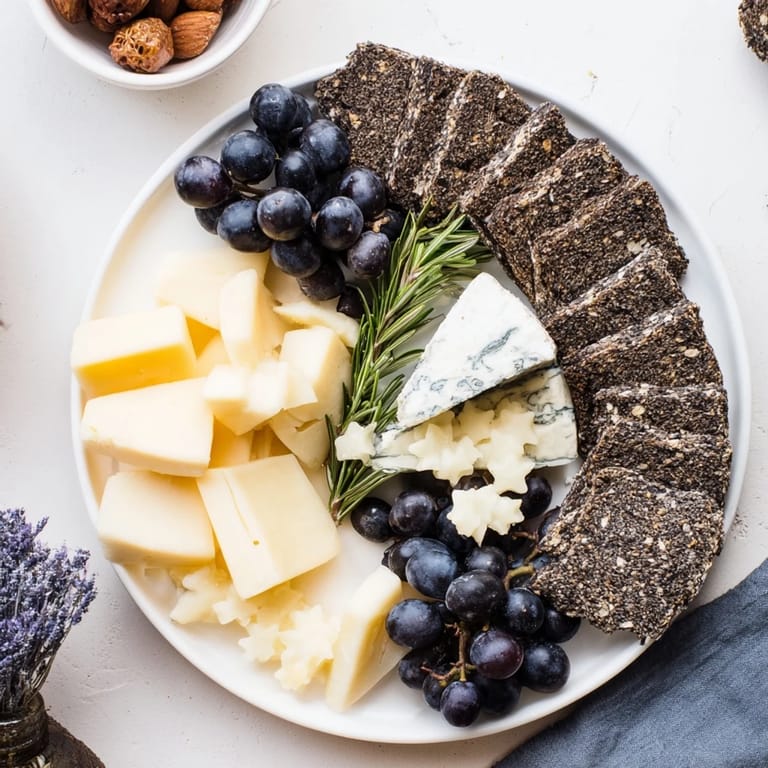
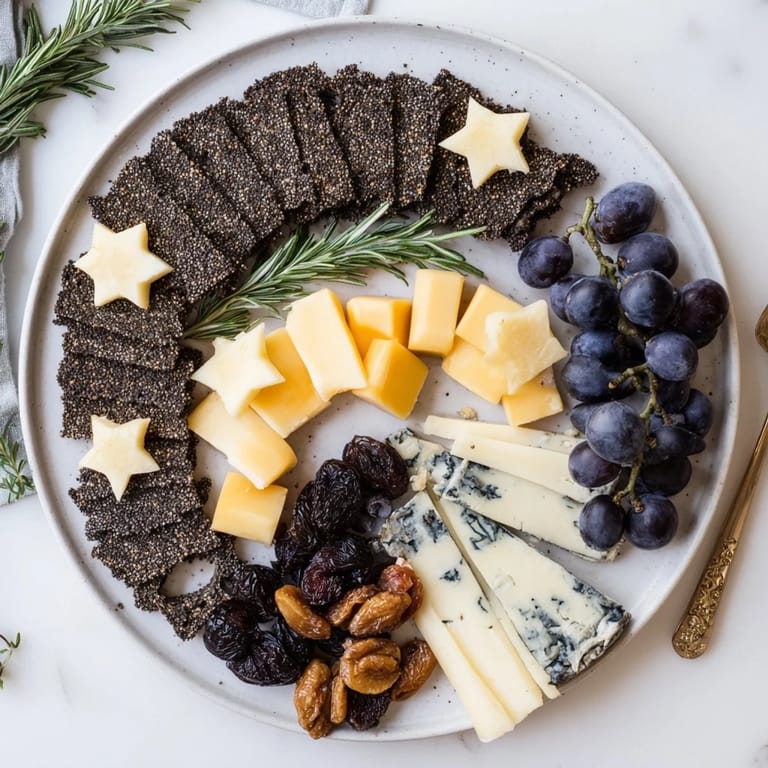
- Gouda for stars (80 g): Here's where the magic happens. Gouda's firm texture means those stars hold their shape beautifully, and their golden-orange hue creates the perfect contrast against dark crackers
- Charcoal or black sesame crackers (100 g): These create the dramatic crescent that defines the entire board. The darkness makes every other element pop, and their subtle nuttiness complements every cheese
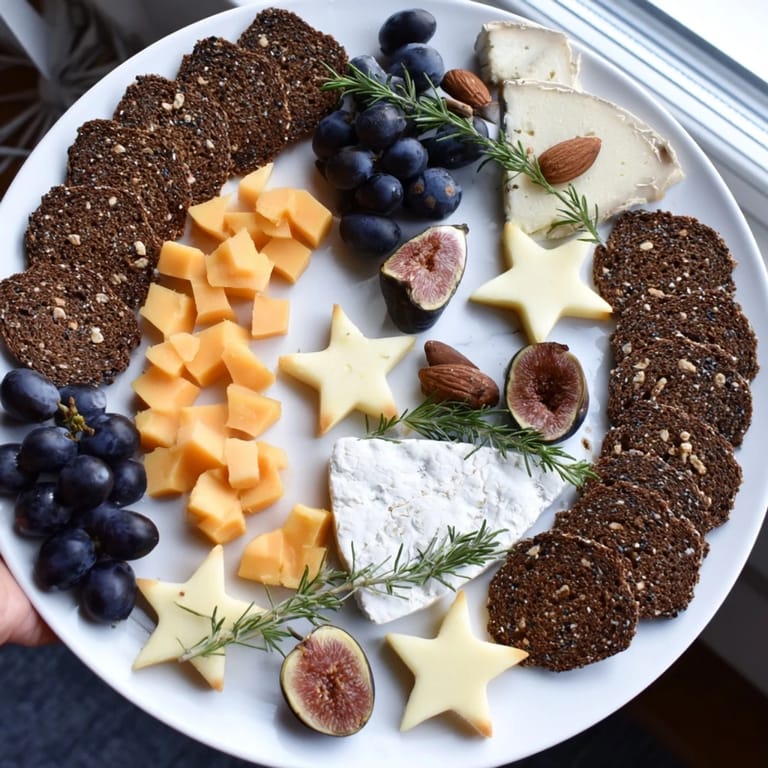
- Pumpernickel bread, sliced (100 g): Don't skip this—it adds an earthy depth and a different textural experience than crackers alone
- Seeded flatbread (50 g): This brings brightness and a different bite. The seeds catch light and add visual interest to any empty spaces
- Black grapes (1 bunch): Fresh, cool, and they cleanse the palate between cheese samples. I scatter them deliberately, using them as color anchors
- Dried figs, halved (small handful): These are little bursts of sweetness and chewiness. They bridge the gap between savory and sweet in a way that feels sophisticated
- Marcona almonds (small handful): Buttery and slightly sweet, they add a crunch and richness that keeps the board from feeling too soft
- Fresh rosemary sprigs: More than garnish—they perfume the board and add a forest-like aroma that makes people want to lean in close
- Honey or fig preserves (optional): A quiet luxury. A small spoon of either transforms a simple cheese bite into something memorable
Tired of Takeout? 🥡
Get 10 meals you can make faster than delivery arrives. Seriously.
One email. No spam. Unsubscribe anytime.
Instructions
- Create your stars:
- Take that small star cutter and press it firmly into slices of gouda, twisting gently to release each star. The cheese should be at room temperature—not warm, not cold from the fridge. Arrange them on a small plate as you go, admiring each one. They're your focal points, so treat them with care
- Design the crescent:
- This is where you become the artist. On a large board, start laying down your dark crackers and pumpernickel slices in a curved crescent shape. Think of the moon hanging in the sky. Let them overlap slightly, creating dimension and that lived-in look that makes boards feel generous
- Layer your cheeses:
- Along the inside curve of your crescent, place chunks and slices of cheddar, blue cheese, and brie. Alternate them so colors and textures create visual rhythm. Don't arrange them in straight lines—let them flow. Place larger pieces where they'll anchor the eye, smaller ones to fill gentle gaps
- Float your stars:
- On the opposite side of the board from your crescent, scatter your gouda stars as if they're drifting across the night sky. Let some rest near the board's edge, float a few toward the center. This is pure whimsy—there's no wrong placement
- Fill the spaces with color:
- Tuck black grapes into small gaps. They should nestle between cheeses and crackers. Place halved figs where you want warmth and depth. Scatter almonds across empty spaces—they add texture and a subtle shimmer
- Add the finishing touches:
- Tuck fresh rosemary sprigs between cheeses and around the board's edges. Pour honey into a small bowl and place it nearby, or offer fig preserves in another bowl. Step back. Let your eyes rest on what you've created. This is the moment the board becomes complete
 Save
Save One guest told me that this board reminded him of nights spent stargazing with his daughter. Another said it made her feel like a child again, looking up at the sky with wonder. That's when I understood: the most delicious recipes aren't just about taste. They're about the feelings and memories they unlock.
Choosing Your Cheeses Wisely
The magic of this board lives in contrast. You need sharp, creamy, and mild cheeses working in conversation. I learned this the hard way by once choosing all soft cheeses—the board was pretty, but monotonous. Now I think of the cheddar as the bold voice, the blue cheese as the mysterious whisper, and the brie as the warm embrace. Together, they tell a complete story. If aged cheddar isn't available, sharp provolone or aged manchego work beautifully. The point isn't specific brands—it's the interplay of flavors and textures.
The Art of Board Design
Making a beautiful board is less about rules and more about understanding visual flow. The crescent creates a natural guide that draws the eye around the board. The stars create a focal point. The dark crackers create drama. Every element should serve both beauty and taste. I started arranging boards by thinking about them like landscapes—the crescent is the horizon, the stars are distant lights, and the varied cheeses are the terrain in between. This shift from "arranging ingredients" to "composing a landscape" changed everything.
Wine and Pairing Ideas
This board sings with a crisp white wine—Sauvignon Blanc, Albariño, or even a dry Riesling. The acidity cuts through the richness of the cheeses and refreshes your palate between bites. Sparkling cider is the non-alcoholic answer, offering slight sweetness and bubbles that lift everything. I've also served it with still ciders and light red wines, and each pairing feels different and right. Trust your instinct about what you want to drink, and the board will follow.
- Pair sharp cheeses with wines that have good acidity
- Let creamy cheeses taste alongside slightly sweet beverages
- The figs and almonds love gentle sparkling options
 Save
Save Every time I make this board, I'm reminded that entertaining is really about creating moments. This crescent moon and stars board does that effortlessly, turning a simple gathering into something guests will talk about for weeks.
Recipe FAQ
- → What cheeses are best for this board?
Aged cheddar, creamy blue cheese, brie or camembert, and gouda for the stars create a balanced mix of textures and flavors.
- → How do I create the crescent shape?
Arrange dark crackers and pumpernickel slices in a curved crescent on one side of the platter before layering the cheeses inside.
- → Can I substitute the crackers?
Yes, charcoal or black sesame crackers work best for contrast, but feel free to use alternatives that suit your taste.
- → What garnishes complement this board?
Fresh rosemary sprigs, black grapes, dried figs, and Marcona almonds add color and varied texture, while honey or fig preserves add sweetness.
- → Is this suitable for vegetarians?
Yes, all components are vegetarian-friendly, featuring cheeses, fruits, nuts, and bread.
- → How long does preparation take?
Preparing the board takes approximately 20 minutes, with no cooking required.