 Save
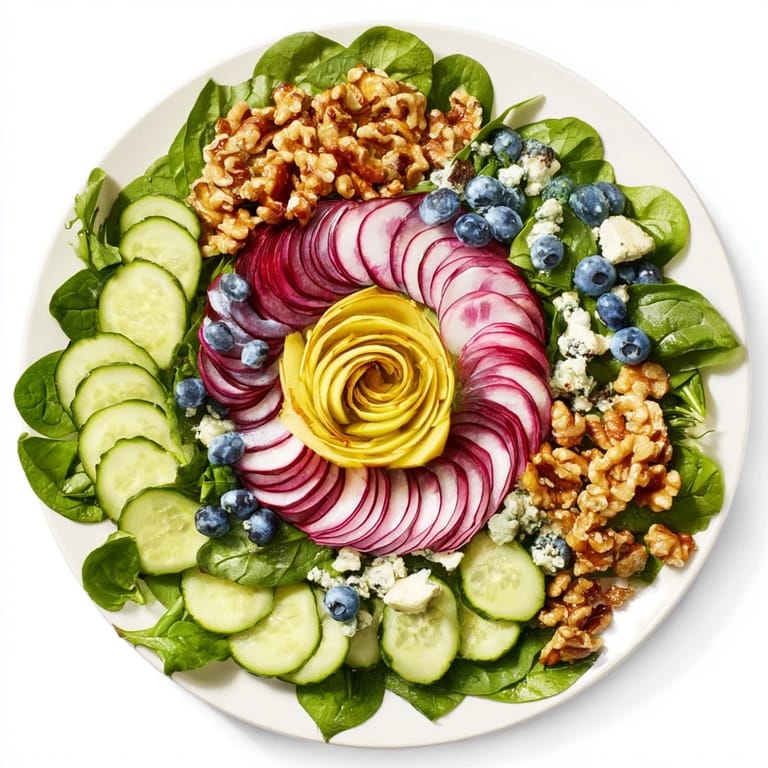
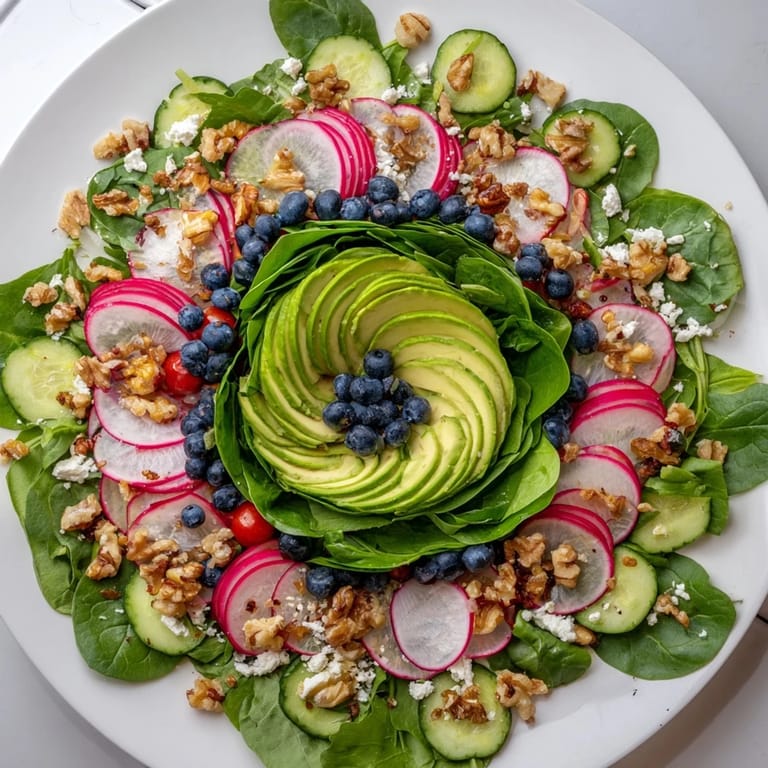
Save I stumbled onto this salad by accident, honestly. I was arranging vegetables on a plate one afternoon, trying to make something that wouldn't bore my eyes while I ate it, when I noticed the way the pieces spiraled outward naturally. The baby spinach became the heart, then the arugula fanned out, and suddenly there was this mathematical beauty emerging from my cutting board. It felt like the kitchen was teaching me something about balance I'd never considered before.
The first time I served this at a dinner party, my friend Emma spent longer photographing it than eating it. That moment when someone just stops mid-conversation to really look at what you've made, that's when you know the food has done something more than fill a plate. She called it "the most mathematical thing I've ever wanted to eat," and I've never forgotten it.
Ingredients
- Baby spinach leaves: These form your foundation and should be fresh enough that they don't wilt when you look at them hard. The smaller leaves work better for creating that tight inner crescent.
- Arugula: Its peppery bite is essential here, not just for flavor but for that visual pop of darker green against the spinach's softer color.
- Cherry tomatoes: Halving them exposes their seeds and creates little pools of juice that dress everything around them naturally.
- Cucumber: Slice it thin enough to be almost translucent so it drapes beautifully and doesn't add unwanted weight to the spiral.
- Radishes: These paper-thin slices are where you get crunch and a subtle heat that keeps the palate interested.
- Red onion: Just a whisper of it, sliced fine enough to feel delicate rather than aggressive.
- Avocado: Use one that's perfectly ripe, not mushy, and add it last because it bruises like it has feelings.
- Blueberries: They seem odd here until you taste how their slight tartness plays against the feta and nuts.
- Toasted walnuts: Toast them yourself for thirty seconds in a dry pan and notice how the kitchen suddenly smells like fall.
- Crumbled feta cheese: The tang cuts through everything and gives your teeth something to hold onto.
- Extra-virgin olive oil: Don't use the cheap stuff here because you'll taste it doing nothing special.
- Lemon juice: Fresh squeezed makes an actual difference, though bottled works in a pinch.
- Honey: Just enough to round out the sharp edges without making it sweet.
- Dijon mustard: This is the secret ingredient that nobody notices but would miss immediately if it vanished.
Tired of Takeout? 🥡
Get 10 meals you can make faster than delivery arrives. Seriously.
One email. No spam. Unsubscribe anytime.
Instructions
- Build your foundation:
- Lay the spinach leaves in a crescent on your largest round platter, each leaf overlapping the last like you're creating something intentional. This inner arc is your starting point, the beginning of everything that spirals outward from here.
- Create the first expansion:
- Fan the arugula around the spinach in a larger crescent, letting each leaf catch the light slightly differently. You're not being rigid about this, just letting each ingredient expand the spiral naturally.
- Build your color story:
- Add the tomatoes next, each half placed so the cut side faces up and the colors deepen as you move outward. Follow with cucumber slices creating delicate overlap, then radish slices that catch light like little mirrors.
- Add your accent details:
- Place the red onion in a thin ring near the edge, add avocado slices nestled into gaps, and scatter blueberries where they create visual surprise. This is where you trust your eye rather than a recipe.
- Layer your textures:
- Sprinkle the toasted walnuts and crumbled feta across the entire spiral, letting them settle into the crevices and sit on top. The cheese and nuts are both punctuation and substance.
- Make your dressing:
- Whisk together the olive oil, lemon juice, honey, and mustard in a small bowl until it becomes creamy and unified. Taste it and adjust because this is where you make it yours.
- Finish with intention:
- Drizzle the dressing in a thin spiral pattern that mirrors the arrangement, or just across the whole thing if you're feeling loose about it. Serve immediately so everything stays crisp and the colors don't fade into one another.
 Save
Save There's something about feeding people food that looks this intentional that changes the energy at the table. Someone will always ask if it took hours, and you get to tell them it took twenty minutes and no special skill, just attention. That moment when they understand they could make beautiful things too, that's the real ingredient here.
Why Spirals Work in Food
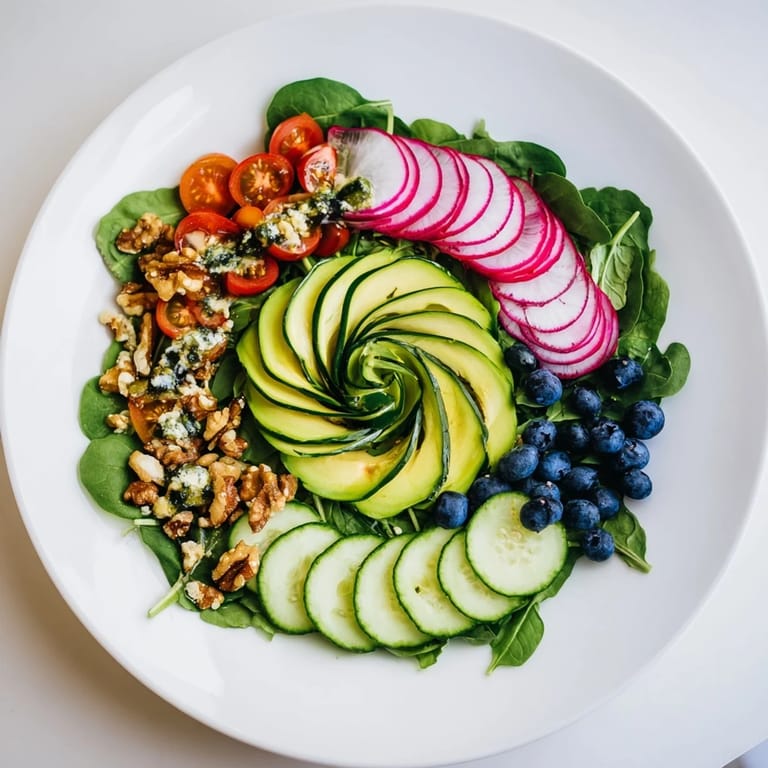
The Fibonacci spiral isn't just pretty, it's how nature actually organizes things. When you arrange food this way, you're tapping into something that already feels balanced and right to our eyes. I learned this by accident but now I use it everywhere, knowing it helps food look intentional even when you're just following instinct.
Playing with Variations
The beauty of this salad is how flexible it actually is once you understand the concept. Grilled chicken slices can spiral in place of some vegetables, or roasted chickpeas if you want plant-based protein. Goat cheese crumbles differently than feta and adds a different kind of tang, and honestly both work perfectly. The structure stays the same, but you can build it with whatever looks vibrant at your market that day.
Setting Yourself Up for Success
Having a large round platter is genuinely important here because you need that space to let the spiral breathe and show itself. Prep all your ingredients on a cutting board before you start arranging so you're not halfway through realizing you haven't sliced the cucumber yet. The act of arranging becomes meditative when you're not rushing, and that calm transfers to everyone who eats it.
- Keep a damp paper towel nearby to clean your hands between touching raw vegetables and cheese so flavors don't muddy together.
- If your platter isn't round, use whatever you have and just lean into the spiral concept with what fits your space.
- Make the dressing first so it can sit quietly while you arrange the vegetables, giving all the flavors time to know each other.
 Save
Save This salad taught me that presentation isn't about being fancy, it's about taking five extra minutes to show people you were thinking of them. Every time someone eats this, they're tasting both the vegetables and the care, and that's what actually stays with them.
Recipe FAQ
- → What makes this salad visually unique?
The ingredients are arranged following the Fibonacci spiral, creating expanding arcs that balance color and texture beautifully.
- → Can the feta cheese be substituted?
Yes, goat cheese works well as an alternative to feta for a similar creamy texture and tangy flavor.
- → How should the dressing be applied?
Whisk the olive oil, lemon juice, honey, Dijon mustard, salt, and pepper together and drizzle evenly over the arranged salad just before serving.
- → Is this salad suitable for vegetarians?
Yes, it contains fresh produce, nuts, and cheese, making it vegetarian-friendly as listed.
- → Can I add protein to this salad?
Grilled chicken or chickpeas can be added on top for extra protein and heartiness.