 Save
Save There's something about the smell of ginger hitting hot oil that makes everything feel intentional in the kitchen. I discovered this soup on a drizzly afternoon when I had a handful of vegetables and absolutely no plan, just a knob of ginger sitting in my crisper drawer practically begging to be used. What started as improvisation became a ritual—the kind of meal I now make whenever I need something that feels both nourishing and comforting without any fuss. It's become my go-to when friends stop by unexpectedly or when I'm cooking for myself on a quiet evening.
I made this for my sister during her first week living in a new city, and she called me later saying the smell of it simmering on the stove made her apartment feel like home. That moment stuck with me—soup as comfort, soup as belonging. Now whenever someone's going through something, this is what I reach for.
Ingredients
- Onion, carrots, and celery: This trio is your flavor foundation, and letting them soften first builds a depth that makes the whole soup taste intentional.
- Fresh ginger: Peeling and grating it yourself changes everything—that sharp, bright heat you get is completely different from pre-minced.
- Garlic cloves: Minced fresh garlic rather than jarred makes the aromatics sing and keeps the soup tasting alive.
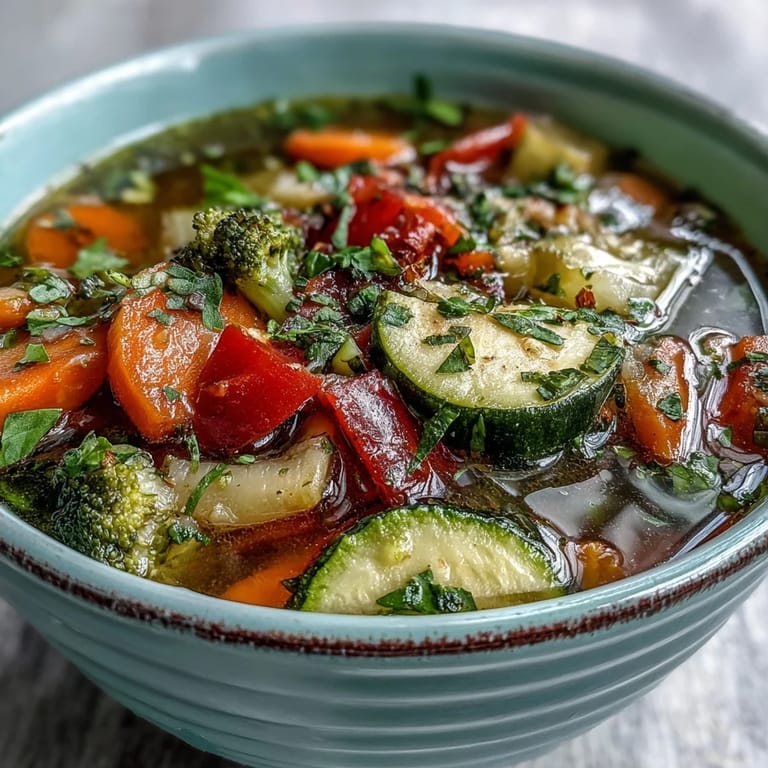
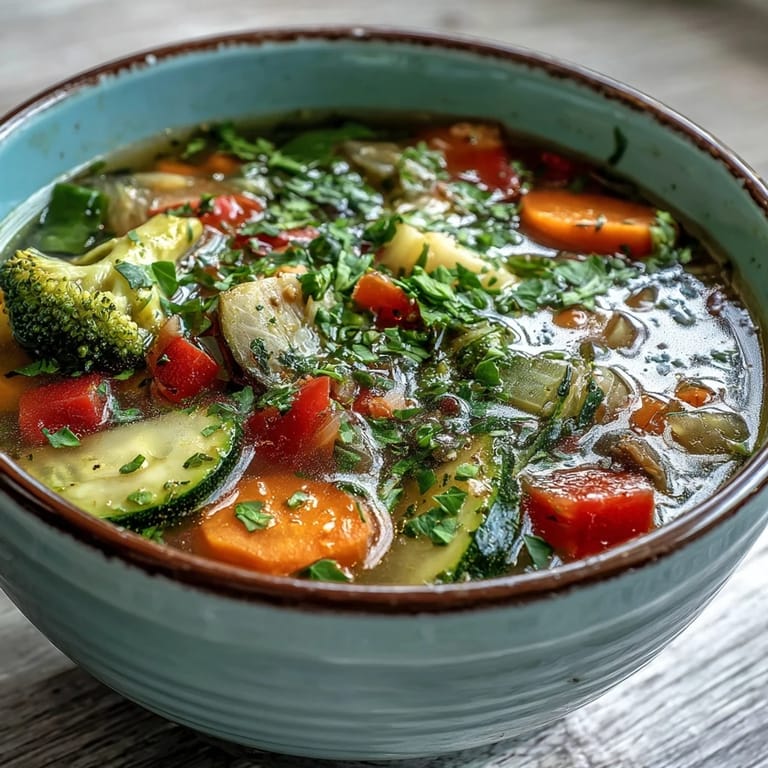
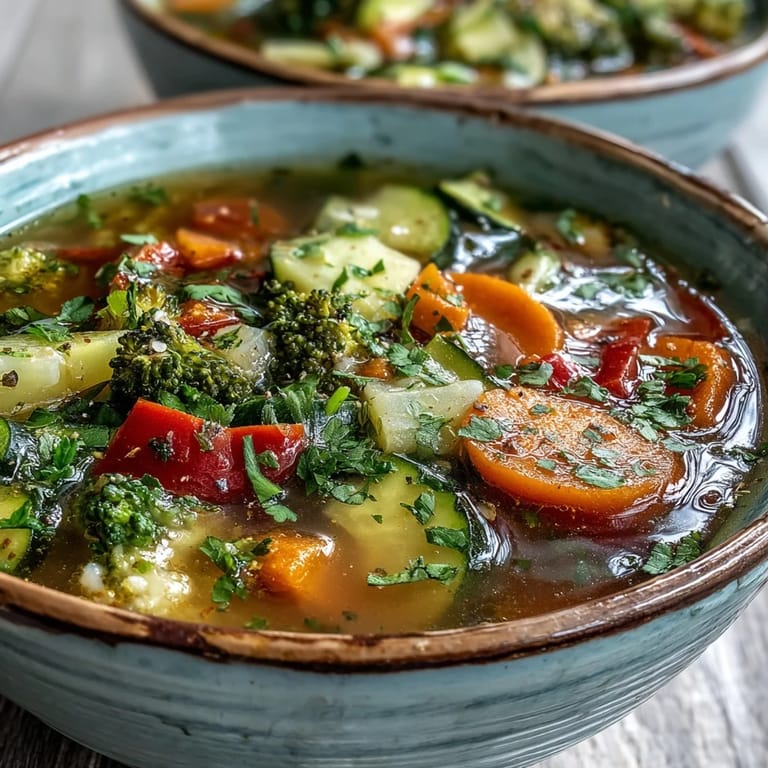
- Red bell pepper, zucchini, and broccoli: These vegetables stay slightly tender when you don't overcook them, giving the soup texture instead of turning it into mush.
- Vegetable broth: The quality matters here—a good broth lifts the whole thing, so read labels if you care about where it comes from.
- Olive oil: Just enough to coat the pot and wake up those first vegetables without making the soup feel heavy.
- Sea salt and black pepper: Taste as you go; you'll need more than you think because broth is forgiving.
- Soy sauce or tamari: Optional but worth the small bottle if you don't have it already—it adds an umami depth that makes people ask what your secret is.
- Fresh cilantro or parsley: A pile of herbs at the end brightens everything and makes it look like you know what you're doing.
- Toasted sesame oil: Just a drizzle transforms the whole bowl into something that tastes restaurant-quality.
Tired of Takeout? 🥡
Get 10 meals you can make faster than delivery arrives. Seriously.
One email. No spam. Unsubscribe anytime.
Instructions
- Get the base going:
- Heat your oil over medium heat, then add the onion, carrots, and celery—you want them to soften and turn a little golden at the edges, which takes about five minutes. This is where the flavor starts building, so don't skip it or rush it.
- Wake up the aromatics:
- Add your minced garlic and grated ginger and let them cook together for two minutes—your kitchen should smell incredible by now. If it doesn't smell amazing, something's off, so trust your nose.
- Add the colorful vegetables:
- Throw in the bell pepper, zucchini, and broccoli and give everything a stir so the ginger and garlic coat the vegetables. Let them cook for about three minutes until they're fragrant and starting to soften slightly.
- Build the broth:
- Pour in your vegetable broth and crank the heat to bring it to a boil—you'll see bubbles breaking the surface. Once it's boiling, turn the heat down to a simmer so it's just gently bubbling.
- Season and simmer:
- Add your salt, pepper, and soy sauce if you're using it, then let the whole thing simmer uncovered for fifteen to twenty minutes until the vegetables are tender. Don't walk away completely—stir occasionally and taste the broth to make sure it's seasoning the way you like.
- Taste and adjust:
- Before serving, take a spoonful and really taste it—add more salt, pepper, or soy sauce if it needs it. This is your chance to make it exactly right.
- Serve with style:
- Ladle the soup into bowls, drizzle with sesame oil if you have it, and scatter fresh herbs on top. The presentation matters because people eat with their eyes first.
 Save
Save My neighbor tasted this soup once and asked if I'd gone to cooking school—I hadn't, but that question made me realize that sometimes the simplest meals are the ones that feel most thoughtfully made. It's not fancy, but it's honest food that actually nourishes you.
Why Ginger Makes All the Difference
Ginger is doing more work than you realize in this soup—it's not just a flavor, it's a warmth that travels through your whole body. The first time I used fresh ginger instead of the powdered stuff, I couldn't believe how different it tasted, sharper and more alive. It's worth taking the thirty seconds to peel and grate it yourself because you'll taste the difference in every spoonful.
Building Flavor in Layers
Good soup isn't made all at once—it's built step by step, with each layer adding something new. The onions, carrots, and celery start first because they need time to soften and release their sweetness. Then the garlic and ginger come in to add warmth and complexity, and finally the vegetables get added so they stay bright and textured instead of turning soft and colorless.
Making It Your Own
This is the kind of soup that wants you to play with it—I've made it with snap peas when that's what I had, swapped in mushrooms for earthiness, and once added a handful of spinach at the very end so it wilted right into the broth. The foundation is strong enough to handle swaps, and the ginger and garlic are flexible enough to make almost any vegetable combination taste intentional and warm.
- Add a pinch of chili flakes or red pepper if you want heat creeping up behind the ginger.
- Stir in cooked lentils or tofu cubes if you want more protein and substance.
- Serve it with crusty bread or rice noodles to turn it into a full meal instead of just a starter.
 Save
Save This soup has become one of those recipes I make without thinking, which somehow makes it taste better every time. There's something about the meals we stop overthinking that end up feeding people best.
Recipe FAQ
- → Can I make this soup ahead of time?
Absolutely. This soup actually develops deeper flavors when made ahead. Store it in an airtight container in the refrigerator for up to 4 days. Reheat gently on the stovetop, adding a splash of water or broth if it has thickened. The vegetables will soften slightly but maintain their texture well.
- → Can I freeze this ginger vegetable soup?
Yes, it freezes beautifully for up to 3 months. Let the soup cool completely before transferring to freezer-safe containers, leaving some space for expansion. Thaw overnight in the refrigerator before reheating. Note that the vegetables may be slightly softer after freezing, but the flavor remains excellent.
- → What other vegetables can I use?
This recipe is highly adaptable. Try adding snap peas, spinach, kale, mushrooms, green beans, or butternut squash. Root vegetables like sweet potatoes or parsnips work well too—just add them earlier in the cooking process as they take longer to soften. Use what's seasonal or what you have in your crisper drawer.
- → How can I add more protein to this soup?
Several options work seamlessly. Add cooked lentils or chickpeas during the last 5 minutes of simmering. Cubed tofu absorbs the savory broth beautifully. For a non-vegan option, poach eggs directly in the hot broth or serve with shredded chicken on the side. Quinoa is another excellent protein boost that adds pleasant texture.
- → Is this soup spicy?
As written, it has a gentle warmth from the ginger without being spicy. The heat level is mild and family-friendly. If you enjoy spice, add chili flakes when sautéing the aromatics, or garnish with sliced fresh chili or a swirl of sriracha. You can easily adjust the heat to your preference.