 Save
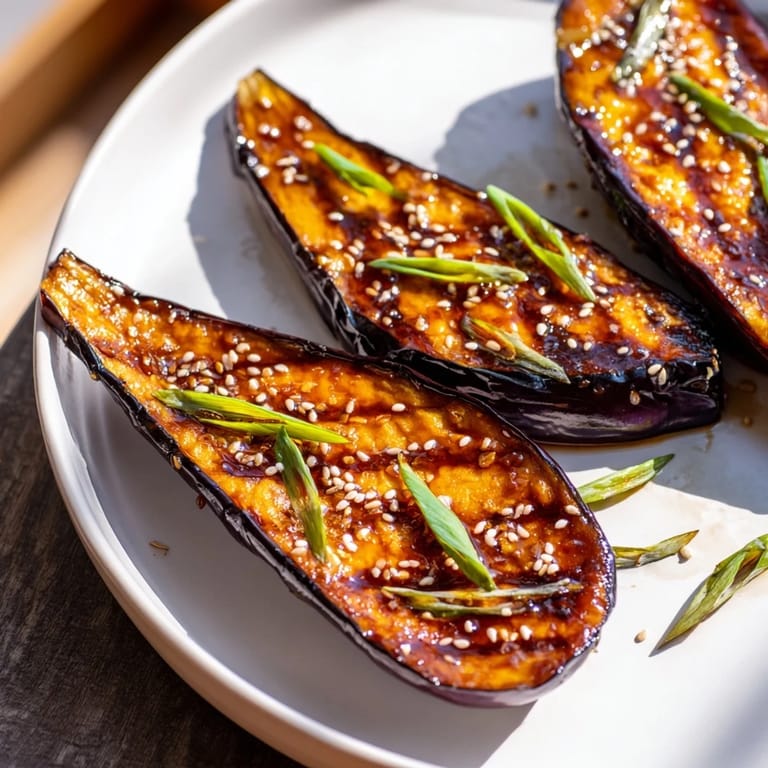
Save The first time I encountered miso glazed eggplant was at a tiny izakaya in Tokyo, where the chef slid a plate of sizzling halves across the counter. The glaze was bubbling and dark in spots, and the scent of toasted sesame wrapped around everything. I ate it straight from my chopsticks, burning my tongue just a little because I could not wait. Recreating that memory in my own kitchen took some experimentation, but now its one of those recipes I make when I want something that feels fancy but comes together quickly.
Last summer I made these for a dinner party where half the guests claimed they did not even like eggplant. They went back for seconds and thirds, and someone actually asked if there was meat in the glaze because the flavor was so rich. Watching people convert right at the table, spearing the caramelized edges and reaching for more, reminded me why simple ingredient combinations can be so powerful.
Ingredients
- 2 medium Japanese eggplants: These have thinner skin and fewer seeds than Italian varieties, which means they turn silky rather than bitter when roasted
- 3 tbsp white miso paste: The foundation of the glaze, bringing that deep fermented savory note that makes everything taste better
- 1 tbsp mirin: Adds sweetness and a subtle gloss that helps the glaze cling to the eggplant flesh
- 1 tbsp sake: Rounds out the sharpness of the miso and adds a gentle depth
- 1 tbsp sugar: Balances the saltiness and helps the glaze caramelize under the broiler
- 1 tbsp sesame oil: Half for brushing the eggplant before roasting, half for whisking into the glaze
- 1 tbsp toasted sesame seeds: Sprinkle these right before serving for nutty crunch and visual contrast
- 2 green onions, thinly sliced: Fresh brightness that cuts through the rich glaze
Tired of Takeout? 🥡
Get 10 meals you can make faster than delivery arrives. Seriously.
One email. No spam. Unsubscribe anytime.
Instructions
- Get the oven ready:
- Preheat to 400°F and line a baking sheet with parchment paper so cleanup is minimal later.
- Score the eggplants:
- Slice each eggplant in half lengthwise and make a crosshatch pattern in the flesh, pressing about halfway through without cutting into the skin.
- Oil and arrange:
- Brush the cut sides with a little sesame oil and place them cut side up on your prepared baking sheet.
- Roast until tender:
- Let them go for 20 to 25 minutes until the flesh is soft and starting to turn golden.
- Make the glaze:
- Whisk together the miso paste, mirin, sake, sugar, and remaining sesame oil until completely smooth.
- Glaze the eggplants:
- Pull the baking sheet out and spread a generous layer of glaze over each eggplant half.
- Broil for caramelization:
- Switch your oven to broil and cook for 2 to 3 minutes, watching closely until the glaze bubbles and darkens in spots.
- Finish and serve:
- Sprinkle with sesame seeds and green onions while still hot.
 Save
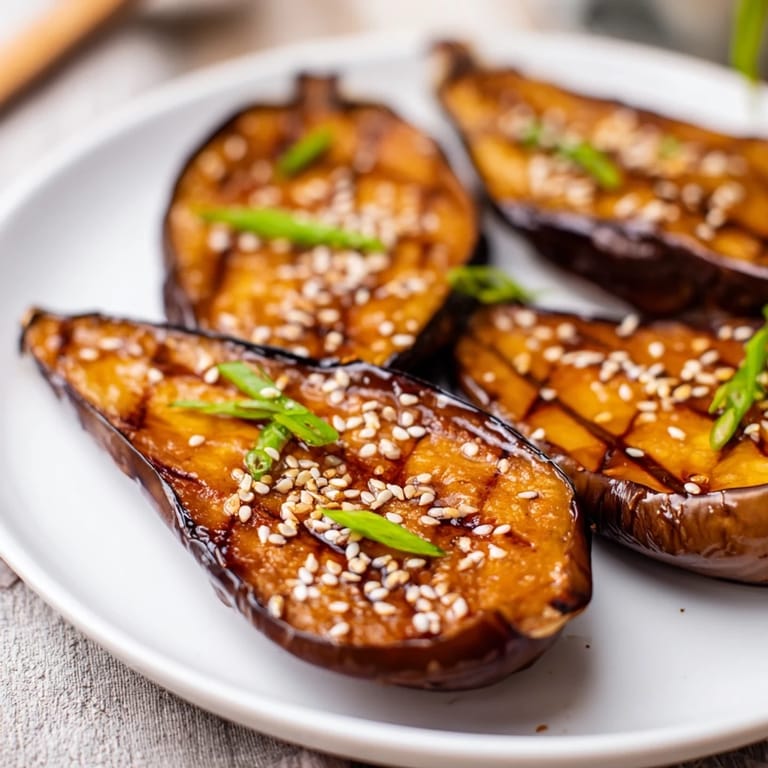
Save My friend Sarah asked for the recipe after eating these at my place, and when she made them for her family the next week, her husband sent me a photo of an empty plate. That is the kind of endorsement that matters more than any cookbook review.
Making Ahead
You can whisk the glaze together up to three days in advance and keep it in the refrigerator. The eggplants are best roasted the same day you plan to serve them since they do not hold up well once cooked and can become soggy.
Serving Ideas
I love these alongside steamed short grain rice with a sprinkle of salt, or as part of a spread with pickled vegetables and some protein like grilled fish or tofu. The eggplant is substantial enough to work as a light main if you double the portion.
Variations
Sometimes I add a teaspoon of grated fresh ginger to the glaze for extra warmth. During summer, a handful of shiso leaves instead of green onions brings a bright herbal note.
- Honey or maple syrup works beautifully in place of sugar for a different kind of sweetness
- A pinch of red pepper flakes in the glaze adds just enough heat to make things interesting
- Try black sesame seeds occasionally for a dramatic visual contrast
 Save
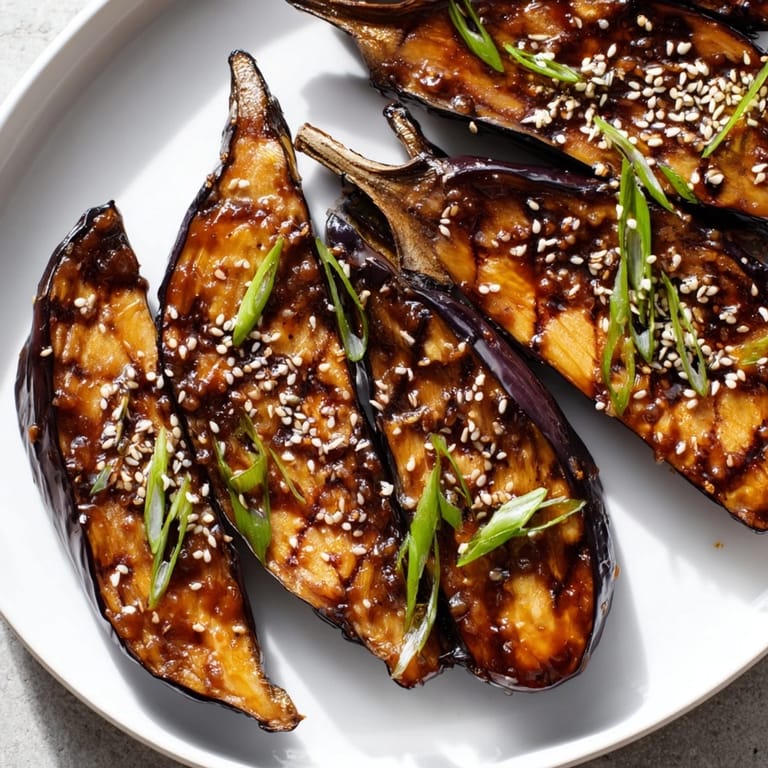
Save These eggplants have become my go to when I want something that feels comforting but still special enough for company.
Recipe FAQ
- → What type of eggplant works best?
Japanese or Chinese eggplants are ideal because they have thinner skin, fewer seeds, and a naturally creamier texture than globe eggplants. If unavailable, you can substitute baby eggplants or smaller globe eggplants, though cooking times may vary slightly.
- → Can I make this gluten-free?
Yes. Choose a certified gluten-free miso paste and verify that your sake and mirin are gluten-free. Some traditional brands contain wheat-based additives, while many modern brands offer gluten-free alternatives.
- → Why score the eggplant flesh?
Scoring creates more surface area for the glaze to penetrate and helps the heat reach the interior more evenly. It also allows the eggplant to absorb the miso mixture more deeply, resulting in better flavor throughout each bite.
- → How do I store and reheat leftovers?
Store in an airtight container in the refrigerator for up to 3 days. Reheat in a 350°F oven for about 10 minutes, or microwave gently. Note that the glaze may lose some of its caramelized crispiness upon reheating.
- → Can I adjust the sweetness level?
Absolutely. Reduce the sugar for a more savory glaze, or increase it for a sweeter finish. Honey or maple syrup work as natural alternatives and add slightly different flavor notes. Taste the glaze before applying and adjust to your preference.