 Save
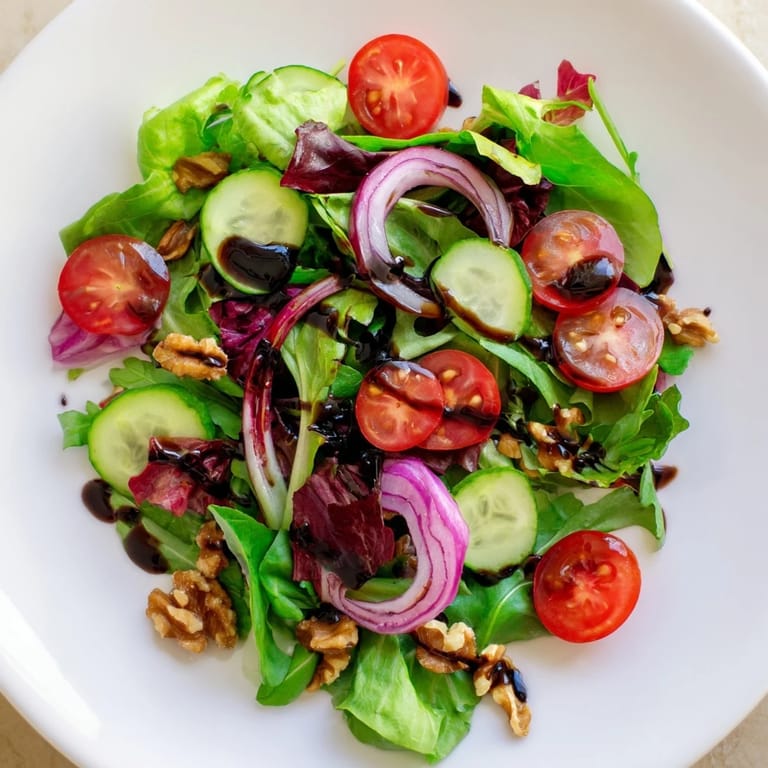
Save There's something almost meditative about the first time you taste a properly reduced balsamic vinegar—that moment when you realize the thin, sharp liquid you started with has transformed into something glossy, almost syrupy, with a depth that catches you off guard. I discovered this salad on a quiet weeknight when I had exactly seven minutes before guests arrived and nothing but greens in my crisper drawer. What started as panic-cooking became one of those dishes I now make constantly, not because it's fancy, but because it somehow tastes like both effort and ease at the same time.
I made this for a friend who'd been eating sad desk salads all week, and watching her face light up when she tasted it felt oddly satisfying. She asked for the recipe immediately, which meant I had to confess it wasn't some inherited family secret—just greens, tomatoes, and balsamic that had actually been paid attention to for a few minutes. Now whenever I make it, I think about how the smallest acts of care in the kitchen somehow translate into the food itself.
Ingredients
- Mixed salad greens (6 cups): Use whatever's fresh and crisp—arugula brings a peppery bite, spinach adds earthiness, romaine gives you structure, and radicchio contributes a subtle bitterness that plays beautifully against the sweet vinegar.
- Cherry tomatoes (1 cup, halved): Halving them instead of leaving them whole means more surface area for the dressing to cling to, and they won't roll around your bowl quite so dramatically.
- Red onion (1/2 small, thinly sliced): Thin slicing matters here—you want delicate ribbons that distribute throughout rather than harsh chunks that dominate.
- English cucumber (1/2, sliced): English cucumbers are seedless and tender, so you can eat the whole thing without that watery, seedy disappointment.
- Toasted walnuts (1/4 cup, optional): Toasting them yourself makes all the difference; it wakes up their flavor and adds a satisfying crunch that keeps every bite interesting.
- Balsamic vinegar (1/2 cup): This is your star ingredient, so buy the best you reasonably can—it should smell complex and slightly sweet.
- Extra-virgin olive oil (2 tablespoons): A good olive oil tastes like it came from somewhere, not like it came from a warehouse.
- Dijon mustard (1 teaspoon, optional): It adds a subtle sharpness that keeps the sweetness of the balsamic from feeling cloying.
- Sea salt (1/2 teaspoon): Fine sea salt dissolves quickly and distributes evenly throughout the dressing.
- Freshly ground black pepper (1/4 teaspoon): Fresh cracking matters—pre-ground pepper tastes like it's been sitting in a cabinet somewhere wondering about its purpose.
Tired of Takeout? 🥡
Get 10 meals you can make faster than delivery arrives. Seriously.
One email. No spam. Unsubscribe anytime.
Instructions
- Reduce the balsamic into glossy gold:
- Pour the balsamic vinegar into a small saucepan and set it over medium heat—you're looking for a gentle simmer, not an aggressive boil that splatters everywhere and fills your kitchen with vinegar steam (learned that the hard way). After 6 to 8 minutes, it should have darkened slightly and thickened enough that when you drag a spoon through it, the liquid flows slowly back together.
- Cool it just enough to work with:
- Let it sit off the heat for about 2 minutes so it's not still steaming when you add it to the oil, but while it's still warm and pliable.
- Gather your greens and vegetables:
- Combine the mixed greens, halved tomatoes, sliced red onion, cucumber slices, and walnuts in a large salad bowl—there's no need to be precious about this, just pile it all together. This is where you can taste as you build, adjusting quantities if something feels off.
- Build the dressing by hand:
- In a small bowl, whisk the olive oil together with the mustard, salt, and pepper until they start to come together, then slowly pour in your cooled balsamic reduction while whisking constantly. You're trying to create something emulsified and smooth, not separated and choppy.
- Bring it all together with a gentle toss:
- Drizzle the dressing over the salad and toss gently, using tongs or your hands if that feels more natural—the goal is to coat everything evenly without bruising the delicate greens into submission. Taste a leaf and adjust the salt and pepper if it needs it.
- Serve it while everything's still crisp:
- Plate it immediately and eat it right away, because even though this dressing is beautiful, it will eventually soften the greens if you let them sit together too long.
 Save
Save This salad became my go-to dish for those moments when I needed to prove to myself that I was still capable of feeding myself well, even on nights when everything felt chaotic. There's something grounding about knowing you can make something this good with nothing but what's already in your kitchen.
Why This Works Every Time
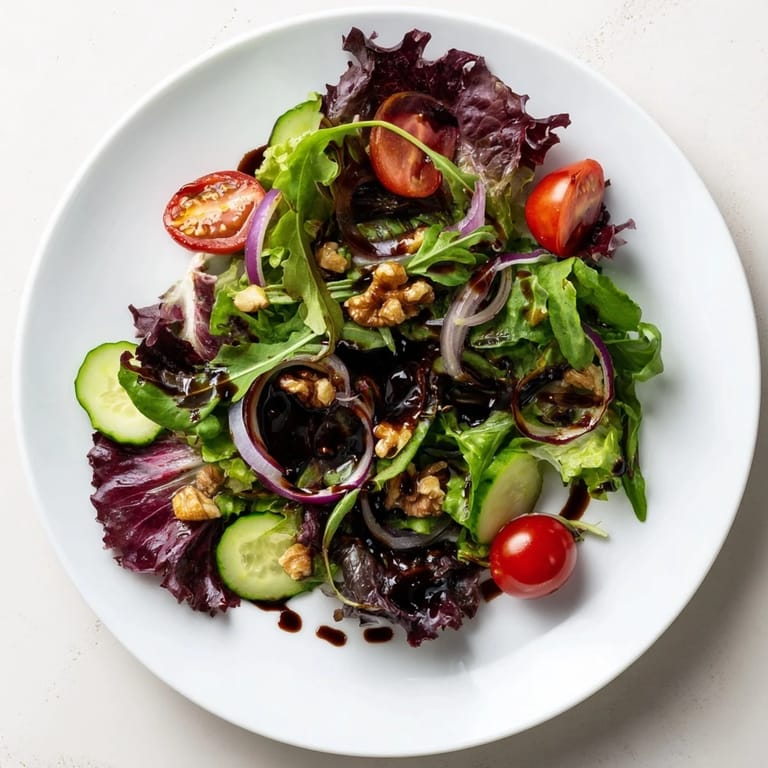
The secret is that balsamic reduction does something almost chemical to the other flavors in a salad—it makes everything taste more like itself while tying all the disparate elements together into one cohesive thing. It's not aggressive or demanding; it's more like a quiet anchor that holds everything else in place. The sweetness plays against the sharpness of the red onion, the earthiness of the greens, and the brightness of the tomatoes in a way that feels effortless once you've done it once.
Playing with What You Have
This is one of those salads that welcomes experimentation without falling apart—you can swap greens depending on the season, add crumbled feta or shaved Parmesan if you want richness, or top it with grilled chicken or roasted chickpeas if you need more substance. I've made it with thinly shaved fennel when that's what was on hand, and with candied pecans instead of walnuts when I was feeling fancier. The balsamic reduction is flexible enough to hold everything together, even when you're improvising.
Small Touches That Matter
The details in a simple salad are everything—crisp greens that were actually stored properly, tomatoes at room temperature so they taste like something, an onion thin enough that you can see light through it, and a reduction that's been given just enough time and heat to become something special. These aren't complicated techniques, but they're the difference between a salad that feels like punishment and one that feels like a gift to yourself.
- Toast your own walnuts or buy them from somewhere that turns them over quickly, because rancid nuts can ruin everything in seconds.
- If your tomatoes are mealy or flavorless, consider adding a tiny splash of balsamic reduction directly to them before they hit the salad—it wakes them up.
- Keep your salad bowl cold if you can, either by chilling it beforehand or running it under cool water and drying it well, so the greens stay crisp longer.
 Save
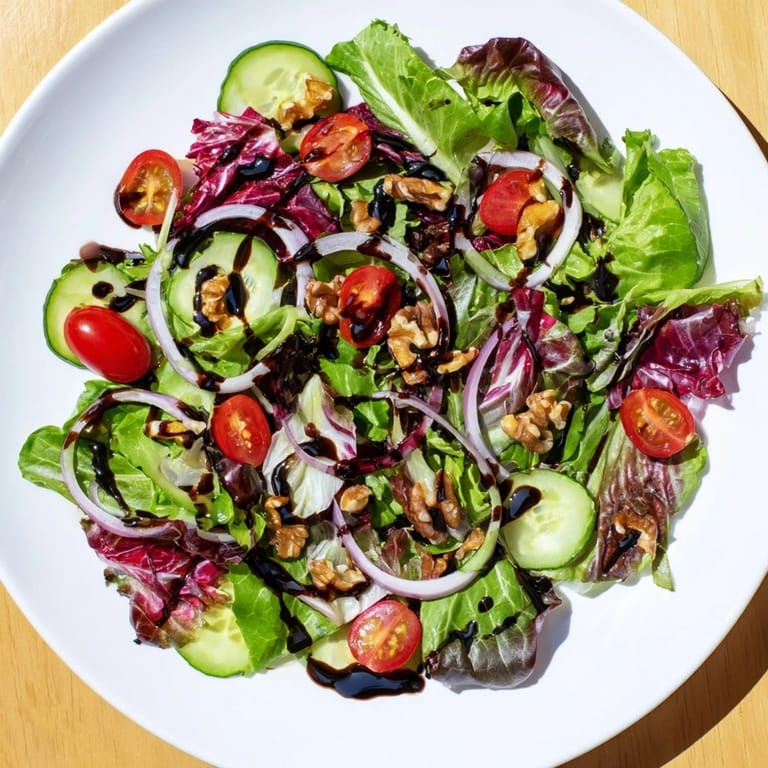
Save What started as seven minutes before guests arrived has become one of my favorite reminders that the most satisfying meals don't require hours or a complicated list of ingredients—just attention, quality basics, and a little bit of care. That's all this salad really is, and somehow it's enough.
Recipe FAQ
- → How do I make the balsamic reduction?
Simmer balsamic vinegar in a small saucepan over medium heat for 6–8 minutes until it reduces by half and thickens slightly. Let it cool before use.
- → Can I prepare the balsamic reduction in advance?
Yes, you can make the reduction ahead of time and store it in the refrigerator for up to one week.
- → What greens work best in this salad?
Mixed greens such as arugula, spinach, romaine, and radicchio provide a nice balance of flavors and textures.
- → Are walnuts necessary in this dish?
Walnuts are optional but add a pleasant crunch and nutty flavor if you choose to include them.
- → Can I add protein to this salad?
For extra protein, consider adding grilled chicken or chickpeas to complement the fresh greens and tangy dressing.
- → How do I dress the salad evenly?
After whisking the balsamic reduction with olive oil and seasonings, drizzle over the salad and toss gently to coat all ingredients evenly.