 Save
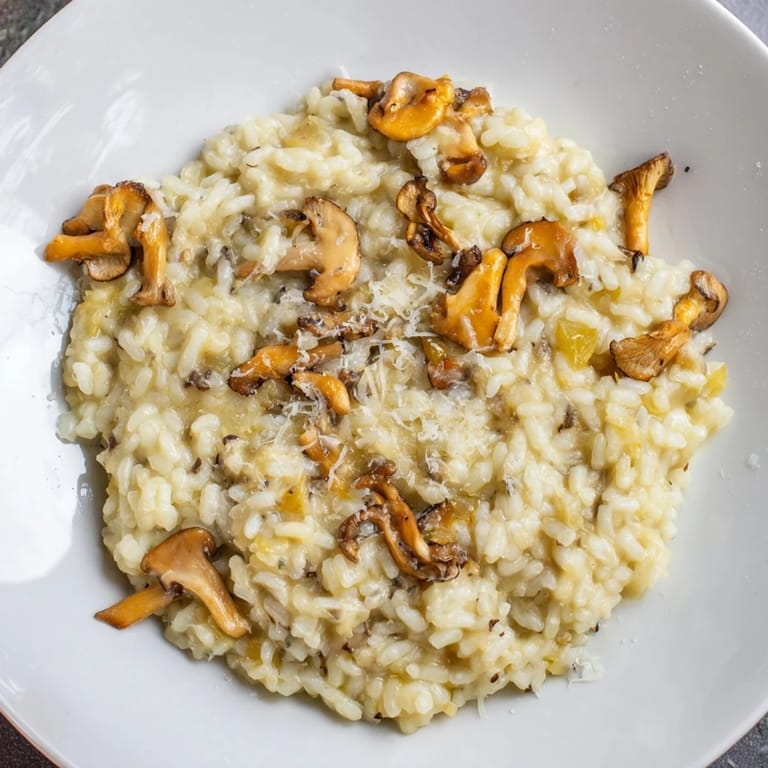
Save There's a particular moment when risotto stops being a chore and becomes meditation—it happened to me on a rainy Tuesday when I had nothing but rice, mushrooms, and time. The kitchen filled with that earthy, buttery aroma while I stood at the stove, ladle in hand, watching the rice gradually transform into something creamy and luxurious. My neighbor came by complaining about the weather, took one spoonful, and suddenly we weren't talking about the rain anymore. That's when I realized risotto isn't fussy or intimidating; it just wants your attention and a little patience.
I made this for a dinner party once, convinced I'd mess it up because risotto has that reputation for requiring perfect timing. Instead, my friends gathered around the kitchen island, passing wine back and forth while I stirred, and the whole meal turned into the kind of evening where nobody checks their phone. That's when cooking risotto stopped being about achieving perfection and became about creating those moments where good food and good company are exactly the same thing.
Ingredients
- Arborio rice: This short-grain rice has a high starch content that releases slowly as you stir, creating creaminess without cream—it's the whole reason risotto works at all.
- Cremini or button mushrooms: They shrink down and concentrate in flavor when sautéed until golden; if you can find a mix of wild mushrooms, they'll add earthiness that transforms the entire dish.
- Olive oil and unsalted butter: The olive oil gets the mushrooms golden, while butter appears twice—once for sautéing and again at the finish for richness.
- Yellow onion and garlic: These build flavor from the ground up; don't skip the step of cooking them until the onion turns translucent.
- Vegetable broth: Keeping it warm is non-negotiable because cold broth will shock the rice and slow your cooking; vegetable broth lets the mushrooms shine, but chicken works if you prefer.
- Dry white wine: It adds acidity and depth; the alcohol cooks off, leaving behind a subtle complexity.
- Parmesan cheese: Freshly grated makes all the difference—the pre-shredded stuff has anti-caking agents that don't melt as smoothly.
- Salt and black pepper: Season at the end when you can taste the rice; risotto is forgiving about this.
- Fresh parsley: Mostly optional, but it adds brightness and a visual finish that makes people think you fussed more than you did.
Tired of Takeout? 🥡
Get 10 meals you can make faster than delivery arrives. Seriously.
One email. No spam. Unsubscribe anytime.
Instructions
- Get the mushrooms golden:
- Heat olive oil and butter together in a large skillet over medium heat, then add the sliced mushrooms in a single layer. Let them sit for a minute before stirring—this gives them a chance to brown instead of steam, and you'll know they're done when they're dark golden and any liquid they released has evaporated, about 6 to 8 minutes. Set them aside on a plate.
- Build your flavor base:
- Wipe the pan clean or work in the browned bits—they're good. Add the chopped onion to the same pan and stir occasionally until it turns soft and translucent, roughly 3 minutes, then add the garlic and cook just until fragrant, about 1 minute more. This is when your kitchen smells like home.
- Toast the rice:
- Stir in the Arborio rice and keep stirring for about 2 minutes; you're looking for the edges of the grains to turn translucent and slightly opaque while the center stays white. This toasting step is subtle but crucial—it seals the grain so it releases starch gradually instead of all at once.
- Add the wine:
- Pour in the white wine and stir constantly until it's mostly absorbed, which takes a minute or two. The wine will bubble slightly and smell wonderful; don't walk away during this part.
- The slow, steady stir:
- This is where risotto earns its reputation—add the warm broth one ladle at a time, stirring frequently as the rice absorbs it. Each addition should mostly disappear before you add the next; the whole process takes about 18 to 20 minutes. The rice gradually becomes creamy as it releases its starch, and the stirring releases even more, creating that signature silky texture. You'll feel the moment it shifts from brothy to creamy.
- Finish with gold:
- Stir in the reserved mushrooms, the remaining 2 tablespoons of butter, and the grated Parmesan. The butter and cheese will make everything glossy and rich; cook for 2 more minutes to meld the flavors together. Taste and adjust with salt and pepper—remember that Parmesan is already salty.
- Serve right now:
- Risotto waits for no one. Divide among bowls, add an extra shaving or two of Parmesan, scatter parsley over the top if you have it, and eat while it's still warm and creamy.
 Save
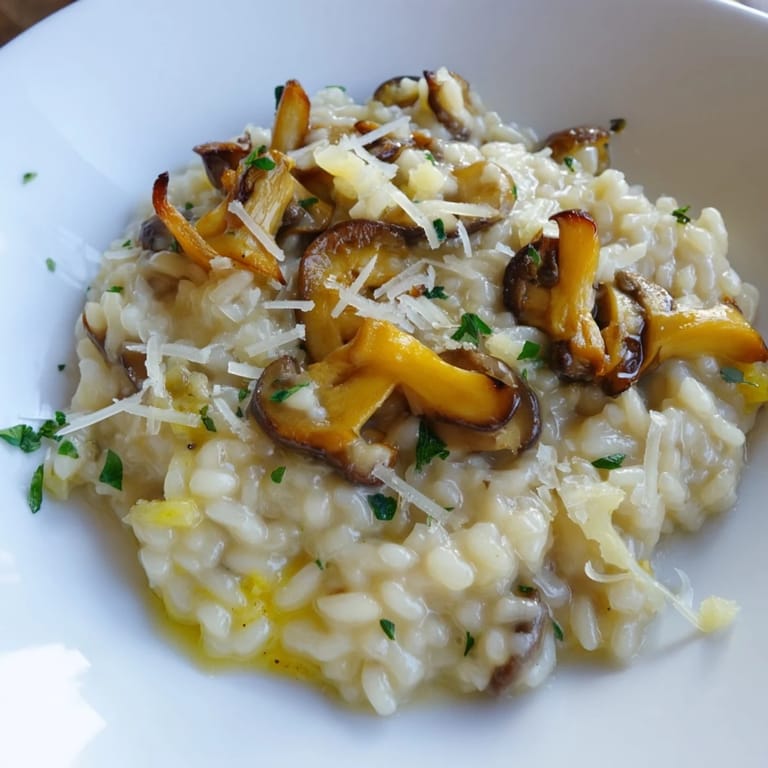
Save I remember standing in front of a pot of risotto one evening, thinking about how something so simple—just rice and broth and butter—could feel like the most luxurious meal I'd made all month. It reminded me that cooking doesn't have to be complicated to feel special.
Why Mushrooms Make Everything Better
Mushrooms in risotto aren't just a side note—they're the heart of the dish. When you sauté them until they're golden brown and slightly caramelized, they develop an umami depth that makes every spoonful taste richer than it has any right to be. I learned this by accident once when I over-sautéed them, thinking I'd ruined the meal, but instead discovered that darker mushrooms create an almost meaty intensity that makes vegetarians feel completely satisfied. If you can find a mix of cremini, shiitake, and oyster mushrooms at your market, grab them all—each one brings its own flavor character to the party.
The Wine Matters More Than You Think
The white wine does something chemical and wonderful in risotto—it adds acidity that brightens all the richness from the butter and cheese, and it prevents the dish from tasting heavy. I once made risotto with a really cheap, sweet wine and it felt flat and one-dimensional, but switching to a crisp Pinot Grigio or Sauvignon Blanc completely changed the result. The wine you choose doesn't have to be expensive, but it should be something you'd actually drink; if it doesn't taste good in a glass, it won't improve your risotto.
Small Details That Change Everything
Risotto reveals itself through small, sensory moments that you'll start to recognize after making it a few times. The sound of the rice as you stir it changes from a hollow tap-tap-tap to a softer sound as it softens; the smell shifts from nutty and toasted to creamy and almost sweet; the color lightens as it absorbs the broth. Pay attention to these signals instead of watching the clock, and you'll always nail it.
- Invest in a wooden spoon—it's the traditional choice because it doesn't conduct heat and won't scratch your pan, and honestly, stirring risotto with the right tool makes the whole experience better.
- Let your broth simmer gently on a back burner the entire time you're cooking risotto; this ensures every ladle you add is the right temperature and your rice stays at a steady cook.
- Taste the rice, not just the liquid, to know when it's done—the grains should be creamy on the outside but still have a slight firmness in the center, not mushy.
 Save
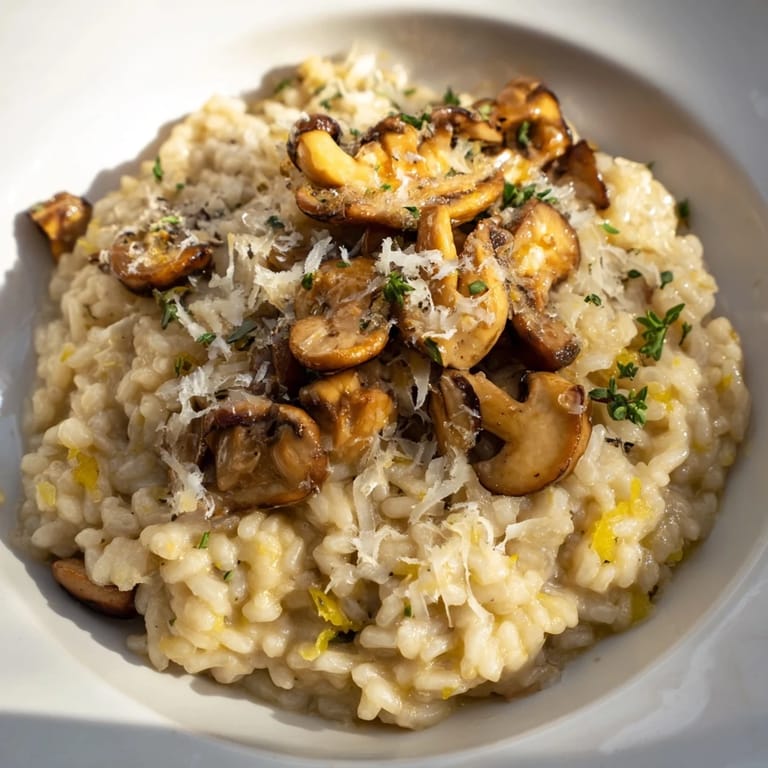
Save Risotto taught me that the best meals come from paying attention, not from fancy techniques or expensive ingredients. Make this for someone you want to cook for, not just cook at them.
Recipe FAQ
- → What type of rice is best for this dish?
Arborio rice is preferred due to its high starch content, which helps achieve the creamy consistency characteristic of this dish.
- → Can I use different mushrooms?
Yes, wild mushrooms or a mix of cremini and button mushrooms work well to enhance earthy flavors.
- → How do I know when the risotto is done?
The rice should be tender yet slightly firm to the bite (al dente) and the texture should be creamy without excess liquid.
- → Is it necessary to add wine?
White wine adds acidity and depth; however, it can be omitted or substituted with additional broth if preferred.
- → How to keep the risotto warm without overcooking?
Once off heat, cover the risotto and let it rest briefly to maintain warmth without further cooking.