 Save
Save I'll never forget the first time I arranged vegetables in a spiral pattern on a plate—it was at a small dinner party where I wanted to impress some food-loving friends without spending hours in the kitchen. As I roasted those delicate vegetable slices and spread the creamy goat cheese base, something magical happened. The simple act of overlapping colors in a continuous spiral transformed ordinary vegetables into edible art. Now, whenever I make this dish, I'm transported back to that moment of discovery, watching my guests' faces light up as they realized this stunning centerpiece was not just beautiful, but genuinely delicious and surprisingly simple to create.
I remember bringing this to a potluck once, nervous that it might seem too fussy. But as people gathered around the plate, something unexpected happened—it became the focal point of conversation. The combination of warm roasted vegetables with that cool, herbaceous cheese spread created this perfect balance that had everyone coming back for more. It was then I realized that cooking isn't just about feeding people; it's about creating moments worth remembering.
Ingredients
- 1 small eggplant, thinly sliced lengthwise: Eggplant provides a beautiful deep purple backdrop and has a naturally creamy texture when roasted. The key is slicing it lengthwise rather than in rounds—it gives you those elegant, long ribbons that spiral beautifully.
- 1 medium zucchini, thinly sliced lengthwise: This is your reliable green anchor in the spiral. It's mild enough not to compete with the cheese, yet substantial enough to hold the structure together.
- 1 red bell pepper, seeded and thinly sliced: Bell peppers add a sweet, slightly tangy note and those stunning red streaks that catch the light. Slice them thinly and evenly so they pliable when roasted.
- 1 yellow squash, thinly sliced lengthwise: This brings cheerful warmth to the palette—a gentle yellow that bridges the gap between the greens and reds beautifully.
- 1 small carrot, peeled and thinly sliced lengthwise: Carrots add earthiness and a gentle sweetness. Slice them thin enough that they soften quickly in the oven but maintain their structure.
- 100 g goat cheese, softened: This is your creamy, tangy foundation. Softened goat cheese spreads easily and creates that luxurious base that holds everything together. Room temperature is essential.
- 2 tbsp crème fraîche: A touch of crème fraîche makes the cheese spread easier to work with and adds a subtle richness that balances the acidity of the goat cheese.
- 2 tbsp fresh basil leaves, finely chopped: Basil brings brightness and a peppery note that makes people close their eyes in appreciation. Chop it just before using to preserve the essential oils.
- 1 tbsp fresh thyme leaves: Thyme adds an earthy, subtle depth that ties all the roasted vegetables together. It's the herb that says, 'yes, this was meant to be.'
- 2 tbsp olive oil: Good olive oil makes all the difference—it helps the vegetables roast gently and adds a finish of golden richness. Don't skip quality here.
- ½ tsp sea salt: Sea salt brings out the natural sweetness of the roasted vegetables. Add it before roasting so it seasons them evenly.
- ¼ tsp freshly ground black pepper: Freshly ground pepper adds a gentle bite that awakens the palate without overwhelming the delicate flavors.
- 1 tbsp pine nuts, lightly toasted: These provide a buttery crunch and an indulgent touch. Toast them yourself—the aroma alone is worth it. Just a minute or two in a dry pan transforms their flavor.
- Microgreens, for garnish (optional): If you have them, microgreens add a delicate, peppery finish and make each bite feel like fine dining.
Tired of Takeout? 🥡
Get 10 meals you can make faster than delivery arrives. Seriously.
One email. No spam. Unsubscribe anytime.
Instructions
- Preheat and Prepare:
- Heat your oven to 200°C (400°F) and line a baking tray with parchment paper. This temperature is the sweet spot—hot enough to caramelize the vegetables slightly, but gentle enough to keep them tender. Think of this as the overture to your edible spiral symphony.
- Oil and Season the Vegetables:
- Brush each vegetable slice lightly with olive oil on both sides, then sprinkle with sea salt and fresh pepper. You want just enough oil to glisten, not drench—this isn't a deep-fry situation. Take your time here; this is where you're setting the stage for everything that comes next.
- Roast Until Pliable:
- Spread the vegetables in a single layer on your prepared tray. Roast for 10–12 minutes, watching carefully. You're looking for them to become soft and slightly flexible, but not browned or crispy. The moment they're cool enough to handle, they should bend without cracking. This is the magic window where they transform from raw to perfectly tender.
- Prepare the Cheese Base:
- While the vegetables roast, combine the softened goat cheese, crème fraîche, chopped basil, and thyme in a small bowl. Stir until you have a smooth, spreadable mixture. Taste it—does it sing? A tiny pinch more salt might be just what it needs. This is your adhesive, your flavor foundation, your reason to come back for another bite.
- Create the Spiral Base:
- On your serving plate, starting from the absolute center, spread a thin, even layer of the cheese mixture in a continuous spiral motion, winding outward toward the edges. Use the back of a spoon to create gentle, confident strokes. Imagine you're painting a story in reverse, starting at the heart and expanding outward.
- Arrange the Vegetables in a Spiral:
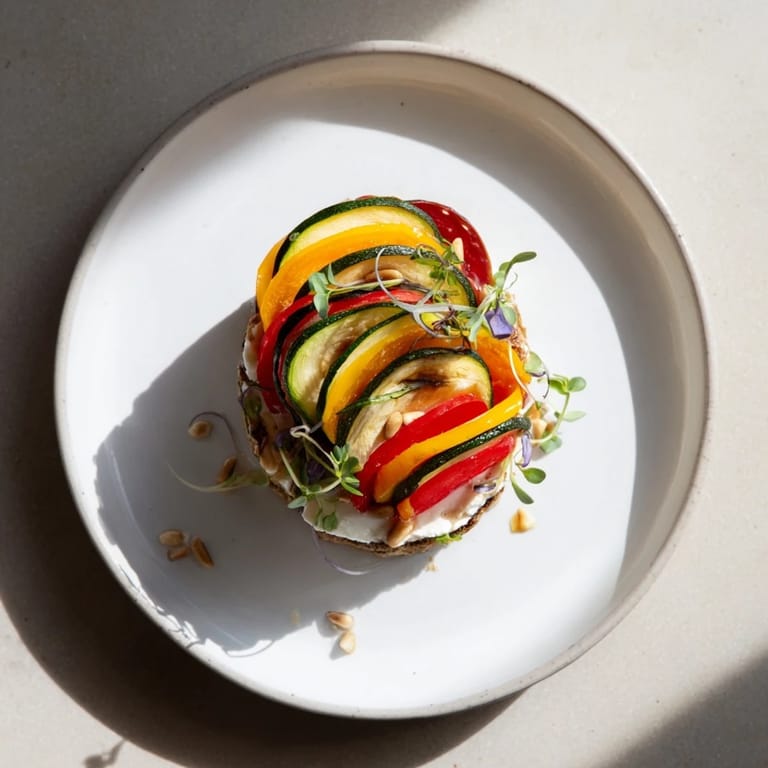
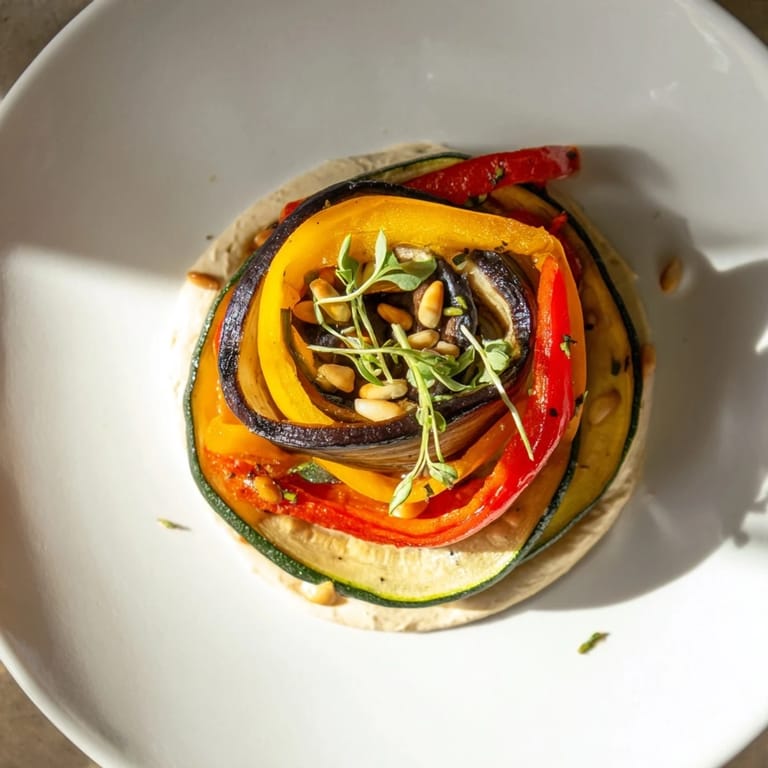
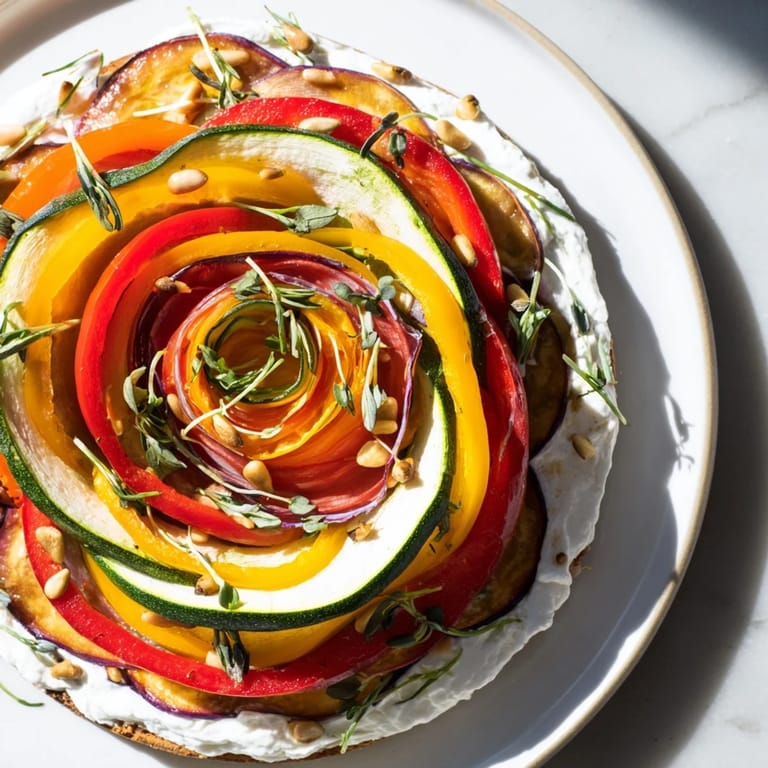
- Beginning at the center again, lay down the roasted vegetable slices one by one, overlapping them slightly as you spiral outward. Alternate the colors deliberately—eggplant, then zucchini, then red pepper, then yellow squash, then carrot, then back again. Overlap them just slightly so you see the colors building upon each other, creating that mesmerizing spiral pattern. This is where patience becomes art.
- Finish with Flourish:
- Sprinkle the toasted pine nuts over the spiral, distributing them so each section gets a few. If using microgreens, add them with care, as though you're placing delicate brushstrokes on a painting. Step back and admire your work—you've just created something beautiful.
- Serve with Pride:
- Bring the dish to room temperature before serving (or serve it just slightly warm if you prefer). Accompany it with crusty bread or crackers for those who want to add texture. Serve it as an appetizer that sets the tone for the meal, or as a light lunch that's satisfying enough to stand on its own.
 Save
Save There was a Sunday afternoon when I made this dish not for guests, but just for myself. As I sat at my kitchen table, looking at this spiral I'd created, I realized it had become meditation in edible form. The repetitive motion of arranging the vegetables, the satisfaction of watching colors emerge in sequence, the simple pleasure of tasting something beautiful—it reminded me why I fell in love with cooking in the first place. Food can nourish more than just our bodies.
The Art of Vegetable Preparation
Getting your vegetables ready is genuinely half the battle, and I say that with complete sincerity. The thickness of each slice determines not just how quickly they roast, but whether they'll be tender enough to layer gracefully into a spiral. I've discovered that a mandoline is worth its weight in kitchen gold—it transforms what could be a tedious task into something almost meditative. The consistency it provides means every slice roasts identically, creating that uniform, elegant texture that makes the final dish shine. If you don't have a mandoline, a very sharp chef's knife and patience will work, but invest in that mandoline if you find yourself making spiraled or layered dishes regularly. Your hands will thank you, and your vegetables will be more uniform.
Why Room Temperature Is Essential
I used to serve this dish warm, thinking that was the proper way. Then a friend gently suggested we let it cool to room temperature, and everything changed. At room temperature, the flavors have space to breathe. The goat cheese isn't melting away but stays creamy and present. The vegetables have firmed up slightly, becoming easier to eat in neat, satisfying bites. The herbs in the cheese spread develop their full personality, and the whole experience becomes more refined. It's counterintuitive, I know, but this is one of those dishes where patience in plating becomes elegance at the table.
Variations That Tell New Stories
The beauty of this spiral lies in its flexibility. In summer when beets are at their peak, I've added thinly sliced roasted beets for jewel-like deep purple tones. Sweet potatoes bring warmth and earthy sweetness that makes people discover new depths in the dish. For a vegan version, a quality plant-based cheese spread works beautifully—it's not identical to goat cheese, but it has its own charm and carries the herbs just as elegantly. I once added very thinly sliced roasted radishes and found they brought a peppery brightness I hadn't anticipated. The spiral format invites experimentation; just remember that whatever you add should be thinly sliced, roasted until pliable, and thoughtfully chosen for both flavor and color.
- Try roasted beets or sweet potatoes for unexpected color and subtle sweetness
- For vegan versions, use a plant-based cheese spread that's spreadable enough to work as your base
- Serve with crusty bread or crackers to add textural contrast and catch every bit of that herbed cheese
 Save
Save This dish has taught me that elegance doesn't require complexity, and impressive presentations don't need to be stressful. It's become my go-to when I want to cook something that feels special without the theatrical pressure of more demanding recipes. Every time I spiral these vegetables, I'm reminded that the most beautiful meals often come from the simplest ideas executed with care and intention.
Recipe FAQ
- → What vegetables work best for the spiral?
Thin slices of eggplant, zucchini, red bell pepper, yellow squash, and carrot create a colorful, tender spiral with contrasting textures and flavors.
- → How can I make the dish vegan-friendly?
Replace goat cheese and crème fraîche with a plant-based cheese spread to maintain the creamy texture without dairy.
- → Why roast the vegetables before assembling?
Roasting softens the vegetables, making them pliable enough to spiral beautifully and enhances their natural sweetness.
- → Can this dish be served warm?
It's best served at room temperature or slightly chilled to keep the cheese mixture fresh and the spiral intact.
- → What garnishes complement this dish?
Toasted pine nuts add crunch and microgreens bring a fresh, delicate finish that enhances both texture and appearance.