 Save
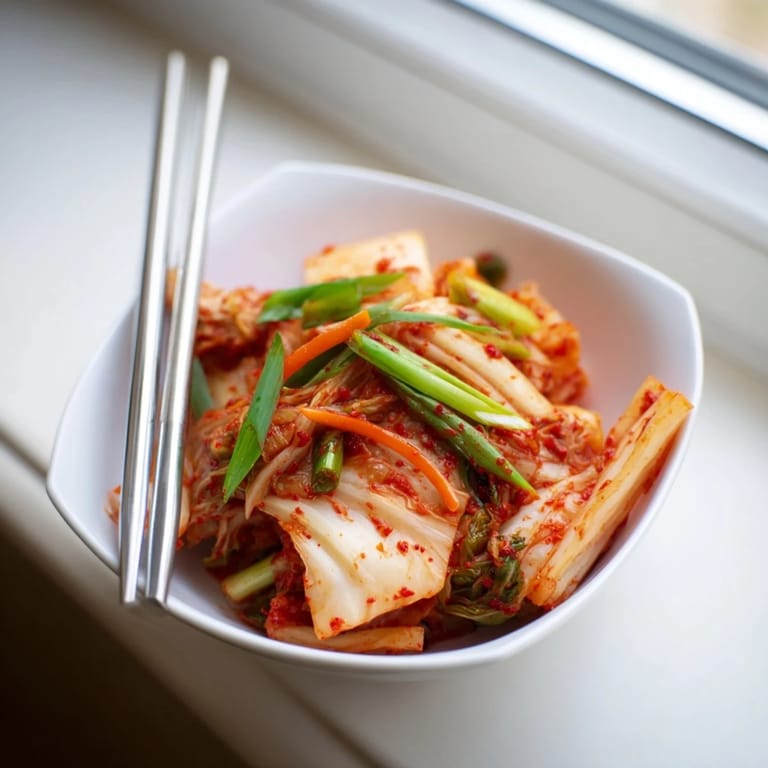
Save The first time I attempted kimchi, my entire apartment smelled like garlic for three days straight. My roommate came home, wrinkled her nose, and asked if I was conducting some kind of chemistry experiment. Now I make a double batch every few weeks, and that same roommate begs me to save her a jar before I start giving them away to friends.
Last autumn, I served my kimchi at a dinner party alongside grilled pork belly. One guest who swore she hated spicy food kept reaching for more, her eyes widening with each bite. By the end of the night, she was demanding the recipe and texting me updates about her own fermentation experiments weeks later.
Ingredients
- Napa cabbage: The foundation of traditional kimchi, its crinkly leaves hold onto the spice paste beautifully while maintaining a satisfying crunch even after weeks of fermentation
- Coarse sea salt: Essential for drawing out moisture from the cabbage, creating the perfect environment for beneficial bacteria to thrive while preventing harmful bacterial growth
- Korean red chili flakes: Unlike regular crushed red pepper, gochugaru has a slightly sweet, smoky flavor and vibrant red color that defines authentic kimchi
- Rice flour: Creates a smooth paste that helps the spice mixture cling to every leaf and accelerates fermentation naturally
- Fish sauce: Adds deep umami notes, though soy sauce makes an excellent vegan substitute that still delivers complexity
Tired of Takeout? 🥡
Get 10 meals you can make faster than delivery arrives. Seriously.
One email. No spam. Unsubscribe anytime.
Instructions
- Salt the cabbage:
- Cut the cabbage into quarters lengthwise, then into 2 inch pieces. Dissolve the salt in cold water and submerge the cabbage, weighing it down with a plate. Let it sit for 2 hours, tossing every 30 minutes so everything gets evenly salted.
- Rinse and drain:
- Rinse the cabbage thoroughly under cold water 2 to 3 times to remove excess salt. Drain well in a colander, squeezing gently to remove remaining water.
- Make the spice paste:
- Whisk rice flour with water in a small saucepan over medium heat until thickened, about 1 to 2 minutes. Let it cool completely. Blend the cooled paste with garlic, ginger, onion, fish sauce, sugar, and gochugaru until smooth.
- Combine everything:
- In a large bowl, toss the drained cabbage with daikon, carrot, and scallions. Add the spice paste and massage thoroughly with gloved hands until every piece is coated.
- Pack and ferment:
- Pack the kimchi tightly into clean jars, pressing down to eliminate air pockets. Leave 1 inch headspace. Seal and let sit at room temperature for 1 to 2 days, burping daily. Refrigerate once it reaches your desired tanginess.
 Save
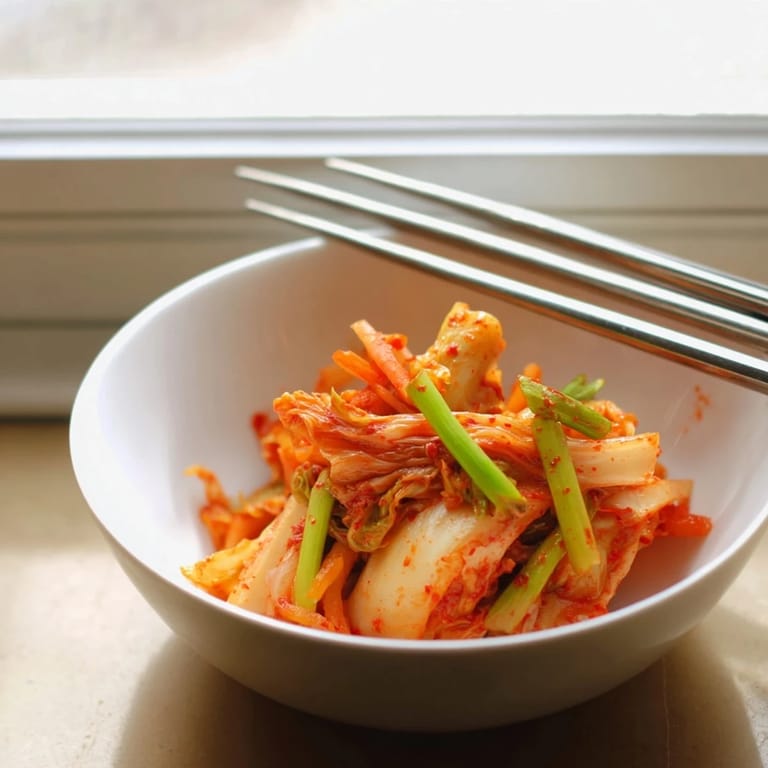
Save My mother in law, who grew up in Seoul, told me that every Korean family has their own kimchi recipe passed down through generations. She smiled when she tasted mine and said it reminded her of her grandmothers house, which might be the highest compliment I have ever received in the kitchen.
Understanding Fermentation
The magic happens when lactic acid bacteria naturally present on cabbage leaves begin multiplying in the salty environment. These beneficial bacteria consume sugars and produce lactic acid, which preserves the vegetables while creating that distinctive tangy flavor and increasing probiotic content.
Adjusting the Heat Level
I have found that 3 tablespoons of gochugaru creates a mild to medium spice that beginners enjoy, while 5 tablespoons delivers the fiery kick kimchi enthusiasts expect. Remember that the heat will mellow slightly as fermentation progresses, so starting on the spicier side often pays off.
Serving Suggestions and Storage
Beyond eating it straight from the jar, try kimchi fried rice, add it to grilled cheese sandwiches, or top scrambled eggs with chopped kimchi and sesame oil. The older and more fermented your kimchi becomes, the better it performs in cooked dishes where its tanginess adds depth.
- Keep refrigerated and use clean utensils to extend shelf life to several months
- The liquid that accumulates is packed with flavor and perfect for adding to soups or marinating meats
- If your kimchi becomes too sour, cooking it tames the acidity while preserving its probiotic benefits
 Save
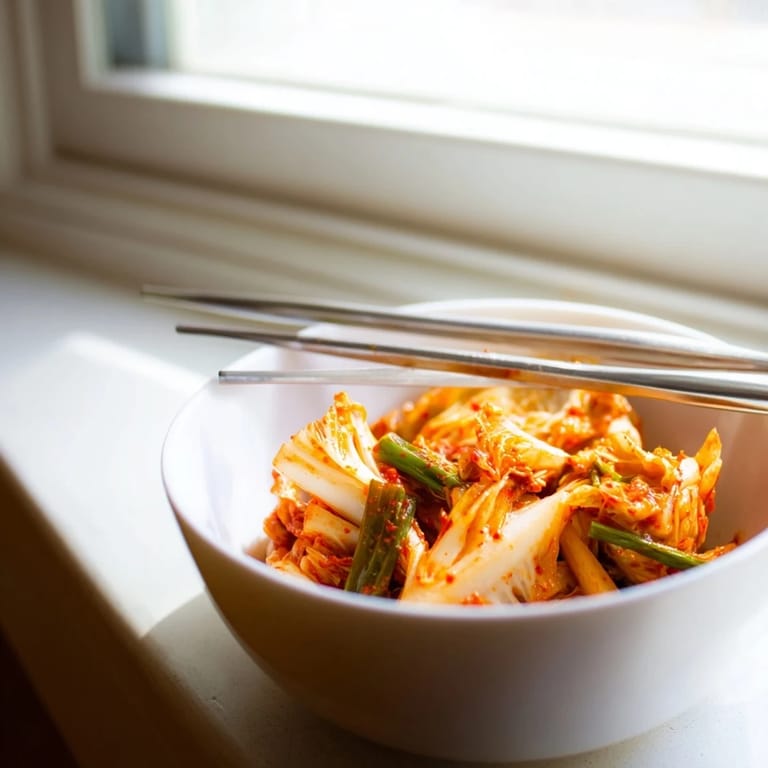
Save There is something deeply satisfying about seeing those jars lined up in my refrigerator, knowing that with each passing day they are becoming more alive and flavorful. Kimchi taught me that patience in the kitchen yields rewards that instant gratification never could.
Recipe FAQ
- → How long should kimchi ferment?
Kimchi typically ferments at room temperature for 1-2 days before refrigeration. During this initial period, the vegetables develop tanginess and beneficial bacteria. Once refrigerated, fermentation slows dramatically but continues, allowing flavors to deepen over several weeks. Taste daily during room-temperature fermentation to find your preferred level of sourness.
- → Can I make kimchi vegan?
Yes, simply substitute traditional fish sauce with soy sauce or a dedicated vegan fish sauce alternative. The rest of the ingredients—napa cabbage, daikon radish, garlic, ginger, gochugaru chili flakes, and scallions—are naturally plant-based. The fermentation process works identically with either version.
- → Why is my kimchi too salty?
Excess saltiness usually indicates insufficient rinsing after the initial salting stage. After soaking cabbage in the saltwater solution for 2 hours, rinse thoroughly 2-3 times under cold running water. Drain well before mixing with the spice paste. This step removes surface salt while retaining enough to support safe fermentation.
- → What dishes pair well with kimchi?
Kimchi shines alongside steamed white rice, fried rice, or in bibimbap bowls. Add it to soups like kimchi jjigae, use it in savory pancakes, or simply enjoy it as a bold side dish with Korean barbecue. The spicy, tangy flavor also complements eggs, noodles, and even grilled cheese sandwiches for a fusion twist.
- → How do I know when kimchi has gone bad?
Fresh kimchi has a vibrant red-orange color and pleasantly sour aroma. Signs of spoilage include mushy texture, dark discoloration, or unpleasant moldy smells. Some white surface yeast is normal during fermentation—simply skim it off. However, fuzzy blue, green, or black growth indicates contamination. Properly stored kimchi lasts months refrigerated.
- → What's the purpose of rice flour in kimchi?
Rice flour creates a smooth, slightly thickened paste that helps the spice mixture adhere evenly to cabbage leaves. When cooked with water into a porridge-like consistency, the rice flour provides a neutral base that carries the garlic, ginger, and gochugaru flavors. This traditional technique ensures consistent seasoning throughout every batch.