 Save
Save My neighbor dropped off a ham bone after Christmas dinner, and I stared at it for two days wondering what to do with something so meaty yet seemingly finished. Then my grandmother's voice popped into my head—she never threw anything away, especially not something that could simmer into liquid gold. That ham bone became the foundation for this soup, a dish that tastes like someone's been tending the stove all afternoon, even though you're mostly just letting time do the work.
I made this for my book club on a February night when everyone was tired and needed something warm that didn't feel like an obligation to eat. Halfway through the first bowl, someone asked for the recipe, then someone else, and by the end I was ladling extra servings into containers because nobody wanted to leave it behind. That's when I knew this wasn't just soup—it was the kind of dish that makes people linger.
Ingredients
- Leftover ham bone (with some meat attached): This is your secret ingredient, the reason this soup tastes like it's been simmering since morning. Don't skip it or substitute lightly—the bone releases collagen and flavor that broth alone can't match.
- Dried navy beans: Soak them overnight to shorten cooking time and help them absorb the smoky broth evenly. Great northern beans work just as well if that's what you have.
- Large onion, carrots, and celery: This trio is your flavor foundation, so don't rush the sauté. You're building layers here, not just heating vegetables.
- Smoked paprika: This is the ingredient that makes people ask what spice you used—it creates that warm, slightly charred taste without any actual smokehouse. A teaspoon more or less changes the whole personality of the soup.
- Low-sodium broth: Use chicken or vegetable depending on what you have; the ham bone will do most of the seasoning work anyway.
- Bay leaf, thyme, and oregano: These dry herbs infuse as the soup simmers, creating depth that fresh herbs can't accomplish in this style of cooking.
Tired of Takeout? 🥡
Get 10 meals you can make faster than delivery arrives. Seriously.
One email. No spam. Unsubscribe anytime.
Instructions
- Prepare your beans:
- Drain the soaked beans and give them a quick rinse under cold water. This removes the starch that would cloud your broth and prevents that heavy feeling some people get from beans.
- Build your flavor base:
- Heat oil in a large soup pot and sauté the onion, carrots, and celery until they're softened and the onion turns translucent, about 5 to 6 minutes. You should smell sweetness starting to develop—that's how you know you're ready for the next step.
- Toast the spices:
- Add garlic and all your dried spices to the pot and let them cook for just one minute, stirring constantly. This wakes up the paprika and herbs so they distribute evenly instead of settling in one corner.
- Combine everything:
- Add the ham bone, drained beans, bay leaf, and broth, then bring the whole pot to a boil. Once it's bubbling, reduce the heat and let it simmer gently, uncovered, for 1 and a half to 2 hours, stirring now and then to keep the beans from sticking to the bottom.
- Rescue the ham:
- Remove the ham bone when the beans are completely tender and let it cool just enough to handle. Pick off any remaining meat and return it to the soup, then discard the bone and bay leaf.
- Taste and adjust:
- This is the moment that separates good soup from the kind you remember. Taste it, add salt gradually, then taste again—the ham bone has already contributed saltiness, so you might need less than you think.
- Serve with generosity:
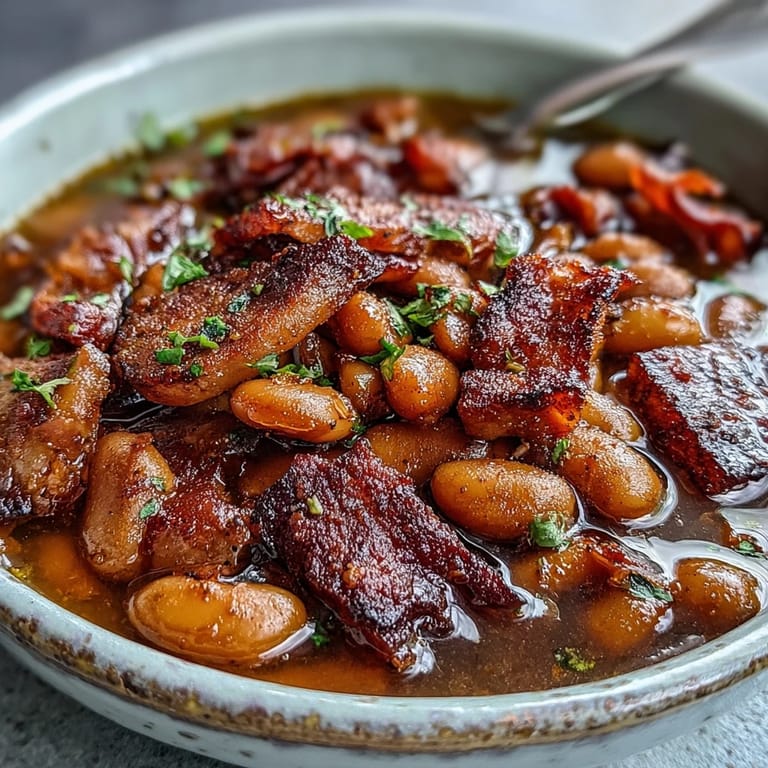
- Ladle into bowls and finish with a crack of black pepper, fresh parsley if you have it, or a small drizzle of olive oil that catches the light.
 Save
Save There's a moment in cooking this soup, usually around the 90-minute mark, when you notice the kitchen has transformed. The walls smell different, the light seems warmer somehow, and you realize you've created something that exists beyond just sustenance. That's when soup becomes memory.
When Beans Won't Soften
If your beans are still hard after two hours, there's usually one culprit—old beans that sat in your pantry too long before you soaked them. I learned this the hard way, and now I write the date on bean bags. If this happens to you, just give them another 30 minutes and be patient. The ham bone isn't going anywhere, and neither are you.
Making It Creamier
When the beans are nearly tender, grab a wooden spoon and mash a handful of them against the side of the pot, letting them break down into the broth. This creates a naturally creamy texture without any cream or extra ingredients—the starch from the beans does all the work. It's the difference between thin soup and the kind that coats your spoon.
Variations and Pairings
This soup is forgiving enough to change with whatever you have and adventurous enough to welcome new ideas. I've added cubed sweet potato when I wanted something slightly sweet, stirred in spinach at the end for color, or swapped the ham bone for a smoked turkey leg when I wanted something slightly lighter.
- Serve with cornbread on the side and watch people light up at the combination.
- A swirl of hot sauce or a pinch of cayenne pepper adds heat for anyone who wants it.
- Fresh parsley, thyme, or a squeeze of lemon juice brings brightness right before serving.
 Save
Save This is the kind of soup that proves you don't need fancy ingredients or complicated technique to feed people well. It just needs time, attention, and something with soul—like a ham bone that remembers the holiday it came from.
Recipe FAQ
- → Can I substitute the ham bone for another meat?
Yes, smoked turkey leg works well as a pork-free alternative, providing a similar smoky flavor.
- → How can I make the soup thicker?
Mash some of the cooked beans directly in the pot before serving to create a creamier, thicker texture.
- → What type of beans is best for this dish?
Navy or great northern beans are ideal due to their tender texture and mild flavor after slow cooking.
- → Is it necessary to soak the dried beans overnight?
Soaking helps soften the beans and reduces cooking time, resulting in a better texture.
- → What garnishes complement this soup?
Fresh parsley or a drizzle of olive oil adds a fresh finish enhancing its rich, smoky depth.