 Save
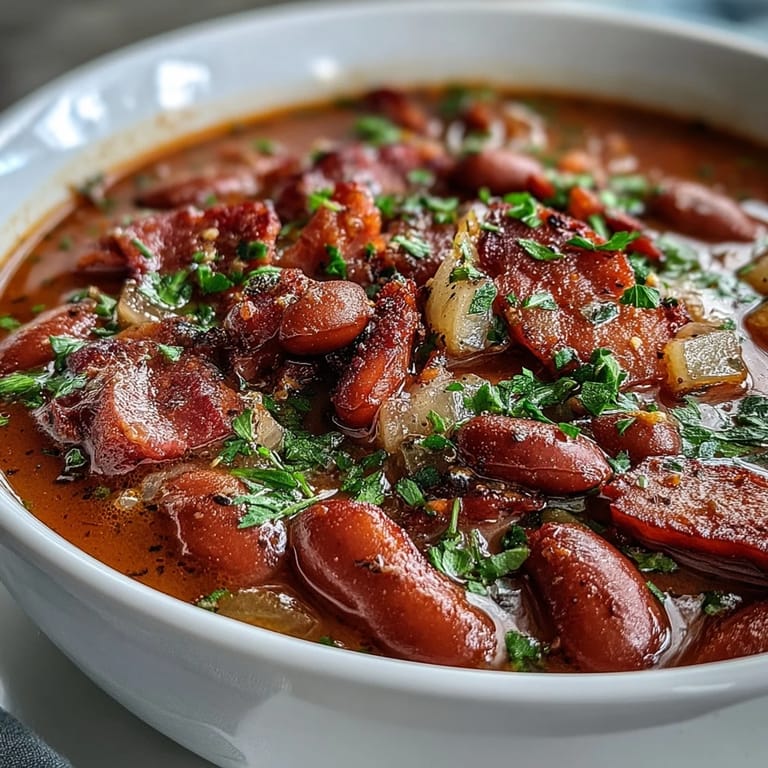
Save My neighbor Marcus taught me that Monday suppers aren't just about leftover ham—they're about turning a humble ham bone into something that fills your kitchen with such honest, smoky warmth that everyone stops what they're doing and asks what you're cooking. The first time I made this Cajun red bean soup, I almost threw away the bone, thinking it was too picked clean, but he stopped me with a knowing smile and said that's exactly where the magic lives. Two hours later, my kitchen smelled like New Orleans, and I understood why this soup has fed families through generations.
I served this to my sister during a cold February when she'd just moved back to town, and watching her take that first spoonful—eyes closed, shoulders relaxing—reminded me that food is how we say welcome home without words. She asked for seconds before finishing her first bowl, and I knew right then this recipe was a keeper, the kind you make again and again until people expect it from you.
Ingredients
- Smoked ham hock or ham bone: This is your foundational flavor—don't skip it or substitute with regular ham alone, as the smoke and collagen from the bone create that signature depth.
- Dried red beans, soaked overnight: Soaking prevents the digestive upset and helps them cook evenly, turning creamy rather than bursting apart.
- Yellow onion, green bell pepper, celery: This holy trinity (called the mirepoix in Cajun cooking) is your flavor base—mince the onion fine so it nearly dissolves into the broth.
- Garlic: Add it after the vegetables soften so it doesn't burn and turn bitter.
- Smoked paprika and cayenne: These aren't optional seasonings—they're the voice of the dish, so taste as you go and adjust heat to your preference.
- Bay leaves, thyme, oregano: These dried herbs need time to bloom in the liquid, which is why simmering matters here.
- Chicken stock or water: Use stock if you can; it adds another layer of savory richness that water alone can't match.
Tired of Takeout? 🥡
Get 10 meals you can make faster than delivery arrives. Seriously.
One email. No spam. Unsubscribe anytime.
Instructions
- Sauté your flavor foundation:
- Heat oil in your Dutch oven and add the onion, bell pepper, and celery, stirring often until they're soft and the onion becomes translucent. You're building the base here—this step matters more than you'd think.
- Wake up the garlic:
- Add minced garlic and let it cook for just one minute until your kitchen suddenly smells alive. Too long and it turns acrid, so stay close.
- Build your pot:
- Add the drained beans, ham hock, diced ham, bay leaves, and all your seasonings in one confident motion. Stir well so the spices coat everything, then pour in your stock and bring it to a rolling boil.
- Let time do the work:
- Reduce heat to low, cover the pot partially so steam can escape, and let it simmer undisturbed for about two hours. After the first hour, check a bean between your teeth—it should be getting creamy but not mushy.
- Rescue the ham meat:
- Once the ham hock is fall-apart tender, fish it out, shred any meat clinging to the bone, and return the meat to the pot. Discard the bone and any excess fat.
- Season with intention:
- Taste your soup—it may need more salt, pepper, or a dash of hot sauce to round out the flavors. This is your moment to make it exactly as you like it.
- Serve with grace:
- Ladle the soup over rice in wide bowls and scatter green onions and parsley on top while the soup is still steaming.
 Save
Save One rainy Tuesday, I reheated a pot of this soup from the day before, and my partner mentioned it tasted even more complex than fresh, like the flavors had gotten to know each other overnight. That's when I realized this isn't a weeknight dinner—it's a living thing that improves with time, which feels almost unfair in the best way.
The Cajun Tradition Behind This Soup
Gumbo and red bean soup are inseparable from Monday in New Orleans, a tradition born from resourcefulness and the rhythms of life—Sunday you roast, Monday you transform what's left into something entirely new. The trinity of onion, celery, and bell pepper isn't just a flavor combination; it's a cultural anchor that shows up in nearly every Cajun kitchen, a shorthand for home. Understanding this connection makes the soup taste different somehow, like you're not just following steps but participating in something larger.
Playing With Heat and Smoke
The beauty of this recipe is that cayenne and paprika let you control the temperature—you can make this soup whisper-gentle or boldly spiced depending on your mood and who's eating. Some cooks add andouille sausage, sliced and browned, for an extra whisper of smoke that transforms the whole pot into something deeper and more complex. I've also added a whole smoked turkey leg instead of ham hock on nights when I wanted to change things up, and the soup completely reinvented itself while staying fundamentally recognizable.
Making It Your Own
This soup doesn't need much, but there are small moments where you can make it yours—maybe you prefer it thinner, broth-forward rather than creamy, or you add a small splash of hot sauce at the end for complexity instead of heat. Rice is traditional, but I've served this over cornbread crumbles when I wanted something different, or simply in a bowl with crusty bread for dunking. The soup is forgiving enough to bend to your preferences without losing its soul.
- If you forget to soak the beans, use canned red beans instead and reduce the cooking time to about 45 minutes.
- Leftover ham from a holiday dinner works beautifully here—save those bones in your freezer for moments exactly like this.
- Make a double batch and freeze half in portions for mornings when you need something warm and substantial without the cooking time.
 Save
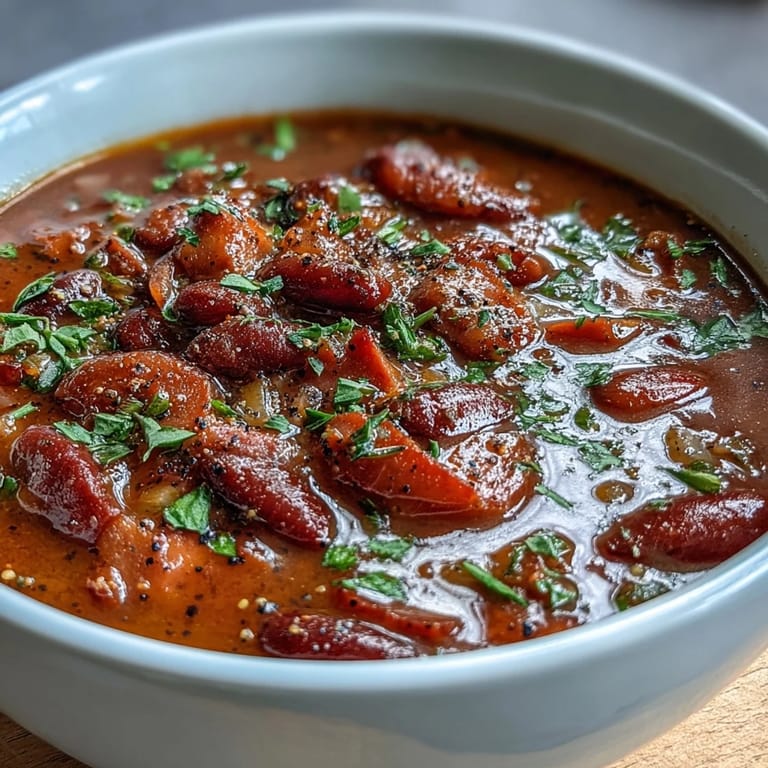
Save This soup is the kind of dish that makes you want to slow down, the kind that turns a regular Monday into something worth remembering. Once you make it, you'll understand why people come back to it again and again.
Recipe FAQ
- → What is the best way to soak red beans?
Soak dried red beans overnight in plenty of water to soften and reduce cooking time. Drain before using.
- → Can smoked ham hock be substituted?
Yes, leftover ham bone or diced smoked ham can be used for similar smoky depth.
- → How can I thicken the soup?
Mash some beans against the side of the pot before serving to create a thicker, creamier texture.
- → Is it necessary to use chicken stock?
Chicken stock adds richness, but water can be used as a lighter alternative without compromising flavor.
- → What sides pair well with this dish?
Serve with cooked white rice and garnished with fresh parsley and green onions for a classic touch.
- → Can additional meat be added?
Andouille sausage can be sliced and browned before adding for extra smokiness and flavor.