 Save
Save The first time I made gumbo, I stood over a pot for twenty minutes, stirring flour and oil while my kitchen filled with the smell of something impossibly deep and brown. My neighbor wandered over, drawn by the aroma, and watched me fret about whether I'd gone too far—whether the roux was about to tip into bitter territory. She laughed and said, 'That's the magic moment, right there.' I've made it a dozen times since, and that patience, that trust in the darkness, is what transforms this soup from ordinary into something people still talk about.
I learned to make this properly when my partner's family invited me to help cook for a crawfish boil weekend. Their grandmother stood behind me while I built the roux, correcting me with gentle nudges—'slower, darker, trust it'—and later, when we served the gumbo over rice, she took a spoonful and nodded in a way that felt like passing a test I didn't know I was taking.
Ingredients
- Boneless, skinless chicken thighs (350g): Thighs stay tender through long simmering, not dry like breast meat would; they dissolve slightly into the broth and give it body.
- Smoked andouille sausage (225g): The smoke runs through every spoonful; it's not just meat, it's the soul of the whole dish.
- Fresh or frozen okra (250g): Sliced okra creates its own natural thickener, which is the old Louisiana trick—thaw it if frozen and squeeze out excess moisture or it'll turn slimy.
- The holy trinity—onion, bell pepper, celery: This isn't negotiable; it's the foundation, and sautéing it in the roux builds layers of flavor that store-bought stock alone can never reach.
- All-purpose flour and vegetable oil (60g each): The roux is everything; this ratio gives you enough control to build deep color without burning.
- Chicken stock (1.5L): Use something you'd taste on its own; weak stock makes weak gumbo.
- Bay leaves, thyme, smoked paprika, cayenne: The spices whisper rather than shout; start with less cayenne and add heat as you taste.
- Fresh tomatoes or canned (2 or 400g): If using canned, drain them so you're adding flavor, not extra liquid.
Tired of Takeout? 🥡
Get 10 meals you can make faster than delivery arrives. Seriously.
One email. No spam. Unsubscribe anytime.
Instructions
- Build your roux, slowly and without rushing:
- Heat oil in your pot over medium heat, add flour, and whisk constantly for fifteen to twenty minutes until it shifts from blonde to peanut butter to chocolate brown. Watch for the moment the flour releases its raw smell and becomes something roasted and warm; that's when you know it's right.
- Wake up the vegetables in the roux:
- Add onion, pepper, and celery to that dark roux and let them soften for a few minutes, then stir in garlic until it blooms. You're building flavor layers now, not just cooking.
- Brown the proteins quickly:
- Toss in the sausage and chicken pieces and let them catch some color, about five minutes, so they aren't pale and steamed when the broth hits them.
- Introduce the okra:
- Add sliced okra and cook it for three or four minutes before the liquid arrives; this prevents it from turning to mush later and helps it thicken the gumbo gently.
- Build the broth and simmer:
- Pour in tomatoes, stock, and all your seasonings—bay leaves, thyme, paprika, cayenne, Worcestershire, salt, and pepper. Bring it to a boil, then drop the heat low and let it barely bubble for forty-five to fifty minutes, stirring now and then so nothing sticks.
- Finish and adjust:
- Fish out the bay leaves, taste, and add more cayenne or salt as needed. If you want it thicker, sprinkle filé powder on the surface off the heat and stir it in gently.
- Serve over rice with joy:
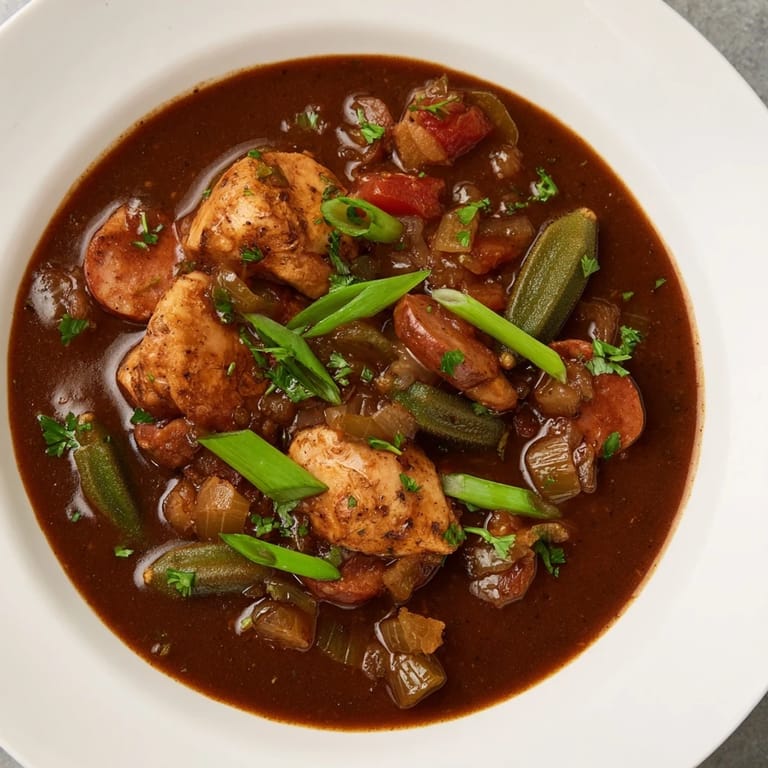
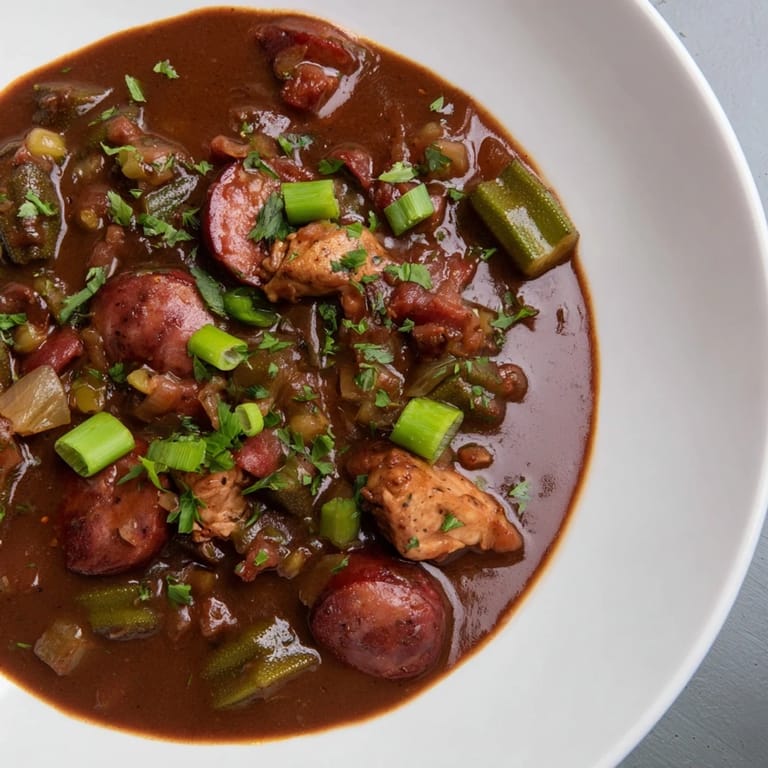
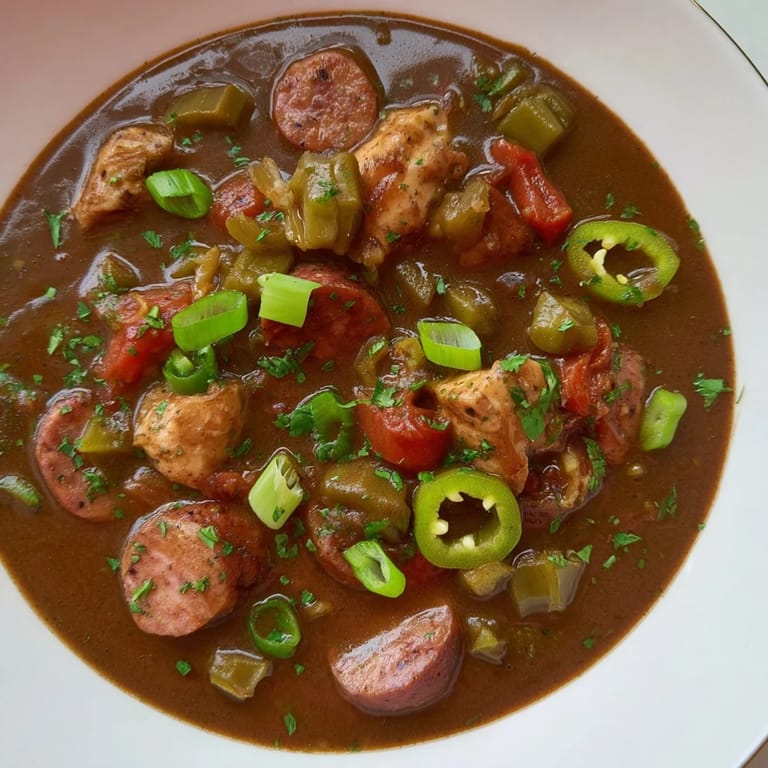
- Ladle it over warm rice, scatter spring onions and parsley across the top, and let everyone add hot sauce to their own taste.
 Save
Save The real moment came when my friend tasted it for the first time and closed her eyes, and I realized that food like this isn't really about technique—it's about care, about stirring something for twenty minutes because it matters, about the kind of slow attention that says to the people you're feeding, 'You're worth this.'
Variations and Improvisations
Gumbo is patient with change. I've made it with shrimp and crab instead of chicken and sausage, adding them in the last ten minutes so they stay tender; I've seen people make it entirely vegetarian with extra okra and mushrooms for depth. The structure—the roux, the trinity, the long simmer—stays true, but the proteins and seasons shift with what you have and what you're hungry for. One autumn I added a cup of diced butternut squash and suddenly it felt like a different dish altogether, but it still tasted like home.
Building Flavor Through Technique
The most important thing I've learned is that gumbo rewards patience in a way few dishes do. The roux takes time because it needs to transform—not just to brown, but to develop complexity that a quick golden roux will never have. The long simmer does the same thing; it's not just softening the chicken and melting the vegetables, it's marrying all those flavors into something that tastes like it's been cooking for hours, not just under two.
Serving and Storage
Gumbo tastes better the next day, when the flavors have settled and deepened—I always make extra. It keeps in the refrigerator for three days and freezes beautifully for up to three months; just reheat it gently on the stove, adding a splash of stock if it's thickened too much. Serve it over rice that's still warm, with crusty bread on the side for soaking up every last spoonful.
- French bread tears apart better than it cuts if you're serving it at the table and want that rustic feel.
- If you make it ahead, skip the filé powder until just before serving so it stays fresh and doesn't get gummy.
- Let people build their own heat with hot sauce; not everyone wants the same level of fire.
 Save
Save This is the kind of soup that fills your home with warmth and makes people linger at the table, not because they're still hungry, but because they don't want the feeling to end. Make it for people you love.
Recipe FAQ
- → What is the purpose of making a dark roux?
A dark roux provides a deep, nutty flavor and thickens the broth, forming the rich base essential to Louisiana-style gumbo.
- → Can I use frozen okra in this dish?
Yes, but thaw and drain frozen okra before adding to prevent excess moisture and ensure proper texture.
- → What alternatives exist for andouille sausage?
Any smoked sausage can replace andouille, though traditional smoked sausage adds the most authentic flavor.
- → How can filé powder enhance this dish?
Filé powder thickens the stew and adds a subtle earthy, herbaceous note typical of Creole flavors.
- → Is it necessary to cook the roux slowly?
Yes, slow-cooking prevents burning and develops the roux's characteristic deep brown color and complex flavor.
- → What is the best way to serve this dish?
Serve hot over cooked white rice and garnish with fresh parsley and spring onions for a complete, hearty meal.