 Save
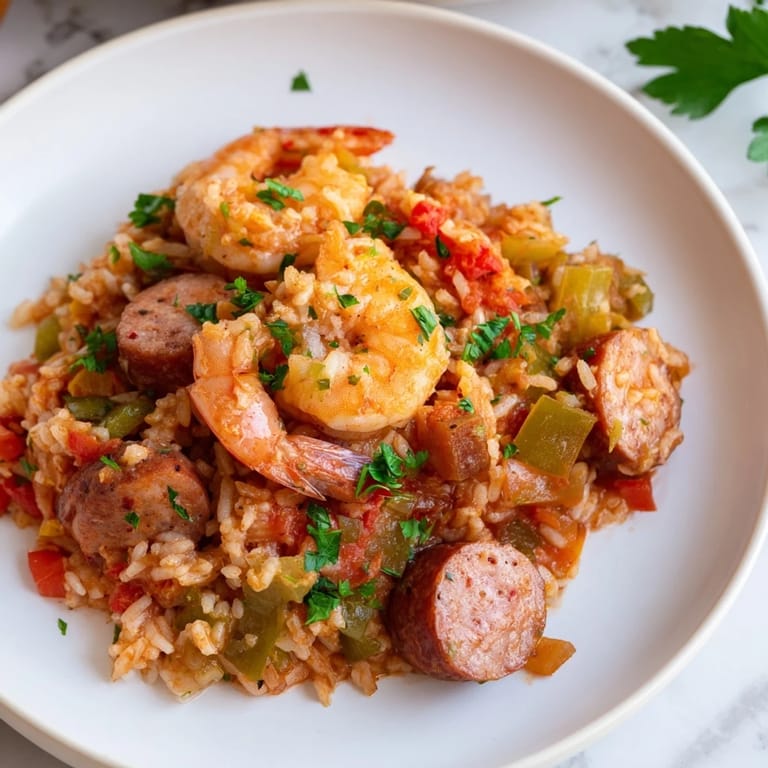
Save There's something about cooking jambalaya that slows down time in the kitchen. A few years back, I was testing recipes for a dinner party and made this skillet version on a whim—no hunting down specialty ingredients, no complicated techniques, just a single pan and thirty-five minutes. By the time my guests walked in, the whole apartment smelled like smoky sausage and Creole spices, and I knew right then this one was a keeper. It's become my go-to when I want something that tastes like it took hours but honestly doesn't.
I made this for my neighbor Marcus one rainy Tuesday when he mentioned missing New Orleans food. He sat at my kitchen counter watching the rice absorb all those spiced broth, and halfway through dinner he got quiet in that way that means something's hit right. Turns out his grandmother used to make something similar, and suddenly we were swapping stories about food and family. That's the magic of jambalaya—it brings people closer somehow.
Ingredients
- Andouille or smoked sausage (8 oz): This is your flavor anchor—the smoke and spice carry the whole dish, so don't skimp on quality here.
- Large shrimp (8 oz): Fresh or frozen both work, but thaw frozen shrimp beforehand so they cook evenly without releasing extra moisture.
- Yellow onion, red bell pepper, green bell pepper, celery (1 each, diced): This is your holy trinity base, and dicing them roughly equal keeps everything cooking at the same pace.
- Garlic (3 cloves, minced): Add it after the softer vegetables so it doesn't burn and turn bitter.
- Long-grain white rice (1 cup): Don't rinse it—the starch helps the rice absorb all that broth flavor.
- Low-sodium chicken broth (1 2/3 cups): Low-sodium lets you control the salt and taste the spices, not just salt.
- Diced tomatoes (1 can, undrained): The juice matters as much as the tomatoes themselves, so don't drain them.
- Smoked paprika, dried thyme, dried oregano, cayenne pepper, black pepper, salt: These spices are the soul of jambalaya—toast them briefly in the pan with the rice to wake them up.
- Olive oil (2 tbsp total): One tablespoon per step keeps everything from sticking without drowning the pan.
- Fresh parsley (2 tbsp): A fresh finish that cuts through the richness and adds a bright note right before serving.
Tired of Takeout? 🥡
Get 10 meals you can make faster than delivery arrives. Seriously.
One email. No spam. Unsubscribe anytime.
Instructions
- Brown the sausage:
- Heat a tablespoon of olive oil in a large skillet over medium-high heat until it shimmers, then add your sausage slices. Let them sit for a minute before stirring—you want that caramelized edge, not gray steamed sausage. After three or four minutes, they'll be golden and starting to crisp, which is exactly when you pull them out and set them aside.
- Build the base:
- Add the remaining oil to the still-warm skillet and toss in your onion, peppers, and celery. This should smell amazing almost immediately. Stir every minute or so, letting them soften and just barely color at the edges, which takes about four or five minutes. When they're nearly there, add your minced garlic and cook one more minute until fragrant.
- Toast the rice and spices:
- Pour in your rice and all those spices—smoked paprika, thyme, oregano, cayenne, black pepper, and salt. Stir it all together for a full minute, coating every grain. You'll hear it clicking slightly against the pan, and that's what you want—the rice is toasting and the spices are blooming.
- Add liquids and return sausage:
- Bring your browned sausage back into the party, then pour in the tomatoes with their juice and the chicken broth. Stir really well to make sure nothing's stuck to the bottom, then let it come to a simmer. You'll see it start to bubble around the edges.
- Cover and simmer:
- Turn the heat down to low, put the lid on, and let time do the work for you. The rice will absorb the liquid gradually over about twenty minutes, and honestly, this is the hardest part—not peeking. The rice is done when it's tender and you can barely see liquid left in the pan.
- Nestle in the shrimp:
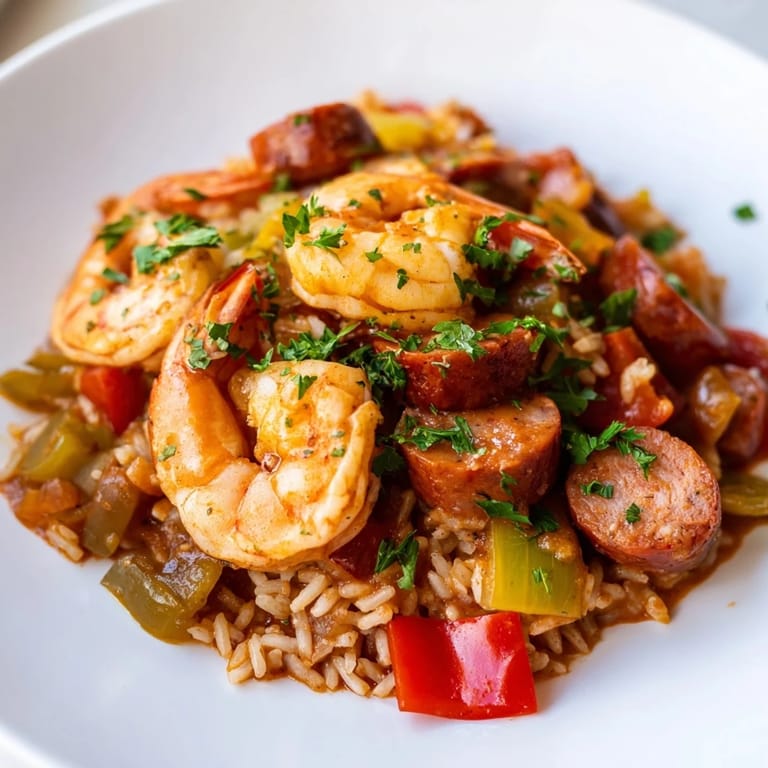
- Arrange your shrimp right on top of the rice—don't stir them in yet. Cover again and cook for five to seven minutes until the shrimp turn from gray to bright pink. Pink means done; any longer and they get rubbery.
- Finish and serve:
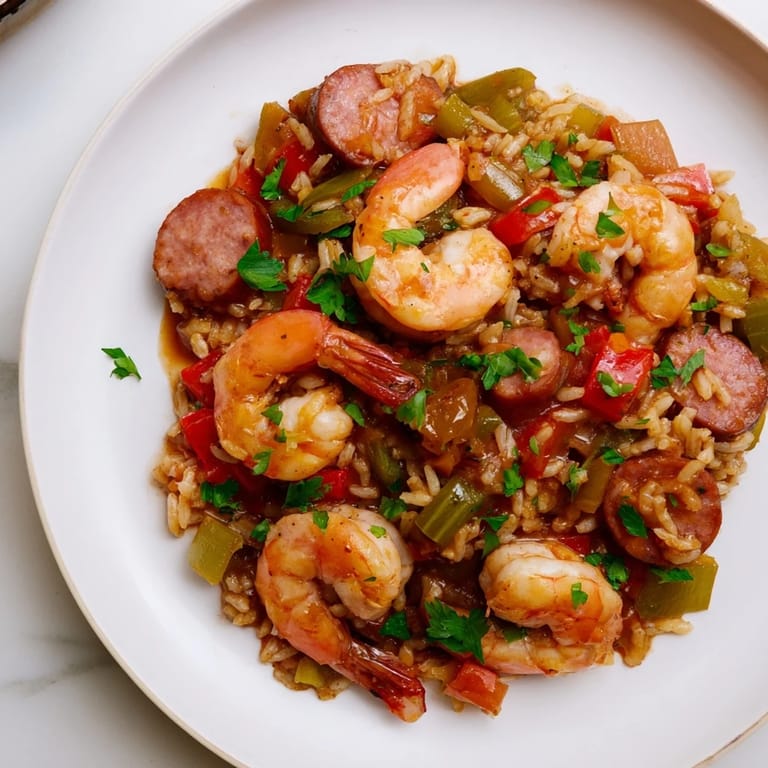
- Use a fork to gently fluff everything together, which separates the rice grains and distributes the shrimp throughout. Scatter fresh parsley over the top, and you're ready to eat.
 Save
Save The first time someone told me this dish was "Creole home cooking," I realized it had nothing to do with fancy techniques and everything to do with good instincts—knowing when sausage is browned enough, trusting that shrimp only needs minutes, understanding that one skillet can hold an entire celebration. That's when jambalaya stopped being a recipe and became something I reach for when I want to feed people well.
Choosing Your Sausage
Andouille is the traditional choice because of its distinctive smoky, slightly spicy profile, but honestly, any good quality smoked sausage works beautifully here. The key is looking for something with real smoke flavor and some spice in the mix—pale sausage won't give you that depth. Slice it thick enough that it gets some color when it hits the pan, about a quarter inch. I once used a mild sausage thinking I could make up the spice with cayenne, and it just wasn't the same—the sausage carries flavor in a way that loose spice can't replicate.
Rice Behavior and Timing
The rice in jambalaya isn't cooked separately and then combined; it cooks right in the pan with all the flavors, which means it absorbs everything. Long-grain white rice is ideal because it stays separate and doesn't clump, and measuring by weight rather than volume keeps the liquid ratio consistent. If your rice finishes early and still looks wet, that's okay—just cover it and let the residual heat finish the job. If it looks dry but feels firm, add a splash more broth and give it another few minutes. You're aiming for tender but not mushy, with just a tiny bit of resistance when you bite it.
The Shrimp Strategy
Shrimp are the wild card in this dish because they're either perfect or ruined, with almost no in-between. They cook in about five minutes, and the moment they turn pink, they're done—any longer and the proteins seize up and they become tough and flavorless. Some people like to devein them beforehand and some just buy them pre-deveined, but definitely peel them if they're still in the shell. I've learned that arranging them on top of the rice rather than mixing them in lets you watch them change color, which is your signal that everything's ready to eat.
- If you can only find frozen shrimp, thaw them in the refrigerator the night before so they don't release excess water into the pan.
- Fresh shrimp smell like the ocean—clean and briny—so if yours smell fishy or off, that's a sign to pass on them.
- Keep a sharp eye during those final five minutes because the difference between perfect and overdone is literally one minute.
 Save
Save This dish has become my answer to almost every question: too tired to cook, but want something special? Jambalaya. Friends coming over unexpectedly? Jambalaya. The kind of day where everything feels heavy and you need comfort? Absolutely jambalaya. It's proof that simple ingredients, good timing, and one good skillet can make something that tastes like you spent all day in the kitchen.
Recipe FAQ
- → Can I use a different type of sausage?
Yes, smoked sausage or andouille can be substituted with chorizo or kielbasa for varied smoky flavors.
- → Is it necessary to peel and devein the shrimp?
Peeling and deveining shrimp ensures a cleaner texture and removes any grit, enhancing the dish's overall taste.
- → What kind of rice works best?
Long-grain white rice is ideal for this dish, as it cooks evenly and absorbs the spices without becoming mushy.
- → How can I add more heat?
Increase cayenne pepper slightly or serve with hot sauce to elevate the spiciness to your preference.
- → Can I prepare this dish in advance?
Yes, it reheats well and flavors deepen overnight, but shrimp is best added fresh to maintain texture.