 Save
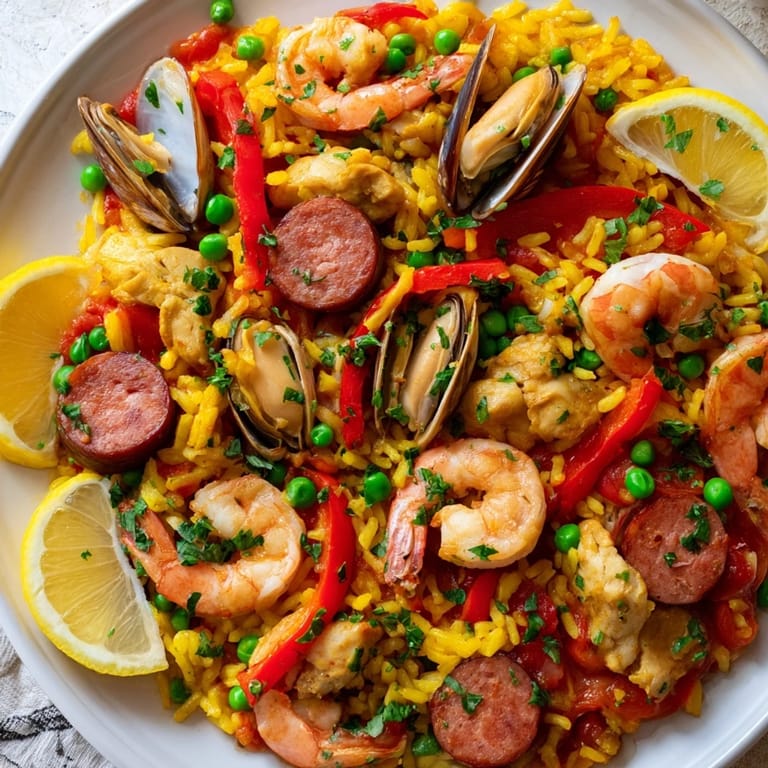
Save My first paella moment happened on a humid Barcelona evening when a neighbor taught me that this wasn't just rice in a pan—it was theater, patience, and permission to feed a crowd without fussing. There's something magnetic about the way saffron blooms into that golden broth, how the bottom of the pan develops those prized crispy bits called socarrat, and how seafood and meat come together without fighting for attention. Since then, paella has become my go-to when I want to cook something that looks far more impressive than it actually is.
I made this for my sister's surprise dinner party once, and honestly, I was terrified the mussels wouldn't open or I'd somehow ruin it all. Instead, the golden crust formed exactly as promised, the shrimp turned perfectly pink, and everyone crowded around the pan asking how I'd pulled it off. It taught me that paella forgives small mistakes because its flavors are so well-balanced—the saffron, the smoke, the brine from the sea—that nothing falls apart.
Ingredients
- Chorizo sausage: Use the fully cooked kind if you can find it—Spanish chorizo has that smoky depth that defines the whole dish and renders its oils to flavor everything else.
- Chicken thighs: Never use breasts here; thighs stay tender and release collagen that builds flavor into the broth.
- Large shrimp and mussels: Buy them the day you cook if possible, and tell the fishmonger you need them for paella so they give you their finest.
- Short-grain paella or Arborio rice: This starch releases slowly and creates that creamy bite without turning to mush—regular long-grain will disappoint you.
- Saffron threads: Real saffron is expensive but three-quarters of a teaspoon is enough; steep it in hot stock first to wake up its color and flavor.
- Chicken or seafood stock: Warm it before adding or the pan temperature will plummet and throw off your timing.
- Bell peppers and tomatoes: Their sweetness balances the salt and smokiness, so don't skip them even if you're tempted.
- Smoked paprika: This is non-negotiable—it's what gives paella its soul.
Tired of Takeout? 🥡
Get 10 meals you can make faster than delivery arrives. Seriously.
One email. No spam. Unsubscribe anytime.
Instructions
- Wake the saffron:
- Pour 3 tablespoons of hot stock over the saffron threads in a small bowl and let them sit. The water will turn liquid gold, and you'll know the saffron is doing its job.
- Brown the meat:
- Heat olive oil in your paella pan over medium heat and add the chorizo and chicken pieces. Let them sear for 5-7 minutes until they develop golden edges—this is where the flavor begins.
- Build the base:
- Once the meat is removed, add your chopped onion and bell peppers to the same oil, stirring for about 4-5 minutes until they soften. Then stir in the garlic and diced tomatoes, cooking for 2 minutes more.
- Toast the rice:
- Add the rice and smoked paprika to the vegetables, stirring so every grain gets coated in oil and spice. This toasting step prevents the rice from becoming gummy.
- Add the liquid:
- Return the browned meat to the pan, then pour in your saffron-infused stock, the remaining warm stock, bay leaf, salt, and pepper. Stir gently just once, then leave it be.
- Simmer without stirring:
- Bring everything to a boil, then turn the heat down to low and simmer uncovered for 15 minutes. Resist the urge to stir—this is when the rice absorbs the liquid and the magic happens.
- Nestle in the seafood:
- After 15 minutes, push the shrimp, mussels, and calamari into the rice, scatter the peas on top, and cover loosely with foil. Cook for another 10-12 minutes until the shrimp are opaque and the mussels have popped open.
- Rest and serve:
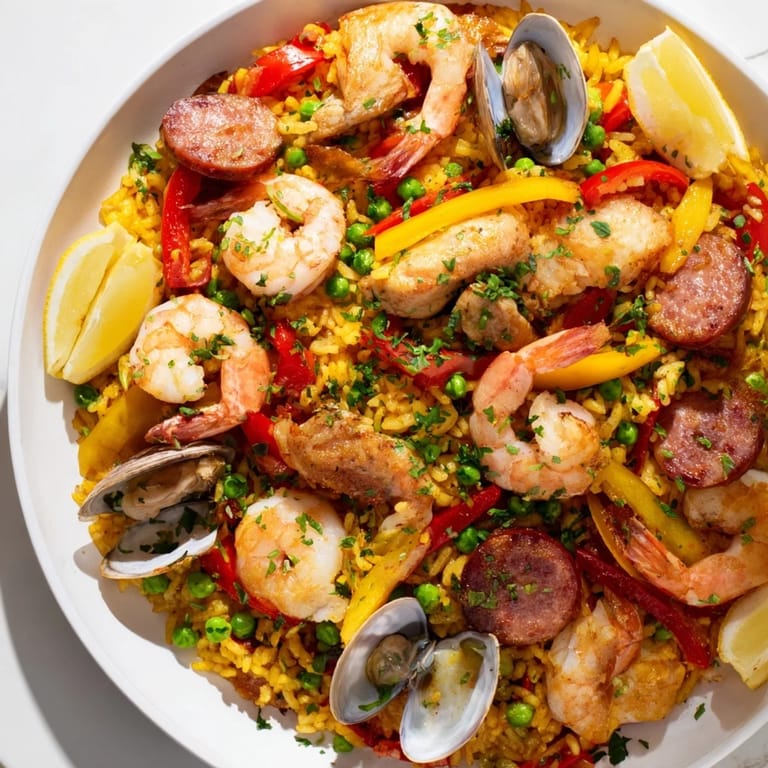
- Remove from heat, keep it covered, and let it sit for 5 minutes so the residual warmth finishes cooking everything. Discard any mussels that stubbornly refused to open, then garnish with fresh parsley and lemon wedges.
 Save
Save There's a moment near the end, when you peek under the foil and see those mussels gaping open against the golden rice, when you realize you've created something that's part celebration and part pure instinct. The whole thing becomes communion—everyone gathered around one pan, reaching with lemon wedges, asking for seconds, suddenly feeling connected by something warm and ocean-touched.
The Magic of Socarrat
The crispy, browned layer of rice at the bottom of the pan—socarrat—is not a mistake you're trying to avoid. It's the treasure. Some cooks listen for a gentle crackling sound coming from the pan in the last few minutes and actually increase the heat slightly just to encourage it. That caramelized, almost-burnt rice has a nuttiness that perfectly complements the briny seafood and smoky chorizo. I learned this by almost panicking the first time I heard that sound, thinking I'd ruined everything, only to discover I'd created the best bite of the entire dish.
Why the Stock Matters
Never, ever use cold or room-temperature stock. When cold liquid hits the hot pan, it drops the pan's temperature and forces the rice to absorb unevenly. Warm your stock separately while you're doing your prep work—this one detail is why some paellas feel cohesive and others feel scattered. A good seafood stock will make your paella taste like you spent hours at the fishmonger's, even if you bought it in a carton.
Serving and Wine Pairing
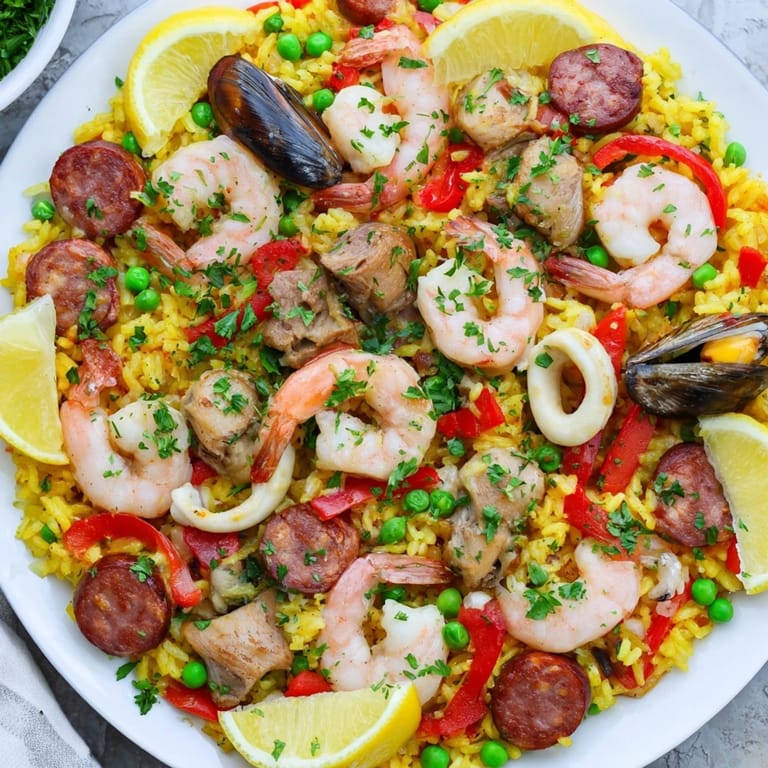
Paella is most forgiving when served straight from the pan, communal-style, with everyone helping themselves. Have lemon wedges ready—the brightness cuts through the richness beautifully and makes every bite feel lighter. A crisp Spanish white wine like Albariño or Verdejo is your partner here; the acidity refreshes your palate between bites and honors where the dish comes from.
- If you don't have Spanish wine on hand, any dry white with good acidity will work in a pinch.
- Make sure your paella pan is something beautiful enough to serve from—it becomes part of the presentation and the memory.
- Leftovers actually improve overnight as the rice absorbs more flavor, though you'll want to reheat gently with a splash of broth.
 Save
Save Paella stopped being intimidating once I understood it's less about precision and more about presence—about showing up with good ingredients and trusting the process. Make it once and you'll make it again, probably many times, because it's one of those dishes that comes with its own built-in celebration.
Recipe FAQ
- → What type of rice works best for this dish?
Short-grain paella or Arborio rice is ideal due to its ability to absorb flavors while maintaining a firm texture.
- → How do you infuse the rice with saffron flavor?
Saffron threads are steeped in hot stock before being added, allowing the rice to absorb the distinct aroma and color.
- → Can the seafood be substituted?
Yes, clams, scallops, or other preferred shellfish can be used to vary the seafood mix while maintaining the dish's essence.
- → What is the purpose of not stirring during simmering?
Keeping the rice undisturbed helps form a desirable crust on the bottom, known as 'socarrat,' adding texture and flavor.
- → How is the smoky flavor achieved?
Smoked Spanish paprika (pimentón) and chorizo sausage impart a rich, smoky depth to the dish.
- → What garnishes enhance the final presentation?
Fresh chopped parsley and lemon wedges add brightness and a fresh contrast to the rich flavors.